
DGT test · 1,397 questions
Traffic signs, markings and signals · Page 7 of 28
Road signs, road markings, traffic lights, police signals and temporary markings: what they mean and which one wins when they disagree. The topic with the most questions in the bank.
Questions in this topic, with answers
1,397 questions, 50 per page, with the correct answer and the explanation. Page 7 of 28.
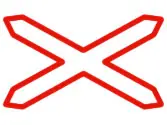
Esta señal advierte del peligro por un paso a nivel...
This sign warns of danger from a level crossing...
- Asin barreras.without barriers.
- Bcon barreras.with barriers.
- Ccon o sin barreras.with or without barriers.
ExplanationThis sign indicates the location of a level crossing without barriers, which is immediately ahead. If it were the road marking with the letters P/N, it would indicate that the level crossing may have barriers or not.
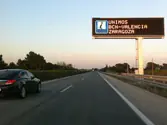
¿Qué función tienen los paneles de mensaje variable?
What is the purpose of variable message panels?
- ADar recomendaciones o instrucciones que no sean de obligado cumplimiento.To give recommendations or instructions that are not compulsory.
- BRegular la circulación adaptándola a las circunstancias cambiantes del tráfico.To regulate traffic, adapting it to changing traffic conditions.
- CIndicar cambios de dirección.To show changes of direction.
ExplanationVariable message panels are used to regulate traffic, adapting it to changing traffic conditions. They are used to give drivers information, warn them of possible dangers and give recommendations or compulsory instructions. The changes these panels make to the usual road signs and road markings end when the panel itself says so or when the reasons for them end; from that moment the usual signs and markings apply again.
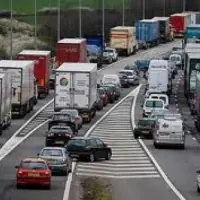
¿Puede entrar un vehículo en una zona de cebreado?
May a vehicle enter a hatched area (cebreado)?
- ASí, pero únicamente en caso de estacionamientoYes, but only to park.
- BSí, siempre que lo deseeYes, whenever it wants.
- CNo, está prohibidoNo, it is prohibited.
ExplanationUnder Article 147.2.d of the General Traffic Regulations (RGC), an area of parallel diagonal stripes framed by a solid line (hatched area, cebreado) means that no driver may enter it with their vehicle or animal, except those who must drive on the hard shoulder.
Si en una curva encontramos marcas longitudinales discontinuas con la separación entre trazos más corta de lo habitual, ¿qué indica?
If, on a bend, you find broken longitudinal markings with shorter gaps between the dashes than usual, what does this indicate?
- AQue está prohibido adelantar.That overtaking is prohibited.
- BQue se aproxima una línea continua.That a continuous line is coming up.
- CQue es una curva peligrosa.That it is a dangerous bend.
ExplanationWhen the gaps between the dashes of a broken line are noticeably shorter than usual, it warns drivers that they are approaching a continuous longitudinal marking or a stretch of road with a special risk.
Una línea longitudinal discontinua más ancha que en el caso general indica...
A broken longitudinal line wider than usual indicates...
- AQue se trata de un carril especial.That it is a special lane.
- BLa proximidad de una marca longitudinal continua.That a continuous longitudinal marking is coming up.
- CLa proximidad de una zona de especial peligro.That an area of special danger is coming up.
ExplanationWhen a broken longitudinal marking is noticeably wider than usual, it shows that there is a special lane for a certain type of vehicle, such as a bus lane or an acceleration lane.
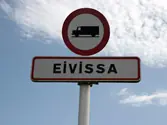
¿Qué le indican estas señales?
What do these signs tell you?
- AQue a partir de la señal rigen las normas de zona urbana y que está prohibida la circulación de camiones.That from the sign onwards the rules for urban areas apply and lorries are prohibited.
- BQue los camiones deben circular a 50 km/h.That lorries must travel at 50 km/h.
- CQue está prohibida la circulación de camiones de más de 3,5 T de MMA.That lorries with a MAM of more than 3.5 t are prohibited.
ExplanationA regulatory sign placed next to the sign marking the entrance to a built-up area applies to the whole built-up area, unless other signs apply to specific stretches. Here it is R-106, which prohibits entry to lorries, tractor units and box vans or vans, whatever their mass.
Si hay que avisar a un ciclista con señales sonoras, ¿cómo debe hacerse?
If you need to warn a cyclist with your horn, how should you do it?
- AEs indiferente.It makes no difference.
- BCerca del ciclista.Close to the cyclist.
- CA cierta distancia del ciclista, para evitar que se asuste.At some distance from the cyclist, so as not to startle them.
ExplanationIf you need to warn a cyclist with the horn, do it in good time, at some distance, so that they are not startled and can react without sudden movements. A beep very close to them can make them jump and lose their balance. Sound warnings must be used only exceptionally and must not be too loud (Article 110 of the RGC).
Si el vehículo cambia de dirección a la izquierda, ¿deberá respetar la señal de STOP?
If the vehicle turns left, must it obey the STOP sign?
- ASí.Yes.
- BNo.No.
- CNo, solo afecta a quienes siguen de frente.No, it only applies to those going straight on.
ExplanationAn upright STOP sign placed on the right-hand side of the road must be obeyed by all drivers, whichever direction they want to take.
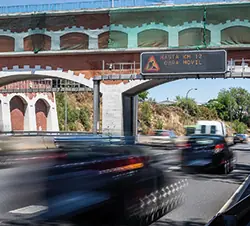
Los paneles de mensaje variable, ¿pueden utilizarse para dar instrucciones de obligado cumplimiento?
Can variable message signs be used to give instructions that must be obeyed?
- ANo, son meramente informativos.No, they are purely informative.
- BSí.Yes.
- CNo, solo pueden usarse para advertir de posibles peligros.No, they can only be used to warn of possible dangers.
ExplanationVariable message signs are fully official signs: as well as informing and warning of dangers, they can impose obligations or prohibitions that must be obeyed.
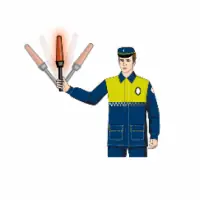
Un agente que balancea una luz roja o amarilla indica que...
An officer swinging a red or yellow light indicates that...
- Alos usuarios de la vía hacia los que el agente dirija la luz deben detenerse.road users towards whom the officer directs the light must stop.
- Bla calzada está totalmente cerrada al tráfico.the carriageway is completely closed to traffic.
- Clos conductores deben disminuir su velocidad y extremar la precaución.drivers must slow down and take extreme care.
ExplanationWhen an officer swings a red or yellow light, they are ordering the road users towards whom they direct the light to stop. It does not mean that the carriageway is closed, and it is not just a warning to be careful.
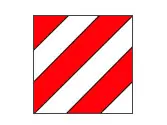
La señal V-20 que indica que la carga sobresale posteriormente, ¿es de uso obligatorio solo para los camiones?
Is the V-20 sign, which indicates that the load sticks out at the rear, compulsory only for lorries?
- ASolo es obligatoria para camiones y vehículos mixtos.It is only compulsory for lorries and dual-purpose vehicles.
- BSí, solo es obligatoria para los camiones.Yes, it is only compulsory for lorries.
- CEs obligatoria para camiones, vehículos mixtos e incluso turismos.It is compulsory for lorries, dual-purpose vehicles and even cars.
ExplanationSign V-20 indicates that the load sticks out at the rear of the vehicle, and its use is also compulsory on cars.
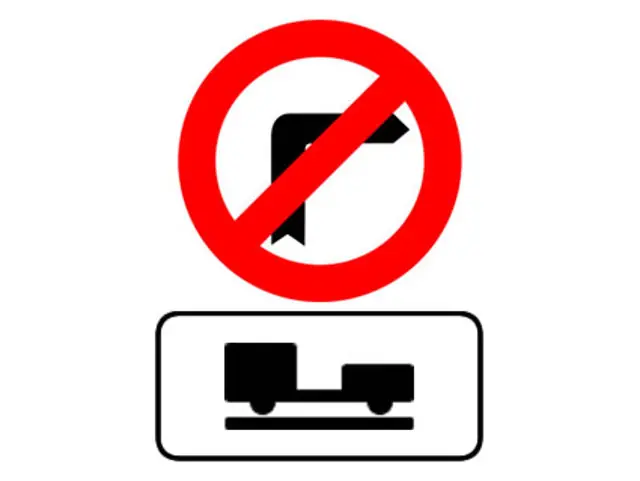
Esta señal indica que está prohibido...
This sign prohibits...
- Agirar a la derecha a todos los vehículos.all vehicles from turning right.
- Bla circulación de vehículos con remolque.vehicles with a trailer from being driven.
- Cgirar a la derecha a los vehículos con remolque, salvo los de un solo eje.vehicles with a trailer, except single-axle ones, from turning right.
ExplanationSign R-302 prohibits turning right, and panel S-880b underneath limits the prohibition to vehicles with a trailer, except single-axle ones. Other vehicles may turn, and the sign does not prohibit anyone from driving.
Si un agente realiza toques cortos y frecuentes con su silbato, ¿qué significa?
If a traffic officer gives short, frequent blasts on the whistle, what does it mean?
- ALa reanudación de la marcha.Vehicles must move off again.
- BLa detención de los vehículos.Vehicles must stop.
- CPasar con precaución.Go through with care.
ExplanationShort, frequent whistle blasts mean stop. Long, sustained blasts mean move off again.
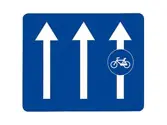
A la vista de la señal, ¿por dónde circularemos conduciendo un turismo?
Given the sign, where will we drive in a car?
- APor cualquiera de los carriles.In any of the lanes.
- BPor el carril de la derecha o el contiguo.In the right lane or the one next to it.
- CPor el carril del centro o el de la izquierda. El de la derecha es un carril que sólo puede ser utilizado por ciclos.In the centre lane or the left lane. The right lane can only be used by cycles.
ExplanationThe right-hand lane shows the sign for a cycle lane or cycle path alongside the carriageway, so that lane is compulsory for cyclists and prohibited for other road users.
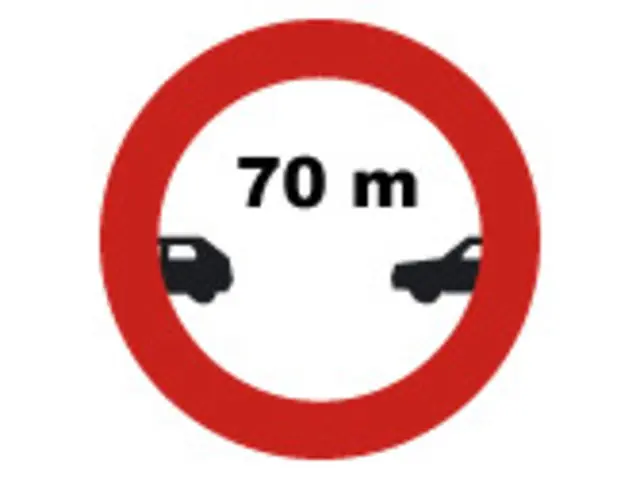
Al ver la señal, ¿qué distancia debes dejar con el vehículo que va delante?
On seeing the sign, what distance should you leave from the vehicle in front?
- AUna distancia mínima de 70 metros.A minimum distance of 70 metres.
- BLa distancia mínima de seguridad obligatoria.The compulsory minimum safe distance.
- CUna distancia máxima de 70 metros.A maximum distance of 70 metres.
ExplanationSign R-300 'Minimum distance' prohibits driving without keeping a gap from the vehicle in front equal to or greater than the one shown, here 70 metres, except when you are about to overtake. It is a minimum distance, not a maximum.
Cuando el semáforo se pone en verde, ¿qué acción es más apropiada para indicar a un conductor distraído que avance?
When the traffic light turns green, what is the most appropriate way to tell a distracted driver to move off?
- ATocar el claxon para alertar al conductor.Sound the horn to alert the driver.
- BPermanecer en silencio y esperar a que el conductor lo note.Stay quiet and wait for the driver to notice.
- CActivar las luces intermitentes del vehículo para llamar la atención del conductor.Switch on your indicators to catch the driver's attention.
ExplanationUnder Article 110 of the RGC, sound warnings are only allowed in exceptional cases: to avoid a possible accident, to warn another driver outside built-up areas that you intend to overtake, or in the cases in Article 70. Light signals may only replace them for those purposes. Hurrying another driver along is not one of them.
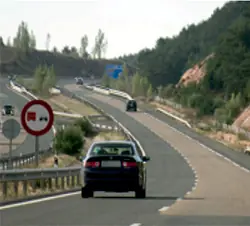
La señal a la izquierda de la fotografía indica que tienen prohibido adelantar…
The sign on the left of the photo shows that overtaking is prohibited for...
- Alos turismos.cars.
- Blos turismos y los camiones de menos de 3.500 kg.cars and lorries of less than 3,500 kg.
- Clos camiones de más de 3.500 kg.lorries of more than 3,500 kg.
ExplanationThe sign shows the outline of a lorry in red: it prohibits overtaking for lorries with a MAM of more than 3,500 kg. Cars and light vehicles may still overtake.
Si en una intersección encontramos un semáforo rojo en el lado izquierdo y otro verde en el derecho, si queremos girar a la izquierda, ¿a qué semáforo obedeceremos?
If, at a junction, you find a red traffic light on the left and a green one on the right, which one do you obey if you want to turn left?
- AAl de la izquierda.The one on the left.
- BAl de la derecha.The one on the right.
- CAl que esté más próximo a nuestro vehículo.The one closest to your vehicle.
ExplanationWhen traffic lights or signs on each side of the carriageway give different instructions, anyone who wants to turn left or go straight on must obey the ones on their left. So to turn left you must stop at the red light.
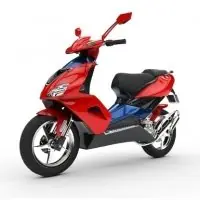
¿Por qué tipo de vías no pueden circular los ciclomotores?
On which types of road are mopeds not allowed?
- APor las autopistas únicamente.Only on motorways (autopistas).
- BPor las vías que no tengan arcén.On roads without a hard shoulder.
- CPor las autopistas y autovías.On motorways (autopistas) and dual carriageways (autovías).
ExplanationUnder Article 38.1 of the General Traffic Regulations, animal-drawn vehicles, bicycles, mopeds and vehicles for people with reduced mobility are not allowed on motorways (autopistas) or dual carriageways (autovías). The only exception is for cyclists over 14, who may ride on the hard shoulder of dual carriageways.
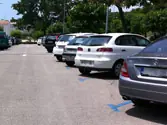
¿Qué pueden indicar las marcas de estacionamiento de un color distinto al blanco, como las de la imagen?
What can parking markings in a colour other than white, like those in the picture, indicate?
- AQue en esas plazas está prohibido estacionar.That parking in those spaces is prohibited.
- BQue significan lo mismo que las blancas, sin ninguna limitación.That they mean the same as white ones, without any limitation.
- CAlguna limitación del estacionamiento: temporal, por tipo de usuario o para un fin concreto.Some limitation on parking: by time, by type of user or for a specific purpose.
ExplanationAccording to the catalogue of road markings, parking markings may be in colours other than white to show limitations by time, by type of user or for a specific purpose, such as spaces for people with reduced mobility or for customers of a pharmacy.
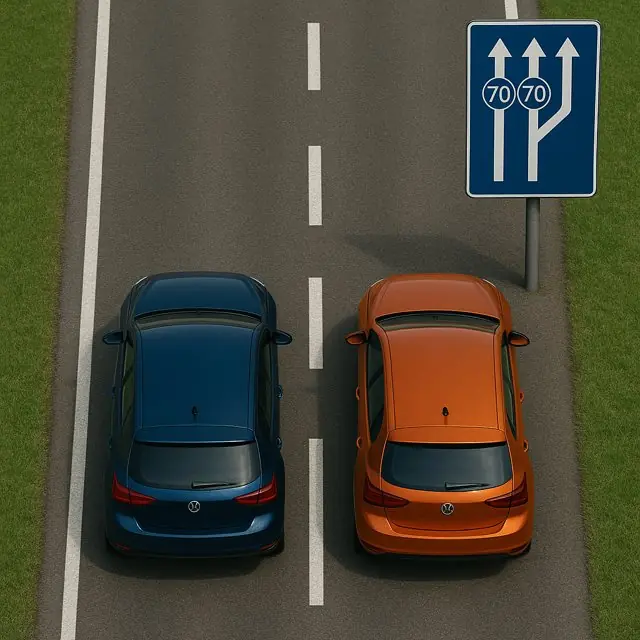
Viendo la señal y sabiendo que circulamos a 90 km/h, ¿podemos usar el carril derecho?
Looking at the sign, and knowing that we are driving at 90 km/h, may we use the right lane?
- ANo, porque está reservado para vehículos lentos.No, because it is reserved for slow vehicles.
- BSí, normalmente usaremos el carril derecho.Yes, we will normally use the right lane.
- CUsaremos cualquier carril indistintamente.We will use any lane, it makes no difference.
ExplanationThis is an S-50 type sign, Lanes reserved according to signed speed: the lanes showing the figure 70 may only be used by vehicles travelling at that speed or faster, but the right lane has no such restriction and, if circumstances allow, you must drive in it (Article 31.1 of the RGC).
Las cargas que sobresalen por detrás del vehículo, ¿se señalizarán con este panel?
Should loads that stick out beyond the rear of the vehicle be marked with this panel?
- ASí, y además con una luz de color rojo tanto de día como de noche.Yes, and also with a red light both by day and at night.
- BSí, y además con un trapo de color rojo vivo.Yes, and also with a bright red cloth.
- CSí, y además si es de noche con una luz de color rojo.Yes, and also with a red light if it is night-time.
ExplanationLoads that stick out beyond the rear of the vehicle, whether on a lorry or a car, must be marked with the panel in the picture. If you are driving in bad weather that reduces visibility, or between sunset and sunrise, you must also carry a red light. In addition, when the load sticks out along the whole width of the rear of the vehicle, two panels are fitted and their stripes form an inverted ‘V’.
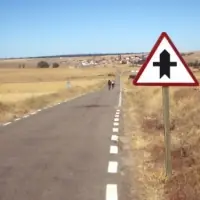
Esta señal indica que se aproxima a un cruce...
This sign indicates that you are approaching a junction...
- ASin preferencia de paso.without right of way.
- BCon una vía estrecha.with a narrow road.
- CCon preferencia de paso.with right of way.
ExplanationThis is sign P-1, ‘Junction with priority’: it warns that you are approaching a junction with a road whose users must give way. Drivers on the road with the sign have right of way, although they must take extra care.
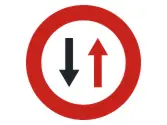
¿Qué haremos ante esta señal?
What will we do at this sign?
- ADetenernos en todo caso.Stop in all cases.
- BCeder el paso a la circulación transversal.Give way to crossing traffic.
- CTendremos prohibido el paso por el paso estrecho, si obligo a los vehículos que circulen en sentido contrario a detenerse.We will be prohibited from entering the narrow passage if we would force vehicles coming the other way to stop.
ExplanationThis is sign R-5 «Priority for oncoming traffic»: it prohibits entering the narrow passage until it is possible to get through it without forcing vehicles coming the other way to stop. Its counterpart is R-6, which gives priority to whoever sees it.
Si la separación entre los trazos de una línea longitudinal discontinua es notablemente más corta de lo habitual, esto indica...
If the gaps between the dashes of a broken longitudinal line are much shorter than usual, this indicates…
- Ala proximidad de un cruce.that a junction is coming up.
- Bla proximidad de un tramo de vía que presenta un riesgo especial.that a stretch of road with a particular risk is coming up.
- Cla proximidad de un tramo con una pendiente superior al cinco por ciento.that a stretch with a gradient of more than five per cent is coming up.
ExplanationWhen the gaps in a broken line are shorter than usual, it is the advance-warning marking (M-1.9 and M-1.10 in the road-marking catalogue, RD 465/2025): it announces that a solid marking or a stretch of road with a particular risk is coming up.
La percepción del conductor respecto al estado de la carretera, su señalización y el flujo del tráfico...
The driver's perception of the state of the road, its signs and the flow of traffic...
- Asiempre debe tener prioridad sobre las instrucciones del navegador (GPS).must always take priority over the instructions of the navigator (GPS).
- Bno prevalecen sobre las indicaciones del navegador GPS, ya que sus indicaciones son más precisas.does not prevail over the GPS navigator's instructions, because they are more accurate.
- Cno siempre tienen prioridad sobre las instrucciones del navegador.does not always take priority over the navigator's instructions.
ExplanationAlthough the navigator usually suggests the most suitable route at any given moment, the driver's judgement must prevail at all times.
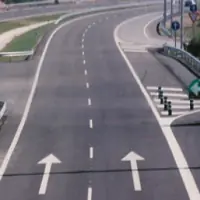
¿Cuál de éstas NO es una marca vial?
Which of these is NOT a road marking?
- APalabrasWords.
- BConosCones.
- CLíneasLines.
ExplanationCones are not road markings. Words (for example, STOP painted on the carriageway) and lines (for example, a transverse stop line at a junction) are.
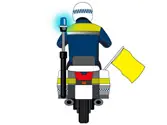
¿Qué le indica un agente con una bandera amarilla?
What does a traffic officer with a yellow flag tell you?
- AQue la calzada queda temporalmente cerrada al tráfico.That the carriageway is temporarily closed to traffic.
- BQue se tiene que extremar la atención o la proximidad de un peligro.That you must pay extreme attention, or that a danger is near.
- CQue nos detengamos.That we must stop.
ExplanationA traffic officer with a yellow flag tells drivers and road users that they must pay extreme attention, or that a danger is near. If the flag were red, it would show that the carriageway is completely closed to traffic.
Si circula por un carril delimitado por líneas longitudinales continuas, ¿está permitido cambiar de carril?
If you are driving in a lane marked by continuous longitudinal lines, are you allowed to change lanes?
- ASolo los camiones pueden hacerloOnly lorries may do so
- BNoNo
- CSíYes
ExplanationNo, as a general rule it is not allowed. Continuous longitudinal markings have a clear meaning: no driver may cross them or drive on them, nor drive to the left of them when they separate the two directions of traffic. This means that moving sideways (changing lanes) is prohibited if it requires crossing that line. The answer about lorries is wrong, because the prohibition applies to all vehicles regardless of their mass or size.
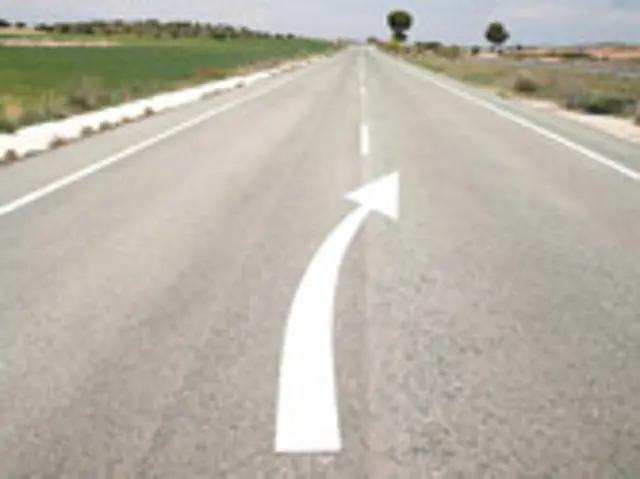
¿Qué indica la flecha si va por el carril izquierdo?
If you are in the left-hand lane, what does the arrow indicate?
- AQue puede circular en paralelo.That you may drive side by side.
- BQue está cerca de la próxima salida.That you are close to the next exit.
- CQue tiene que incorporarse al carril derecho lo antes posible.That you must move back into the right-hand lane as soon as possible.
ExplanationThe curved arrow painted in the lane for the opposite direction is a return arrow (M-5.5): it announces a continuous line ahead, so you must give up overtaking or finish overtaking as soon as possible and return to the right-hand lane.
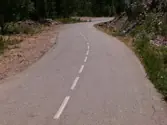
¿Está permitido circular sobre una marca longitudinal discontinua cuando los carriles de la calzada son muy estrechos?
Is it allowed to drive on a broken longitudinal line when the lanes of the carriageway are very narrow?
- ANo, nunca.No, never.
- BSí, siempre.Yes, always.
- CSí, siempre que sea necesario y la seguridad de la circulación lo permita.Yes, as long as it is necessary and traffic safety allows it.
ExplanationAccording to the catalogue of road markings, no driver should drive on a broken longitudinal line, except when, because of the width of the lanes, it is necessary and traffic safety allows it.
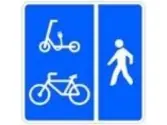
En la imagen se muestra una señal, ¿qué indica?
The picture shows a sign. What does it indicate?
- ALa existencia de una vía para ciclos, vehículos de movilidad personal y peatones, con un espacio para ciclos y VMP diferenciado del de los peatones.A route for cycles, personal mobility vehicles and pedestrians, with a space for cycles and PMVs separate from the space for pedestrians.
- BUna vía donde ciclos, VMP y peatones deben compartir el mismo carril sin separación.A route where cycles, PMVs and pedestrians must share the same lane with no separation.
- CUna vía exclusiva para peatones, prohibiendo el paso de ciclos y VMP.A route for pedestrians only, where cycles and PMVs are prohibited.
ExplanationThis is sign S-43: a route reserved for cycles, personal mobility vehicles and pedestrians, with separate spaces for the first two and for the third. Cycles and PMVs share one space and pedestrians use another.
¿Cuál es el orden de prioridad entre los distintos tipos de señales de circulación?
What is the order of precedence between the different types of traffic signs?
- AAgentes de la circulación, semáforos, señales circunstanciales, señales verticales, marcas viales.Traffic officers, traffic lights, temporary signs, upright signs, road markings.
- BAgentes de la circulación, señales circunstanciales, semáforos, marcas viales, señales verticales.Traffic officers, temporary signs, traffic lights, road markings, upright signs.
- CAgentes de la circulación, señalización circunstancial, semáforos, señales verticales, marcas viales.Traffic officers, temporary signs, traffic lights, upright signs, road markings.
ExplanationIf the instructions given by different signs appear to contradict each other, the one with precedence prevails, in this order: traffic officers, temporary signs, traffic lights, upright signs, road markings.
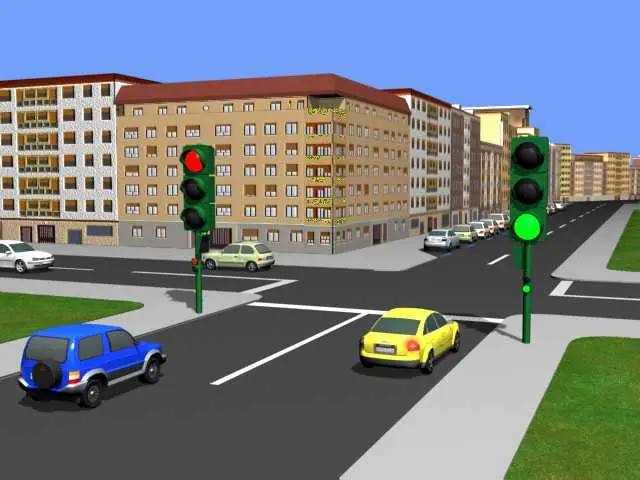
El vehículo azul quiere seguir de frente. ¿A cuál de los 2 semáforos tiene que obedecer?
The blue vehicle wants to go straight on. Which of the 2 traffic lights must it obey?
- AAl semáforo de la izquierda.The traffic light on the left.
- BComo los semáforos se contradicen, hay que hacer caso al que pone más límites.As the traffic lights contradict each other, you must obey the more restrictive one.
- CAl semáforo de la derecha.The traffic light on the right.
ExplanationWhen there is a traffic light on each side showing different signals, the one on the right controls turning right and the one on the left controls going straight on or turning left. The blue vehicle wants to go straight on, so it obeys the one on the left, which is red, and must stop. This is not a contradiction between signs.
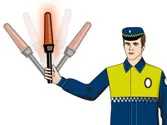
Un agente que balancea una luz roja o amarilla, ¿qué significado tiene?
What does it mean when a traffic officer swings a red or yellow light?
- ANos obliga a disminuir la velocidad.You must slow down.
- BNos obliga a pasar con precaución.You must go through with care.
- CObliga a detenerse a los usuarios de la vía a los que el agente dirige la luz.The road users towards whom the officer directs the light must stop.
ExplanationSwinging a red or yellow light requires all users towards whom the officer directs the light to stop.
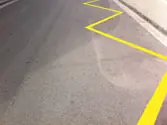
Si inmoviliza el vehículo junto al borde de esta calzada, ¿incumple alguna norma de circulación?
If you bring your vehicle to a halt next to the edge of this carriageway, are you breaking any traffic rule?
- ANo, si es para efectuar una parada.No, if it is only to stop.
- BNo, ya que esta marca vial no prohíbe parar ni estacionar.No, because this road marking prohibits neither stopping nor parking.
- CSí, porque es una zona de carga y descarga y está prohibido cualquier tipo de inmovilización.Yes, because it is a loading and unloading area and any kind of halt is prohibited.
ExplanationThe yellow marking in the question shows the part of the carriageway where parking is prohibited for vehicles in general, because it is reserved for a special use that does not involve any vehicle staying there for long. It is usually used at bus stopping areas (not parking) or at loading and unloading areas. Stopping is allowed (for less than 2 minutes and without the driver leaving the vehicle), unless the marking outlines a bus stop, in which case both stopping and parking are prohibited.
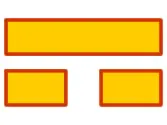
¿Qué nos indica esta placa colocada en un vehículo?
What does this plate fitted on a vehicle tell us?
- AQue el vehículo tiene una longitud superior a 12 metros.That the vehicle is more than 12 metres long.
- BQue el vehículo mide más de 4 metros de ancho.That the vehicle is more than 4 metres wide.
- CQue el vehículo mide más de 5 metros de alto.That the vehicle is more than 5 metres high.
ExplanationThis plate shows that the vehicle or combination of vehicles carrying it at the back is more than 12 metres long.
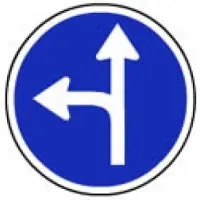
¿Qué significado tienen las señales circulares de color azul?
What do round blue signs mean?
- APrecauciónCaution.
- BObligaciónObligation.
- CProhibiciónProhibition.
ExplanationRound blue traffic signs indicate an obligation, while square signs with a blue background give information.
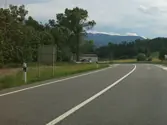
En una calzada con los dos sentidos separados por una línea continua, ¿está permitido girar a la izquierda?
On a carriageway where the two directions are separated by a solid line, is it permitted to turn left?
- ASí, cuando no se comprometa la seguridad de ningún usuario de la vía.Yes, when it does not endanger any road user.
- BNo.No.
- CSolo dentro de poblado.Only in built-up areas.
ExplanationA solid line on the carriageway means that no driver may cross it, drive on it or, when the line separates the two directions of traffic, drive to the left of it.
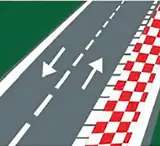
Marcas blancas y rojas de la calzada, ¿qué indican?
Red and white markings on the carriageway: what do they indicate?
- AUna zona reservada para la salida de competiciones de coches.An area reserved for the start of car races.
- BUna zona reservada para el estacionamiento de camiones.An area reserved for lorry parking.
- CUna zona reservada para frenado de emergencia, donde no puedo parar ni estacionar.An area reserved for emergency braking, where I may not stop or park.
ExplanationRed and white chequered markings mark out an emergency braking area, intended to stop vehicles whose brakes have failed, such as lorries on long downhill slopes. It must always be kept clear, so stopping and parking there are prohibited.
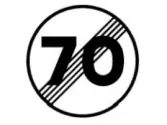
Esta señal significa...
This sign means...
- Afin de velocidad máxima.end of maximum speed.
- Bfin de velocidad mínima.end of minimum speed.
- Cfin de velocidad aconsejada.end of advisory speed.
ExplanationThis sign indicates the end of the speed limit, that is, the end of the maximum speed.
En una carretera interurbana de doble sentido con tres carriles separados por líneas discontinuas, ¿dónde debe situarse el conductor de un coche para girar a la izquierda?
On a two-way road outside built-up areas with three lanes separated by broken lines, where must a car driver position themselves to turn left?
- AEn el carril central.In the centre lane.
- BEn el carril izquierdo.In the left lane.
- CEn el carril derecho, por norma general.In the right lane, as a general rule.
ExplanationUnder Article 75.1.b of the General Traffic Regulations, to turn left on a two-way carriageway with three lanes separated by broken lines you must move into the centre lane. The left lane is for traffic in the opposite direction, and the right lane does not allow you to turn safely.

A la vista de esta señal, ¿puede pasar conduciendo un ciclomotor?
Given this sign, may you ride a moped past it?
- ASí, porque no es un vehículo a motor.Yes, because it is not a motor vehicle.
- BNo.No.
- CSí, porque la señal sólo prohíbe el paso a automóviles, y no a ciclomotores.Yes, because the sign only prohibits motor cars, not mopeds.
ExplanationThe round white sign with a red border and no symbol means no traffic in either direction for all vehicles, including mopeds and bicycles. It does not matter that a moped is not considered a motor vehicle: the prohibition is general.
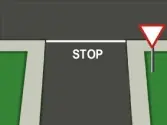
En caso de contradicción entre señales de diferente tipo, ¿qué señal deberá obedecer?
If signs of different types contradict each other, which sign must you obey?
- AA la señal más restrictiva.The most restrictive sign.
- BA la señal prioritaria según el orden entre señales.The sign with priority according to the order between signs.
- CEn caso de contradicción entre señales se aplica la norma general, ceder el paso a la derecha.When signs contradict each other, the general rule applies: give way to the right.
ExplanationWhen the signs are of the same type, the most restrictive one prevails. When the signs are of different types, the one with the highest priority prevails, following this order of priority: 1. Signals and orders from traffic officers. 2. Temporary signs that change the normal use of the road, and fixed markers (beacons). 3. Traffic lights. 4. Road signs. 5. Road markings.
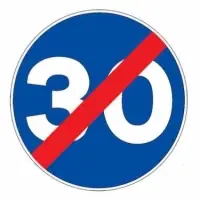
Esta señal indica fin de velocidad…
This sign marks the end of the...
- AMínima.minimum speed.
- BMáxima.maximum speed.
- CRecomendada.recommended speed.
ExplanationThe end sign R-506 shown in the picture marks the place where an earlier ‘Minimum speed’ sign ends and stops applying.
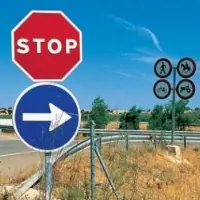
¿Cual de éstas funciones cumplen las señales de tráfico?
Which of these functions do traffic signs perform?
- AOrdenar la circulaciónOrganising traffic.
- BHacer que los usuarios olviden las prescripciones más básicasMaking road users forget the most basic rules.
- CDisminuir la seguridad en la víaReducing road safety.
ExplanationThe main functions of traffic signs are: to regulate and organise traffic, to increase road safety, and to remind road users of the basic rules they must follow to make themselves and other road users safer.
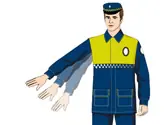
Un agente con el brazo extendido y moviéndolo alternativamente de arriba a abajo, obliga a...
A traffic officer holding out an arm and moving it up and down requires...
- ADisminuir la velocidad.drivers to slow down.
- BDetenerse a todos los usuarios que se acerquen al agente.all users approaching the officer to stop.
- CDetenerse fuera de la calzada en el arcén de la derecha.drivers to stop off the carriageway, on the right-hand hard shoulder.
ExplanationAn arm held out and moved up and down requires drivers approaching the officer on the side of the arm giving the signal to slow down.
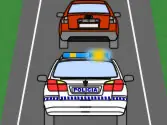
Desde un vehículo policial un agente hace señales al vehículo que circula delante para que se detenga, ¿qué debe hacer su conductor?
From a police vehicle, an officer signals to the vehicle in front to stop. What must its driver do?
- AInmovilizar su vehículo inmediatamente.Bring the vehicle to a halt immediately.
- BSeñalizar la inmovilización con las luces de emergencia y detener el vehículo inmediatamente.Signal the stop with the hazard warning lights and stop the vehicle immediately.
- CDetenerse y permanecer en el interior del vehículo.Stop and stay inside the vehicle.
ExplanationWhen an officer driving behind us signals from the police vehicle that we must stop, as a general rule we will do so on the right-hand side, in front of the police vehicle, in a place where we do not create further risk or inconvenience for other road users, and we will stay inside the vehicle and wait for the officer's instructions.
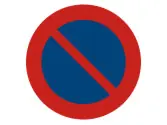
¿Podremos hacer una parada a partir de esta señal?
May we stop after this sign?
- ANo, por prohibirlo la señal.No, because the sign prohibits it.
- BNo podremos a partir de la señal, si podremos antes de la señal.Not after the sign, but we may before the sign.
- CSí.Yes.
ExplanationThe sign prohibits parking on the side of the carriageway where it is placed, from the point level with the sign to the nearest junction, but it does not prohibit stopping.
Un vehículo especial de reparación de las vías accede a una autopista para realizar obras. ¿Cuándo debe encender la señal luminosa V-2?
A special road-repair vehicle enters a motorway (autopista) to carry out works. When must it switch on the V-2 light?
- ASólo cuando circule entre la puesta y la salida del sol.Only when driving between sunset and sunrise.
- BDesde el momento en que circule por vías de uso público.From the moment it drives on public roads.
- CNo debe encenderla hasta llegar a la zona de obras.It must not switch it on until it reaches the works area.
ExplanationA special vehicle for road works or repairs must have the V-2 light on from the moment it drives on public roads, because its purpose is to warn other road users of its presence and of its special and potentially dangerous nature. This signal must stay on throughout its journey, not only when it reaches the work area.
All topics
- Definitions
- Documents and penalty points
- The driver's condition
- Duties of drivers and pedestrians
- Vehicle safety devices
- Vehicle controls and equipment
- Vehicle lights and horn
- The road and its lanes
- Speed and distances
- Manoeuvres
- Right of way
- Carrying passengers and loads
- Driving safely in difficult conditions
- Vehicle mechanics and maintenance
- Road accidents and first aid
- Defensive and eco-driving
Independent app: not affiliated with or endorsed by the DGT (Spain's Directorate-General for Traffic) or the Ministry of the Interior. The official exam is booked with the DGT and taken at its test centres. The questions here are practice material; the DGT's official question bank is not public.
Basado en datos de la Agencia Estatal Boletín Oficial del Estado (https://www.boe.es). Textos consolidados de carácter meramente informativo. La AEBOE no patrocina ni respalda este sitio.
Parte de las preguntas procede de los tests de la revista «Tráfico y Seguridad Vial» de la DGT, reproducidos con indicación de la fuente.