
DGT test · 1,397 questions
Traffic signs, markings and signals · Page 3 of 28
Road signs, road markings, traffic lights, police signals and temporary markings: what they mean and which one wins when they disagree. The topic with the most questions in the bank.
Questions in this topic, with answers
1,397 questions, 50 per page, with the correct answer and the explanation. Page 3 of 28.
Un agente agita una luz roja o amarilla. ¿Qué obliga a los conductores?
A traffic officer is waving a red or yellow light. What does this require drivers to do?
- APasar por el lado del brazo con que hace la señal.Pass on the side of the arm the officer is signalling with.
- BDetenerse si la luz se dirige hacia su vehículo.Stop if the light is pointed towards their vehicle.
- CReducir la velocidad.Slow down.
ExplanationUnder section 1.1 of Annex I of the General Traffic Regulations, when a traffic officer swings a red or yellow light, the road users towards whom the officer points the light must stop. Slowing down is not enough, and the signal does not show which side to pass on.
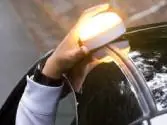
¿Dónde se colocará la señal luminosa de preseñalización de peligro?
Where should the light-emitting hazard warning device be placed?
- AA 100 metros del vehículo inmovilizado.100 metres from the broken-down vehicle.
- BA 150 metros del vehículo inmovilizado.150 metres from the broken-down vehicle.
- CEn la parte más alta del vehículo inmovilizado garantizando su máxima visibilidad.On the highest part of the broken-down vehicle, making it as visible as possible.
ExplanationThe V-16 hazard warning device is an approved, geolocated light device in amber, powered by its own battery. It must be placed on the highest part of the broken-down vehicle, making it as visible as possible. The V-16 is now the only legal option for signalling a broken-down vehicle or an obstacle on the road; warning triangles are no longer used.
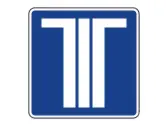
¿Podrá pasar por el carril así señalizado un vehículo no dotado de equipo de telepeaje?
May a vehicle without electronic toll equipment use the lane marked like this?
- ANo, por ser una vía exclusiva para vehículos dotados de telepeaje operativo.No, because it is a lane only for vehicles with working electronic toll equipment.
- BSí, pero solo en las horas de menor intensidad de tráfico.Yes, but only at the quietest traffic times.
- CSí, puesto que se podrán utilizar otros medios de pago.Yes, because other payment methods may be used.
ExplanationThe sign shows that payment can be made with the dynamic electronic toll system, and other payment methods may also be used.
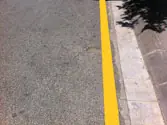
Una marca amarilla longitudinal continua junto al borde de la calzada, ¿qué significa?
What does a continuous yellow longitudinal marking next to the edge of the carriageway mean?
- AQue el estacionamiento está prohibido.That parking is prohibited.
- BQue la parada y el estacionamiento están prohibidos.That stopping and parking are prohibited.
- CQue se podrá parar menos de dos minutos.That you may stop for less than two minutes.
ExplanationA continuous yellow line next to the kerb or the edge of the carriageway prohibits both stopping and parking on that side. If the yellow line were broken, only parking would be prohibited, and stopping would still be allowed.
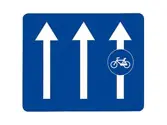
A la vista de esta señal, ¿podemos circular con nuestro turismo por el carril derecho?
Given this sign, may we drive our car in the right lane?
- ASí.Yes.
- BSí, pero dando preferencia a las motocicletas.Yes, but giving priority to motorcycles.
- CNo, está reservado para los ciclos.No, it is reserved for cycles.
ExplanationThis is a lane sign (S-64a) with the symbol for a road reserved for cycles, and compulsory for them, over the right lane: cyclists must use that lane, and all other road users, including cars, are prohibited from using it.
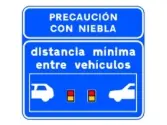
Esta señal indica que en un tramo con niebla frecuente:
This sign indicates that on a stretch with frequent fog:
- AEs recomendable reducir la velocidad sin obligación de mantener distancia específica.It is advisable to reduce speed, with no obligation to keep a specific distance.
- BSe debe mantener entre vehículos el número de balizas luminosas que la señal indique.You must keep between vehicles the number of light beacons shown on the sign.
- CLa señal indica la proximidad de un área de descanso.The sign indicates that a rest area is close.
ExplanationThe sign is used on stretches where loss of visibility due to fog is common. It requires drivers to keep the minimum distance shown from the vehicle in front, using as a reference the light beacons installed at the edge of the road. These beacons, visible even in poor visibility, allow the driver to judge the safe distance accurately, reducing the risk of multiple collisions.
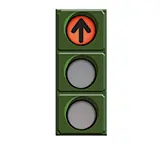
Un semáforo con una flecha negra sobre una luz roja fija...
A traffic light with a black arrow on a steady red light...
- AProhíbe circular por donde indica la flecha.prohibits going in the direction shown by the arrow.
- BPermite seguir circulando extremando la precaución.allows you to keep going, taking extra care.
- CObliga a continuar por donde indica la flecha.requires you to continue in the direction shown by the arrow.
ExplanationA black arrow on a red light limits the prohibition to the movement it shows: you may not go in the direction of the arrow while the light is on, although other movements may be allowed.
En el centro de la calzada ves dos líneas longitudinales paralelas: una continua en tu lado y una discontinua en el lado contrario. ¿Qué significa para ti?
In the centre of the carriageway you see two parallel longitudinal lines: a continuous one on your side and a broken one on the opposite side. What does this mean for you?
- APuedo rebasarla para adelantar, porque hay una discontinuaI may cross it to overtake, because there is a broken line
- BNo puedo rebasarla ni pisarla, porque la línea de mi lado es continuaI may not cross it or drive on it, because the line on my side is continuous
- CPuedo pisarla solo para estacionarI may drive on it only to park
ExplanationWhen there is a continuous line and a broken line together, each driver obeys the one on their own side; the continuous line may not be crossed or driven on.
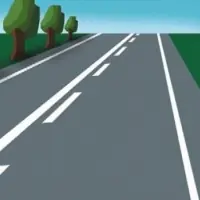
Hay una marca longitudinal continua al lado de otra discontinua ¿Cuál se debe tener en cuenta?
There is a continuous longitudinal marking next to a broken one. Which one should you follow?
- ALa marca situada en el lado contrario al lado por dónde se circula.The marking on the opposite side to the side you are driving on.
- BNinguna.Neither.
- CLa marca situada en el lado por dónde se circula.The marking on the side you are driving on.
ExplanationWhen a continuous line runs next to a broken line, each driver must follow the one on their side. If the broken line is on your side, you may cross them to overtake; if the continuous line is on your side, you may not cross them.
Una señal triangular de peligro con la silueta de peatones advierte de:
A triangular danger sign with the outline of pedestrians warns of:
- AZona de aparcamiento.A parking area.
- BPeligro por la proximidad de un lugar o tramo con elevado tránsito de peatones.Danger because a place or stretch of road with heavy pedestrian traffic is near.
- CProhibición de circular.No driving.
ExplanationIt is danger sign P-20b “Pedestrians”: it warns that a place or stretch of road with heavy pedestrian traffic is near, so you must reduce speed and pay extra attention. P-20a, on the other hand, warns of a pedestrian crossing.
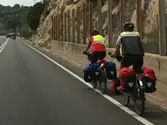
Para adelantar a los ciclistas, ¿podremos rebasar la línea continua?
To overtake cyclists, may you cross the continuous line?
- ANo, porque podemos dejar 1,50 metros de separación lateral, sin tener que rebasarla.No, because you can leave 1.50 metres of lateral clearance without having to cross it.
- BSí.Yes.
- CNo, tendremos que esperar a encontrar discontinua.No, you will have to wait until you find a broken line.
ExplanationUnder Article 88.2 of the General Traffic Regulations (RGC) (as worded by RD 518/2026), even where overtaking is prohibited you may overtake cyclists by using the part of the carriageway reserved for the opposite direction, even crossing the continuous line, when their speed allows you to do so without risk. Article 85.4 requires you to occupy part or all of the adjacent or opposite lane, leaving at least 1.5 metres, both inside and outside built-up areas; if there is more than one lane in each direction, you must change lanes completely.
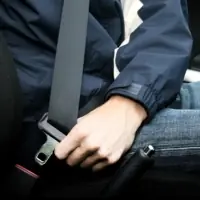
¿Existe la señal vertical de uso obligatorio del cinturón de seguridad?
Is there a road sign for compulsory use of the seat belt?
- ASí, la señal R-417, que recuerda la obligación de utilizar el cinturón.Yes, sign R-417, which reminds you that you must wear a seat belt.
- BSí, pero únicamente en autovías y autopistas.Yes, but only on motorways (autopistas) and dual carriageways (autovías).
- CNo, ya que esa norma se considera implícita al entrar en el vehículo.No, because this rule is taken for granted when you get into the vehicle.
ExplanationThe sign catalogue (RD 465/2025) includes the mandatory sign R-417 “Compulsory use of the seat belt”, which reminds you that you must wear it. It is not limited to one type of road: the seat belt is compulsory on all roads.
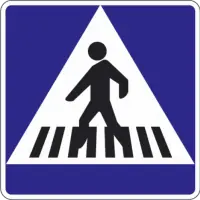
¿Cuál es la principal finalidad de las señales de indicación?
What is the main purpose of information signs?
- AInformar a los usuarios de informaciones de utilidadTo give road users useful information.
- BProhibir el acceso a vehículos allá donde se encuentrenTo prohibit vehicles from entering wherever they are placed.
- CIndicar cuando finaliza una restricción o prohibiciónTo show where a restriction or prohibition ends.
ExplanationUnder Article 146.1 of the General Traffic Regulations (RGC), information signs are meant to give road users certain information that may be useful to them, such as advance warning of an exit or the location of a service. Prohibiting access to a road is the job of regulatory signs.
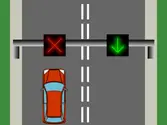
¿Qué indica el semáforo rojo en forma de aspa sobre el carril izquierdo?
What does the red X-shaped light above the left-hand lane show?
- AQue se puede circular por ese carril extremando la precaución.That you may use that lane taking extreme care.
- BQue el carril izquierdo está reservado para adelantar.That the left-hand lane is reserved for overtaking.
- CLa prohibición de ocupar ese carril; quien circule por él debe abandonarlo lo antes posible.That using that lane is prohibited; anyone driving in it must leave it as soon as possible.
ExplanationA red X-shaped light above a lane prohibits using it, and anyone already driving in it must leave it as quickly as possible. These lane traffic lights only apply to vehicles travelling in the lane they are placed above.
Hay un semáforo rojo a la izquierda y otro verde a la derecha. ¿Qué semáforo debes respetar si quieres seguir recto?
There is a red traffic light on the left and a green one on the right. Which traffic light must you obey if you want to go straight on?
- AEl semáforo verde, porque te permite pasar.The green light, because it lets you through.
- BEl semáforo verde, porque está a la derecha.The green light, because it is on the right.
- CEl semáforo rojo, porque está a la izquierda y quieres seguir recto.The red light, because it is on the left and you want to go straight on.
ExplanationUnder Article 132.3 of the General Traffic Regulations, if the traffic lights on the right and on the left show different signals, anyone who is going straight on or turning left must only obey the one on their left. Here it is red, so you may not move forward.
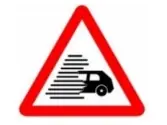
¿De qué peligro le advierte esta señal?
What danger does this sign warn you of?
- APeligro por nieve.Danger from snow.
- BPeligro por visibilidad reducida.Danger from reduced visibility.
- CPeligro por lluvia intensa.Danger from heavy rain.
ExplanationThis danger sign shows that you are approaching a stretch of road where traffic is made difficult by a significant loss of visibility due to fog, rain, snow, smoke, etc.
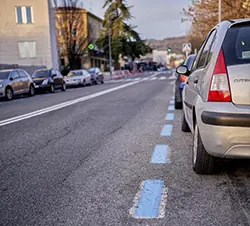
¿Qué indican estas marcas viales?
What do these road markings indicate?
- AProhibición de estacionar.No parking.
- BZona de estacionamiento exclusiva para residentes.A parking area for residents only.
- CZona de estacionamiento de duración limitada.A limited-duration parking area.
ExplanationBlue markings on the carriageway mark out the blue zone: parking for a limited time, usually with a ticket or time permit during the regulated hours.
¿Qué indica el conductor de un turismo con el brazo extendido en posición horizontal con la palma de la mano hacia abajo?
What does a car driver indicate with the arm stretched out horizontally with the palm of the hand facing down?
- AQue va a circular marcha atrás.That they are going to reverse.
- BQue va a cambiar de dirección a la derecha.That they are going to turn right.
- CQue va a cambiar de dirección a la izquierda.That they are going to turn left.
ExplanationAn arm held horizontally with the palm of the hand facing down shows a sideways move towards the side the hand points to. Reversing is shown with the arm stretched out horizontally and the palm of the hand facing backwards.
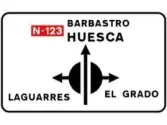
Esta señal indica que en la intersección:
This sign indicates that at the junction:
- ASe aproxima una glorieta donde el tráfico debe ceder el paso al interior.A roundabout is approaching where traffic must give way to vehicles already on it.
- BSolo hay una salida y se trata de un cruce simple sin continuidad de la calzada principal.There is only one exit and it is a simple crossroads where the main carriageway does not continue.
- CLa calzada principal continúa y la intersección tiene forma de glorieta partida con varias salidas.The main carriageway continues and the junction is shaped like a split roundabout with several exits.
ExplanationThe sign indicates a junction shaped like a split roundabout, where the main carriageway continues uninterrupted, that is, vehicles travelling on it keep going without giving way. The different exits are signed, and if any text appears on a blue background, it means that exit leads to a motorway or dual carriageway. This lets drivers plan in advance which exit they need to take.
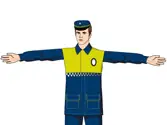
Un agente con los brazos extendidos horizontalmente...
A traffic officer with arms held out horizontally...
- AProhíbe el paso a todos los vehículos que se dirijan hacia el agente.Prohibits all vehicles heading towards the officer from passing.
- BProhíbe el paso a los vehículos que vayan de frente hacia el agente.Prohibits vehicles heading straight towards the officer from passing.
- CObliga a detenerse a los usuarios que se acerquen al agente en todas las direcciones que corten la indicada por los brazos extendidos.Requires users approaching the officer from all directions that cross the one shown by the outstretched arms to stop.
ExplanationAn officer with one or both arms held out horizontally requires all users approaching from directions that cross the one shown by the arms to stop, whichever way they are travelling. Those travelling in the direction of the arms may continue.
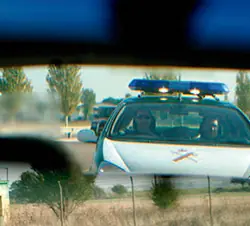
¿Qué debe hacer el conductor del vehículo ante las indicaciones que le realiza el agente del vehículo policial con la señal V-1 encendida?
What must the driver do when given instructions by the officer in the police vehicle with its V-1 signal switched on?
- AReducir la marcha.Slow down.
- BDetenerse en el lado derecho, delante del vehículo policial.Stop on the right-hand side, in front of the police vehicle.
- CDetenerse en el lado izquierdo, detrás del vehículo policial.Stop on the left-hand side, behind the police vehicle.
ExplanationWhen the V-1 signal is on and the officer gives the order, you must stop on the right-hand side, in front of the police vehicle, so that the officer can approach the driver safely.
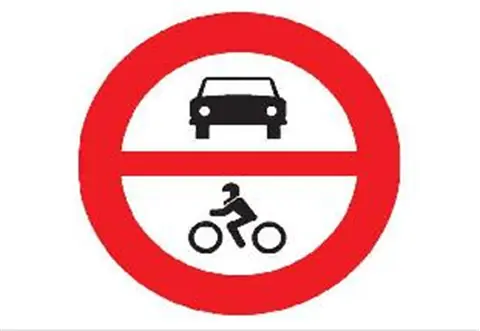
Esta señal, ¿qué prohíbe?
What does this sign prohibit?
- ALa entrada a toda clase de vehículos.Entry for all vehicles.
- BLa entrada a vehículos de motor.Entry for motor vehicles.
- CEl estacionamiento a turismos y motocicletas.Parking for cars and motorcycles.
ExplanationThis sign prohibits entry for motor vehicles, shown by a car and a motorcycle. It does not apply to mopeds or bicycles, which are not motor vehicles, and it is not a parking ban.
¿Qué debe hacer si un agente, que tenía los brazos en cruz, los ha bajado?
What should you do if a traffic officer who had their arms stretched out sideways has lowered them?
- AObedecer las señales o semáforos.Obey the signs or traffic lights.
- BContinuar detenido hasta que realice otra señal.Remain stopped until they give another signal.
- CContinuar circulando.Continue driving.
ExplanationWhen a traffic officer stretches their arms out sideways, road users approaching from directions that cross that of the arms must stop. That order remains in force even if the officer lowers their arms, as long as they do not change position or give another signal.
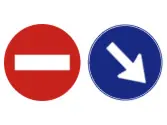
¿Puede girar a la izquierda en la próxima intersección a la vista de la señal? (Paso obligatorio)
May you turn left at the next junction when you see this sign? («Compulsory passage» sign)
- ASi, pasando por el lado del obstáculo que indica la señal.Yes, passing on the side of the obstacle shown by the sign.
- BNo, ya que la señal me obliga a girar a la derecha.No, because the sign requires me to turn right.
- CSi, por ambos lados del obstáculo.Yes, on either side of the obstacle.
Explanation«Compulsory passage» sign. The arrow shows the side or sides of the traffic island on which vehicles must pass.
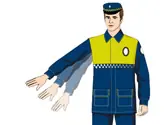
¿Qué le indica el agente que mueve el brazo alternativamente de arriba a abajo?
What is the traffic officer moving an arm up and down telling you?
- AQue debo detenerme.That I must stop.
- BQue debo disminuir la velocidad.That I must slow down.
- CQue debo cambiar de dirección.That I must turn.
ExplanationA traffic officer moving an arm up and down shows that we must slow down. If the officer gave the signal by swinging a red or yellow light, road users towards whom the officer points that light would have to stop.
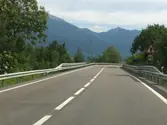
¿Qué indica que los trazos de una línea longitudinal discontinua estén más juntos entre sí?
What does it mean when the dashes of a broken longitudinal line are closer together?
- AQue está próximo un carril especial.That a special lane is coming up.
- BQue está prohibido cambiar de carril.That changing lanes is prohibited.
- CQue está próximo un tramo, con un peligro especial.That a stretch with a special danger is coming up.
ExplanationA broken longitudinal marking whose dashes are noticeably closer together than usual may tell the driver that they are approaching a continuous longitudinal marking or a stretch of road with a special risk.
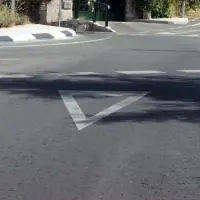
¿Qué son las marcas viales?
What are road markings?
- ALos semáforosTraffic lights.
- BLas señales de circulaciónTraffic signs.
- CMarcas pintadas sobre el pavimentoMarkings painted on the road surface.
ExplanationMarkings on the road surface, or road markings, are used to regulate traffic and to warn or guide road users, and they can be used alone or together with other signs and signals.
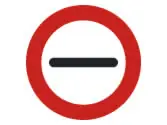
A la vista de esta señal, ¿qué tendrás que hacer?
Given this sign, what will you have to do?
- ADetenerme obligatoriamente.Stop, as it is compulsory.
- BNo podré circular a partir de la señal.I will not be allowed to drive past the sign.
- CNo podrán circular los vehículos de motor.Motor vehicles will not be allowed to pass.
ExplanationThe sign means you must not pass without stopping, and you must comply with the requirement indicated by the wording on it.
Al encenderse la flecha verde sobre fondo circular negro de un semáforo, usted avanza con su turismo en la dirección y sentido indicados por la flecha. ¿Tiene preferencia de paso sobre los vehículos que se aproximen por la vía transversal?
When the green arrow on a black circular background of a traffic light comes on, you drive your car forward in the direction shown by the arrow. Do you have priority over vehicles approaching on the crossing road?
- ANo, avanzará con precaución dejando pasar a los vehículos que se aproximen por el carril al que me voy a incorporar.No, I will go forward with caution, letting through the vehicles approaching in the lane I am moving into.
- BSí, pero solo si el giro es a la derecha.Yes, but only if the turn is to the right.
- CSí, porque cuando en un semáforo se enciende una luz verde siempre da preferencia de paso.Yes, because a green light on a traffic light always gives priority.
ExplanationUnder Annex I of the General Traffic Regulations (RGC), a green arrow on a black circular background allows you to go in the direction shown, but with caution, letting through the vehicles in the lane you are moving into and without endangering anyone crossing the carriageway.
Ante un semáforo en verde...
At a green traffic light...
- APodremos siempre continuar la marcha.we may always carry on.
- BNo pasaremos si previsiblemente nos podemos quedar detenidos de forma que obstruyamos o impidamos la circulación transversal.we will not go through if we are likely to end up stopped in a way that obstructs or blocks crossing traffic.
- CTendremos prioridad incluso sobre los peatones que aún estén cruzando.we will have priority even over pedestrians who are still crossing.
ExplanationAccording to section 4.2 of Annex I of the RGC, a green light allows you to go through with priority, except in the case of Article 59.1: you must not enter the junction if you are likely to end up stopped, obstructing crossing traffic. Nor does it give priority over pedestrians who are still crossing.
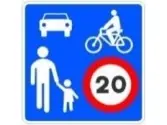
Según la señal que se muestra en la imagen, ¿dónde pueden estacionar los vehículos?
According to the sign shown in the picture, where may vehicles park?
- AEn cualquier parte de la zona, respetando la prioridad de los peatones.Anywhere in the zone, respecting pedestrians' priority.
- BÚnicamente en los lugares designados por señales o marcas.Only in places marked by signs or road markings.
- CSólo en los laterales de la vía sin necesidad de señalización.Only at the sides of the road, with no need for signs.
ExplanationThe sign indicates a coexistence zone, where vehicles may travel but may only park in places specifically marked by signs or road markings. This ensures that pedestrians, cyclists and personal mobility vehicles (PMVs) are not obstructed and that all road users stay safe.
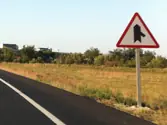
A la vista de esta señal, ¿debe facilitar la incorporación de los vehículos que se incorporen por la derecha?
Given this sign, must you make it easier for vehicles joining from the right?
- ANo, nunca, ya que le otorga la prioridad.No, never, because it gives you priority.
- BSí, en la medida de lo posible.Yes, as far as possible.
- CSólo si se trata de vehículos de transporte colectivo de viajeros.Only if they are public passenger transport vehicles.
ExplanationAlthough the sign indicates that we have priority over vehicles joining from our right, we must make it easier for them to join as far as possible (by changing lane or reducing speed).
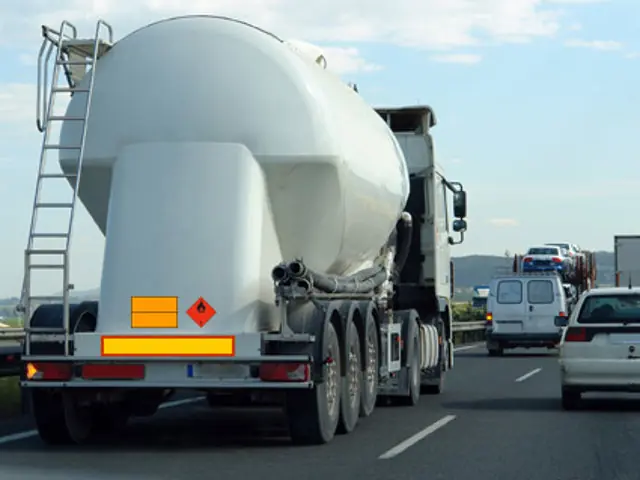
¿Qué indican las señales y placas en la parte trasera del camión?
What do the signs and plates on the back of the lorry indicate?
- AQue transporta mercancías peligrosas y mide más de 12 metros.That it is carrying dangerous goods and is more than 12 metres long.
- BQue su peso y dimensiones son mayores de lo normal.That its weight and dimensions are larger than normal.
- CQue transporta productos alimentarios.That it is carrying food products.
ExplanationThe orange panel is sign V-11, which indicates that the vehicle is carrying dangerous goods, and the yellow plate with a red border is V-6 'Long vehicle', which indicates a length of more than 12 metres. Both vehicle signs are regulated in Annex XI of the General Vehicle Regulations.
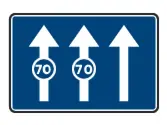
Esta señal indica que los carriles sobre los que están situadas las señales de velocidad mínima...
This sign indicates that the lanes over which the minimum speed signs are placed...
- Asólo puede utilizarlos si circula a una velocidad inferior a la indicada.may only be used if you are driving below the speed shown.
- Bson para vehículos rápidos y el carril situado más a la derecha es para vehículos lentos.are for fast vehicles, and the right-hand lane is for slow vehicles.
- Csólo puede utilizarlos si circula a una velocidad igual o superior a la indicada.may only be used if you are driving at or above the speed shown.
ExplanationThe sign in the question indicates that the lane or lanes over which the minimum speed sign is placed may only be used by vehicles travelling at or above the speed shown, although, if circumstances allow, they must drive in the right-hand lane.
¿Qué debe hacer si circula por una vía de sentido único y, al llegar a un cruce, ve una señal de Stop a la izquierda y quiere girar a la derecha?
What must you do if you are on a one-way road and, at a junction, you see a STOP sign on the left and want to turn right?
- ADetenerse obligatoriamente para respetar la señal de Stop.Stop, as you must obey the STOP sign.
- BGirar a la derecha sin detenerse, ya que la señal no le afecta.Turn right without stopping, as the sign does not apply to you.
- CCeder el paso a la izquierda y girar a la derecha.Give way to traffic from the left and turn right.
ExplanationUnder Article 132.3 of the General Traffic Regulations (RGC), you obey the signs on the right, and those on the left only when there are none on the right and you are going to turn left or go straight on. A driver turning right is not affected by a STOP sign placed on the left.
Cuando la luz verde de un semáforo para peatones comienza a parpadear de forma intermitente, ¿qué indica exactamente?
When the green light of a pedestrian traffic light starts flashing, what exactly does it indicate?
- AQue los peatones deben detenerse y esperar antes de cruzarThat pedestrians must stop and wait before crossing
- BQue los peatones que ya han empezado a cruzar deben terminar rápidamente porque la luz pronto se pondrá rojaThat pedestrians who have already started crossing must finish quickly because the light will soon turn red
- CQue los peatones aún pueden comenzar a cruzar sin riesgoThat pedestrians can still start crossing without risk
ExplanationA flashing green pedestrian-shaped light indicates that the safe crossing time is about to end and the red light will come on very soon. The rules set two behaviours depending on where the pedestrian is: 1) If the pedestrian has already started crossing, they must hurry to finish crossing safely as soon as possible. 2) If the pedestrian is still on the pavement or traffic island and has not started crossing, they must not step onto the carriageway, because they will not have enough time to reach the other side before the light turns red and traffic is released for vehicles.
Circula por una vía y se encuentra con un agente en motocicleta que muestra una bandera roja. ¿Qué indica con la bandera roja?
You are driving along a road and come across an officer on a motorcycle showing a red flag. What does the red flag indicate?
- ADebe detenerse a la derecha.You must stop on the right.
- BLa vía queda temporalmente cerrada al tráfico a partir del paso de esa motocicleta.The road is temporarily closed to traffic after that motorcycle passes.
- CDebe extremar la precaución por la proximidad de un peligro.You must take extra care because danger is near.
ExplanationUnder Annex I of the RGC (signals from vehicles), the red flag indicates that, from the moment the vehicle carrying it passes, the carriageway is temporarily closed to all vehicles and road users, except those escorted by the officers. The green flag opens it again.
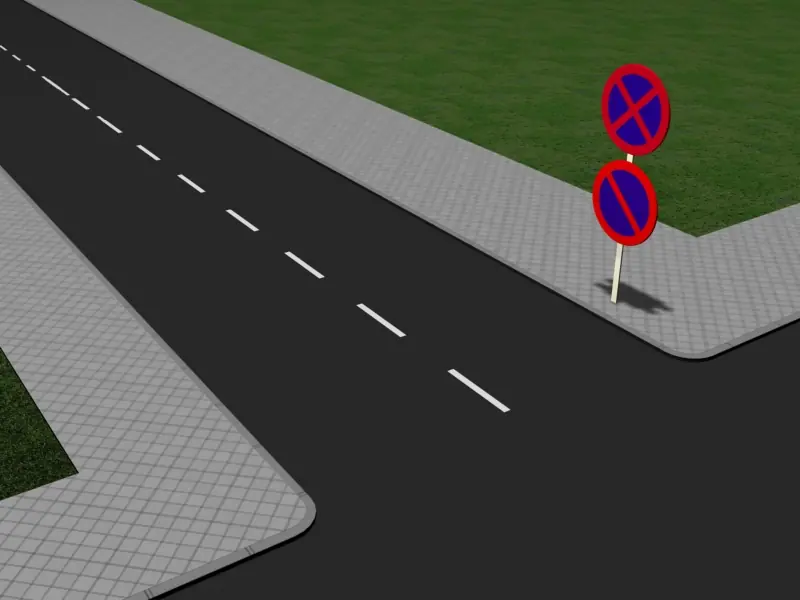
A la vista de las señales...
Given these signs...
- Ano hay que obedecer ninguna, están colocadas de forma antirreglamentaria.you do not have to obey either of them, because they are not placed in accordance with the regulations.
- Bpuedo estacionar, pero no parar.I can park, but not stop.
- Cno puedo ni estacionar ni parar.I can neither park nor stop.
ExplanationThe upper sign, with a red cross on a blue background, prohibits stopping and parking; the lower one, with a single stripe, prohibits parking. Both are valid even though they share a post, so on that stretch you can neither stop nor park.
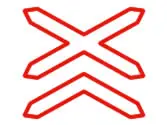
¿Qué indica la siguiente señal?
What does the following sign indicate?
- ASituación de paso a nivel con barreras.Location of a level crossing with barriers.
- BSituación de paso a nivel con o sin barreras.Location of a level crossing with or without barriers.
- CSituación de paso a nivel sin barreras con más de una vía férrea.Location of a level crossing without barriers with more than one railway track.
ExplanationThis sign shows danger because of a level crossing without barriers. As the sign has a double cross, it shows that there is more than one railway track. Do not confuse the sign for a level crossing with barriers with the one for a crossing without barriers.
Una clara disminución de la distancia que separa los trazos de la línea longitudinal discontinua indica...
A clear shortening of the gaps between the dashes of a broken longitudinal line indicates...
- AQue se aproxima una línea longitudinal continua o un riesgo especialThat a continuous longitudinal line or a special hazard is coming up.
- BLa variación de la separación entre los trazos de una línea discontinua no tiene un significado concreto.Changes in the spacing between the dashes of a broken line have no specific meaning.
- CQue se trata de un carril para vehículos de urgencia.That it is a lane for emergency vehicles.
ExplanationWhen the gaps between the dashes of a broken line become clearly shorter, it is a warning marking (M-1.9 and M-1.10): it announces a continuous line or a stretch of road with a special hazard ahead. It is best not to start overtaking.
¿Qué señal debemos obedecer si nos encontramos ante señales de diferentes tipos que se contradicen?
Which sign must we obey if we find signs of different types that contradict each other?
- ALa más restrictiva.The most restrictive one.
- BLa menos restrictiva.The least restrictive one.
- CLa prioritaria.The one with priority.
ExplanationWhen signs contradict each other, the one with priority prevails, according to the order of priority between signs. If the contradiction is between signs of the same type, the most restrictive one prevails.
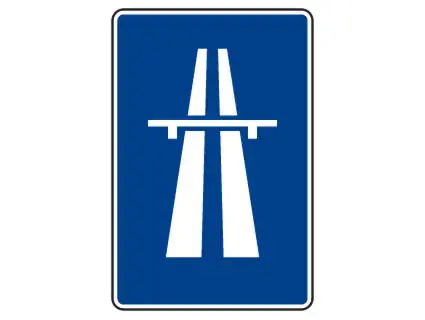
¿Le está permitido circular con un ciclomotor por una vía en la que encuentre esta señal?
Are you allowed to ride a moped on a road where you find this sign?
- ASí.Yes.
- BNo.No.
- CSí, pero solo por el arcén.Yes, but only on the hard shoulder.
ExplanationThe sign marks the start of an autopista (motorway). Under Article 38 of the General Traffic Regulations (RGC), mopeds are prohibited on autopistas and autovías; the option of using the hard shoulder of autovías applies only to cyclists over 14 years old.
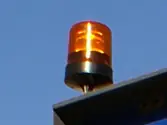
La señal V-2 en un vehículo agrícola advierte...
Sign V-2 on an agricultural vehicle warns...
- Aque el vehículo circula a velocidad inferior a 40 km/h, solo durante la noche.that the vehicle is travelling at less than 40 km/h, only at night.
- Bsu presencia tanto de día como de noche, siempre que circule por vías públicas a velocidad no superior a 40 km/h.of its presence both by day and by night, whenever it is travelling on public roads at no more than 40 km/h.
- Cque el vehículo está averiado, interrumpiendo la circulación.that the vehicle has broken down and is blocking traffic.
ExplanationSign V-2 indicates that the vehicle is carrying out a service, activity or work operation, or is immobilised on the road because of an accident or breakdown, or is travelling at no more than 40 km/h. Sign V-2 must be used both by day and by night.
¿Cuándo deben usar la señal V-2 los conductores de vehículos especiales obligados a hacerlo?
When must drivers of special vehicles who are required to use the V-2 signal use it?
- ATanto de día como de noche.Both by day and by night.
- BSolo de día.Only by day.
- CSolo de noche.Only at night.
ExplanationDrivers of special vehicles are required to use the V-2 signal both by day and by night. This signal shows that a vehicle is carrying out work or services on the road and is essential for road safety, as it warns other drivers about the vehicle's situation on the road, whatever the visibility conditions.
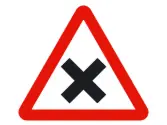
Esta señal indica la proximidad de una intersección...
This sign indicates that you are approaching a junction...
- Asin prioridad de paso.without right of way.
- Bcon prioridad de paso.with right of way.
- Ccon prioridad de paso a la derecha.with priority to the right.
ExplanationThe sign in the picture, triangular with a black X-shaped cross, warns of a junction where the general rule applies: vehicles approaching from the right have priority. The signs that give priority to the driver who sees them are the 'junction with priority' signs.
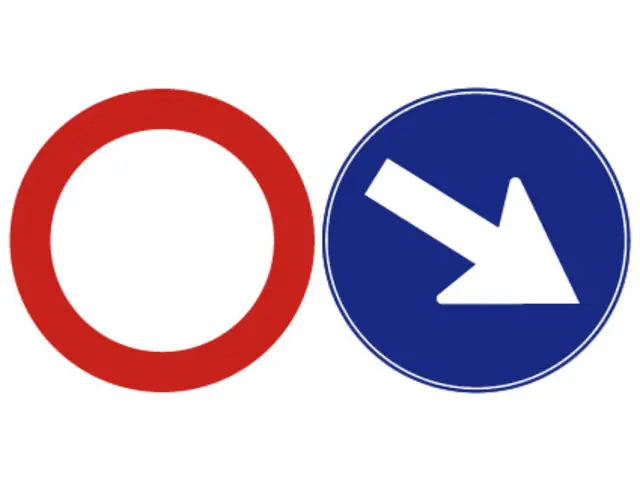
¿Qué debe hacer cuando vea estas señales?
What must you do when you see these signs?
- APasar por el lado que indica la flecha; puede hacerlo por la izquierda si no viene ningún vehículo en sentido contrario.Pass on the side shown by the arrow; you may pass on the left if no vehicle is coming the other way.
- BObedecer la señal más restrictiva.Obey the most restrictive sign.
- CPasar obligatoriamente por el lado que indica la flecha, porque la entrada por la izquierda está prohibida.You must pass on the side shown by the arrow, because entry on the left is prohibited.
ExplanationThe signs in the picture are the no-traffic sign, on the left, and the compulsory passing sign, on the right. Together they show that you may not drive on the left-hand side and must pass on the side shown by the arrow, even if nobody is coming towards you.
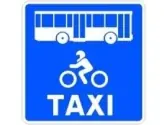
¿Puede circular con su motocicleta por un carril así señalizado?
May you ride your motorcycle in a lane marked like this?
- ASí.Yes.
- BNo, ya que está reservado para bus y taxi.No, because it is reserved for buses and taxis.
- CSí, pero sólo para adelantar y durante el recorrido indispensable.Yes, but only to overtake and for the shortest distance necessary.
ExplanationThe sign in the picture shows a lane intended only for certain types of vehicle (buses, motorcycles, three-wheeled vehicles treated as motorcycles, taxis, cycles, etc.). The sign includes the symbol of the type or types of vehicle allowed. On the stretches where the longitudinal marking of the lane is a broken line, other users may use it only to carry out a manoeuvre other than stopping, parking, making a U-turn or overtaking, always giving priority to vehicles allowed to use this lane.
Una señal triangular con dos niños advierte de:
A triangular sign showing two children warns of:
- ALa proximidad de un lugar frecuentado por niños (por ejemplo, un colegio).A nearby place frequented by children (for example, a school).
- BUn parque de atracciones de pago.A paid amusement park.
- CProhibido el paso a menores.No entry for minors.
ExplanationIt warns of an area where children are usually present; you must take extreme care and reduce your speed.
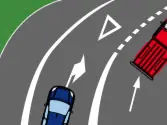
El triángulo blanco pintado en la calzada, ¿qué significa?
What does the white triangle painted on the carriageway mean?
- AQue los conductores tienen preferencia de paso al cambiar de carril.That drivers have right of way when changing lanes.
- BQue es obligatorio ceder el paso a los vehículos que se aproximen por el carril derecho cuando cambie de carril.That, when changing lanes, you must give way to vehicles approaching in the right-hand lane.
- CQue el conductor está obligado a detener el vehículo en todo caso.That the driver must stop the vehicle in all cases.
ExplanationA triangle marked on the carriageway, with the point opposite its short side directed towards the approaching vehicle, tells its driver that they must give way to other vehicles at the next junction.
Observando la señal de la imagen, ¿qué indica?
Looking at the sign in the picture, what does it indicate?
- AUna zona peatonal exclusiva donde no se permite la circulación de vehículos ni ciclistas.A pedestrian-only zone where neither vehicles nor cyclists may travel.
- BUna zona de circulación destinada a turismos y peatones, donde los juegos están permitidos.A traffic zone for cars and pedestrians, where games are allowed.
- CUna zona de coexistencia destinada principalmente a peatones, donde también pueden circular vehículos, ciclistas y VMP bajo normas especiales.A shared-space (coexistence) zone mainly for pedestrians, where vehicles, cyclists and PMVs may also travel under special rules.
ExplanationThe sign shown indicates a coexistence zone, where pedestrians have priority but vehicles, cyclists and personal mobility vehicles (PMVs) may also travel, following special rules: - Maximum speed for vehicles: 20 km/h. - Traffic is shared, with no marked pedestrian crossings. - Cycles and PMVs may travel in both directions unless signs say otherwise. - Parking only in authorised places. - Games and sports are not allowed.
All topics
- Definitions
- Documents and penalty points
- The driver's condition
- Duties of drivers and pedestrians
- Vehicle safety devices
- Vehicle controls and equipment
- Vehicle lights and horn
- The road and its lanes
- Speed and distances
- Manoeuvres
- Right of way
- Carrying passengers and loads
- Driving safely in difficult conditions
- Vehicle mechanics and maintenance
- Road accidents and first aid
- Defensive and eco-driving
Independent app: not affiliated with or endorsed by the DGT (Spain's Directorate-General for Traffic) or the Ministry of the Interior. The official exam is booked with the DGT and taken at its test centres. The questions here are practice material; the DGT's official question bank is not public.
Basado en datos de la Agencia Estatal Boletín Oficial del Estado (https://www.boe.es). Textos consolidados de carácter meramente informativo. La AEBOE no patrocina ni respalda este sitio.
Parte de las preguntas procede de los tests de la revista «Tráfico y Seguridad Vial» de la DGT, reproducidos con indicación de la fuente.