
DGT test · 1,397 questions
Traffic signs, markings and signals · Page 11 of 28
Road signs, road markings, traffic lights, police signals and temporary markings: what they mean and which one wins when they disagree. The topic with the most questions in the bank.
Questions in this topic, with answers
1,397 questions, 50 per page, with the correct answer and the explanation. Page 11 of 28.
¿Existe la señal vertical de fin de velocidad máxima aconsejada?
Is there a road sign for the end of a recommended maximum speed?
- ANo, únicamente la de inicio de velocidad máxima aconsejadaNo, only the one for the start of a recommended maximum speed
- BSíYes
- CSí, pero únicamente en autovíasYes, but only on dual carriageways (autovías)
ExplanationYes, it exists: it is sign S-8, End of recommended maximum speed, which marks the end of a stretch where it is recommended to drive at the speed, in kilometres per hour, shown on the sign. It can be found on any type of road.
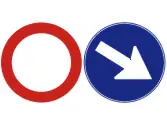
Cuando encuentre estas señales, ¿qué debe hacer?
When you come across these signs, what must you do?
- ACircular por el lado que indica la flecha, pudiendo pasar por el lado izquierdo si observa que no se aproxima ningún vehículo en sentido contrario.Drive on the side shown by the arrow, but you may pass on the left if you see that no vehicle is coming the other way.
- BObedecer la señal más restrictiva.Obey the more restrictive sign.
- CPasar obligatoriamente por el lado que indica la flecha, porque hacia el lado izquierdo la entrada está prohibida.You must pass on the side shown by the arrow, because entry is prohibited on the left side.
ExplanationThe sign on the left prohibits all vehicles in both directions. The sign on the right shows with its arrow the side of the traffic island on which vehicles must pass.
¿Qué significado tiene un semáforo con una luz amarilla intermitente?
What does a traffic light with a flashing amber light mean?
- AIndica que la calzada en la que se encuentra situado está totalmente cerrada al tránsito.It indicates that the carriageway where it stands is completely closed to traffic.
- BIndica que se debe extremar la precaución y, en su caso, ceder el paso.It indicates that you must take extra care and, where appropriate, give way.
- CIndica que se debe extremar la precaución y aplicar las normas generales de prioridad.It indicates that you must take extra care and apply the general right-of-way rules.
ExplanationA flashing amber light requires you to take extra care and, where appropriate, to give way, as the signs indicate. It does not mean the road is closed, and it does not exempt you from obeying other signs that require you to stop.
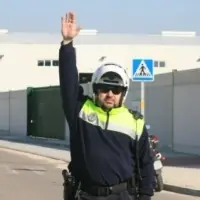
Un agente con el brazo levantado verticalmente obliga a los vehículos que se acercan de cara a...
An officer with one arm raised vertically requires vehicles approaching from the front to...
- ADetenerse.Stop.
- BContinuar la marcha.Carry on.
- CReducir la velocidad.Reduce speed.
ExplanationAn arm raised vertically requires all road users approaching the officer to stop, except those who cannot do so safely. At a junction it does not affect those who have already entered it.
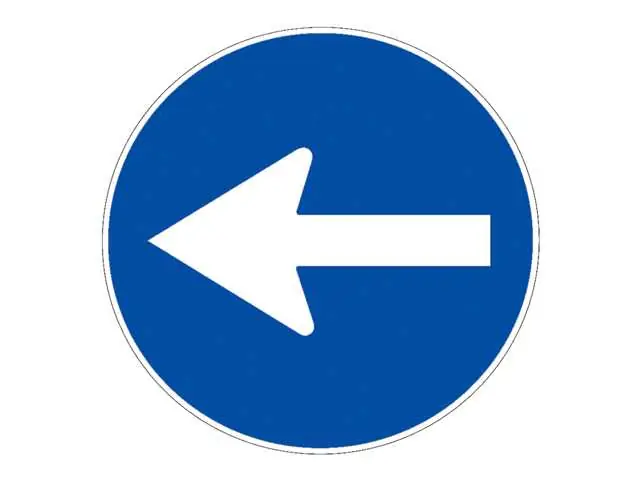
Esta señal indica la dirección y sentido que los vehículos...
This sign shows the direction that vehicles...
- Atienen la obligación de seguir.are required to follow.
- Btienen prohibido seguir.are prohibited from following.
- Cpueden seguir de forma opcional.may follow as an option.
ExplanationIt is a round blue sign with a white arrow, which is a mandatory sign: it shows the direction vehicles must follow. Round blue signs impose obligations; they are neither a mere recommendation nor a prohibition.
¿Son siempre validas las señales hechas con el brazo?
Are arm signals always valid?
- ASí, y prevalecen sobre las señales luminosas.Yes, and they take precedence over light signals.
- BSí, siempre y cuando sean perceptibles por los demás usuarios de la vía.Yes, as long as other road users can see them.
- CNo, solo son válidas las que realizan los agentes.No, only those made by traffic officers are valid.
ExplanationArm signals are valid as long as other road users can see them and they are made correctly.
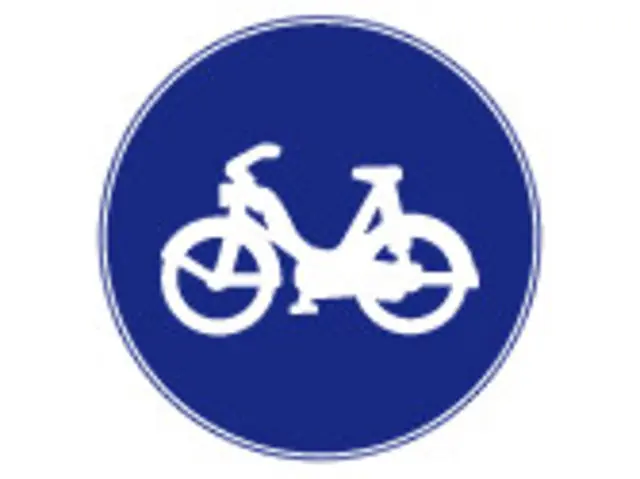
Si ve esta señal al entrar en una vía, debe saber que...
If you see this sign at the entrance to a road, you should know that...
- AEstá prohibido circular con ciclomotores.mopeds are prohibited.
- BSu uso está prohibido para todos los usuarios que no sean los conductores de ciclomotores.its use is prohibited for all users except moped riders.
- CEs una vía reservada para bicicletas y ciclomotores.it is a road reserved for bicycles and mopeds.
ExplanationThe sign placed at the entrance to the road means that only moped riders may use that road. Other users, such as cars, bicycles and pedestrians, are not allowed there. Breaking this rule can lead to fines and create dangerous situations.
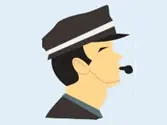
¿Qué le indica un agente que efectúa una serie de pitidos cortos y frecuentes?
What does a traffic officer giving a series of short, frequent whistle blasts tell you?
- AQue me detenga.That I must stop.
- BQue reanude la marcha.That I must move off again.
- CQue me detenga a la derecha de la calzada.That I must stop on the right of the carriageway.
ExplanationA series of short, frequent whistle blasts from a traffic officer requires us to stop. One long whistle blast tells us to move off again.
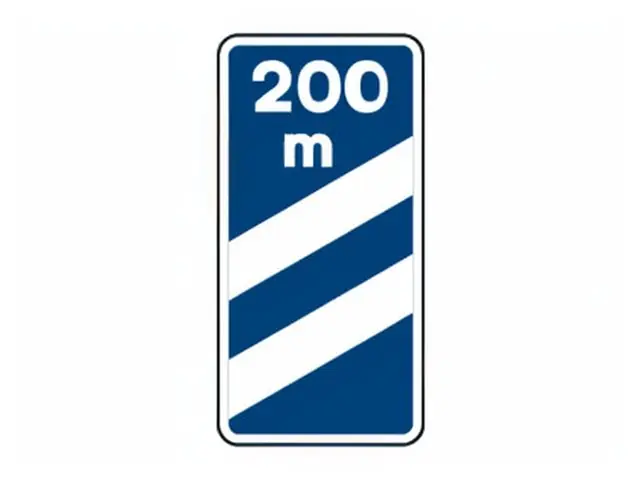
¿Dónde se puede ver esta señal?
Where can you see this sign?
- AEn carreteras normales.On ordinary roads.
- BEn cualquier tipo de vía.On any type of road.
- CEn autopistas y autovías.On motorways (autopistas) and dual carriageways (autovías).
ExplanationIt is an exit approach panel (S-26b): on a motorway or dual carriageway it shows that the next exit is about 200 m away. There are also 300 m (S-26a) and 100 m (S-26c) panels, which announce the same exit.
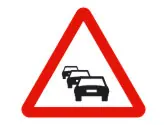
A la vista de esta señal sabremos que existe...
From this sign, we know that there is...
- AUna obstrucción en la calzada.an obstruction on the carriageway.
- BUna congestión de tráfico.traffic congestion.
- CUn tramo con visibilidad reducida.a stretch with reduced visibility.
ExplanationThe sign warns of danger because you are approaching a stretch where traffic is stopped or slowed down by congestion.
En una intersección con un agente regulando el tráfico, ¿qué debe hacer?
At a junction where an officer is directing traffic, what must you do?
- ACeder el paso a los vehículos que vienen por la derecha.Give way to vehicles coming from the right.
- BSeguir las indicaciones del agente de tráfico.Follow the traffic officer's directions.
- CObedecer las señales de tráfico que indican prioridad.Obey the traffic signs showing priority.
ExplanationSignals and orders from traffic officers come first in the order of precedence (Article 133.1 of the RGC) and must be obeyed immediately (Article 141.1), even if they contradict priority signs or the general rule of giving way to the right.
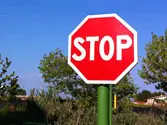
Modificar la señalización de la vía...
Altering road signs...
- Aestá prohibido, salvo por causa justificada.is prohibited, except for a justified reason.
- Bno está prohibido, pero no es recomendable.is not prohibited, but is not advisable.
- Cestá permitido siempre que la modificación ayude a aclarar el sentido de la señalización.is allowed as long as the change helps make the meaning of the signs clearer.
ExplanationIt is prohibited to install, remove, hide or alter the signs on a road, except for a justified reason.
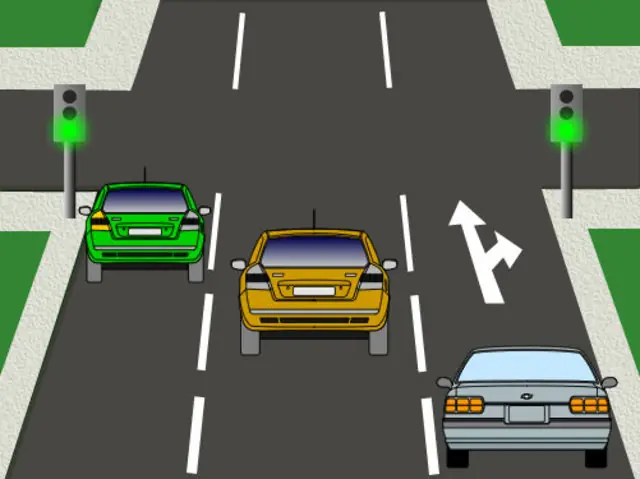
Conduciendo el vehículo gris, ¿qué debe hacer según las marcas viales?
Driving the grey vehicle, what must you do according to the road markings?
- AEstá obligado a girar a la derecha.You are required to turn right.
- BDebe continuar recto o girar a la derecha.You must go straight on or turn right.
- CEstá obligado a continuar recto.You are required to go straight on.
ExplanationThe arrow painted in the grey vehicle's lane shows two permitted movements: straight on and turning right. According to the road marking catalogue in Annex I of the RGC, these arrows indicate the movements permitted or required in that lane, so you may choose either of the two.
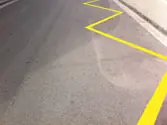
¿Qué significa una marca amarilla en forma de zigzag?
What does a yellow zigzag marking mean?
- AEstá prohibida la parada y el estacionamiento.Stopping and parking are prohibited.
- BEstá prohibido el estacionamiento.Parking is prohibited.
- CSe permite la parada únicamente para efectuar maniobras de carga y descarga.Stopping is allowed only for loading and unloading.
ExplanationA yellow zigzag marking shows the place on the carriageway where parking is prohibited for vehicles in general, because it is reserved for a special use that does not involve any vehicle staying there for long. It may show a loading and unloading area, but also a bus stop (for stopping, not parking).
Cuando haya obstáculos y ciclistas circulando deberá...
When there are obstacles and cyclists on the road, you should...
- Amantener la velocidad y estar atento al cumplimiento de la señalización vertical.keep your speed and pay attention to the road signs.
- Bpensar que los ciclistas pueden realizar un movimiento brusco.bear in mind that cyclists may make a sudden movement.
- Cal acercarnos a los ciclistas hacer señales acústicas para indicar nuestra presencia.sound your horn as you approach the cyclists to let them know you are there.
ExplanationWhen there are obstacles on the road, cyclists may have to swerve suddenly to avoid them. You must anticipate this, reduce speed and give them space. Sounding the horn near them can startle them and make them lose their balance.
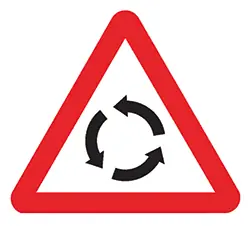
La señal indica que se aproxima...
The sign indicates that you are approaching...
- AA una intersección en la que tengo prioridad.a junction where I have priority.
- BA una intersección en la que tienen preferencia los vehículos que entran por la derecha.a junction where vehicles coming from the right have priority.
- CA una intersección con circulación giratoria.a junction with circular traffic.
ExplanationThis is the warning sign for a junction with circular traffic (a roundabout) ahead: the arrows in a circle warn that you will have to give way to those already going round it.
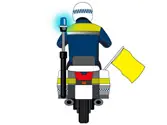
Un agente de tráfico que circula delante muestra una bandera de color amarillo, ¿qué está indicando?
A traffic officer travelling in front of you shows a yellow flag. What is the officer indicating?
- ALa necesidad de extremar la atención o la proximidad de un peligro.The need to take extra care or that there is a danger ahead.
- BQue la calzada queda abierta al tráfico.That the carriageway is open to traffic.
- CQue la calzada queda temporalmente cerrada al tráfico.That the carriageway is temporarily closed to traffic.
ExplanationA yellow flag shows the need to take extra care or that there is a danger ahead. A green flag shows that, once the vehicle carrying it has passed, the carriageway is open to traffic again. A red flag shows that, once the vehicle carrying it has passed, the carriageway is temporarily closed to all vehicles and users, except those accompanied or escorted by officers.
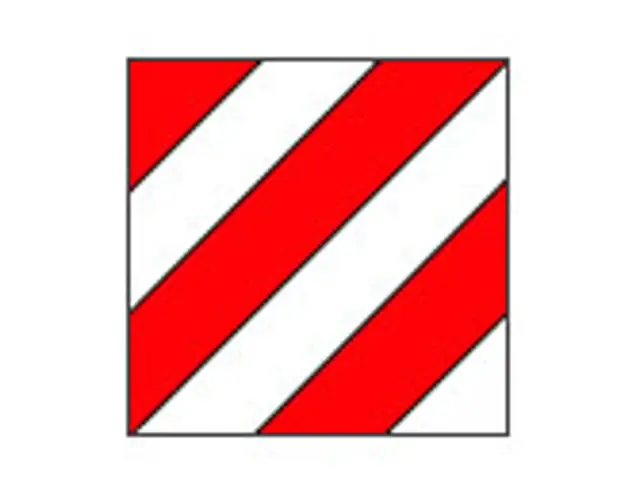
¿Cuándo se debe usar la señal V-20 (cargas que sobresalen) en un vehículo?
When must the V-20 sign (projecting load) be used on a vehicle?
- ACuando la carga sobresale por la parte trasera de un vehículo.When the load sticks out at the rear of a vehicle.
- BCuando la carga sobresale por la parte delantera y por la trasera de un camión.When the load sticks out at the front and rear of a lorry.
- CEn cualquier vehículo cuando la carga sea indivisible.On any vehicle when the load is indivisible.
ExplanationThe V-20 sign must be used when the load sticks out at the rear of a vehicle, such as a car. This is essential for road safety, because proper marking prevents accidents by warning other drivers about the projecting load. This requirement is set out in the General Vehicle Regulations, which state that a load sticking out at the rear must be marked with the V-20, placed so that it is visible and at right angles to the vehicle's centre line.
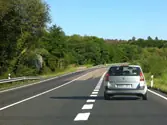
Una marca longitudinal discontinua sensiblemente más ancha que en el caso general, ¿qué significa?
What does a broken longitudinal marking that is noticeably wider than usual mean?
- AQue se trata de un carril bus, siempre.That it is always a bus lane.
- BQue se trata de un carril especial.That it is a special lane.
- CQue no se puede adelantar.That you may not overtake.
ExplanationA wider broken line indicates a special lane, for example lanes reserved for buses, lanes for joining or leaving a motorway, and others.
Un agente desde un vehículo policial hace señales al vehículo que circula delante para que se detenga. ¿Qué debe hacer su conductor?
An officer in a police vehicle signals to the vehicle in front to stop. What must its driver do?
- ADetener su vehículo inmediatamente.Stop the vehicle immediately.
- BSeñalizar la detención con las luces de emergencia y detener el vehículo inmediatamente.Signal the stop with the hazard warning lights and stop the vehicle immediately.
- CDetenerse y permanecer dentro del vehículo.Stop and stay inside the vehicle.
ExplanationUnder Article 69 of the General Traffic Regulations (RGC), when a police vehicle signals to the vehicle in front to stop, its driver must stop carefully on the right-hand side, in front of the police vehicle, in a place where there is no risk, and stay inside, following the officer's instructions.
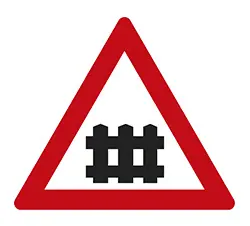
¿Qué significado tiene esta señal?
What does this sign mean?
- APeligro por la proximidad de un paso a nivel provisto de barreras o semibarreras.Danger: level crossing with barriers or half-barriers ahead.
- BPeligro por la proximidad de un paso a nivel sin barreras de más de una vía férrea.Danger: level crossing without barriers over more than one railway track ahead.
- CPeligro por la proximidad de un cruce con una línea de tranvía.Danger: crossing with a tram line ahead.
ExplanationThe sign showing a gate indicates danger because a level crossing with barriers or half-barriers is near; a level crossing without barriers is announced by the sign with a locomotive or with a cross.
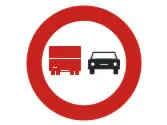
¿A qué vehículos afecta esta señal?
Which vehicles does this sign apply to?
- AAfecta a todos los camiones, que no pueden adelantar a los turismos.It applies to all lorries, which may not overtake cars.
- BAfecta a los camiones cuya MMA es superior a 3500 kg.It applies to lorries with an MAM of more than 3,500 kg.
- CAfecta a los turismos, que no podrán adelantar a los camiones.It applies to cars, which may not overtake lorries.
ExplanationThis is sign R-306 “No overtaking for lorries”: it prohibits lorries with a maximum authorised mass of more than 3,500 kg from overtaking motor vehicles, even when overtaking does not involve moving into the opposite direction. It does not apply to cars or lighter lorries.
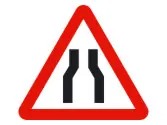
Esta señal de advertencia de peligro indica la proximidad de...
This danger warning sign indicates that you are approaching...
- Aun resalto o badén en la vía.a hump or dip in the road.
- Buna zona de la vía en la que se estrecha la calzada.a place on the road where the carriageway narrows.
- Cuna obstrucción en la calzada.an obstruction on the carriageway.
ExplanationThe sign in the picture, with two lines coming closer together, warns that you are approaching a stretch where the carriageway narrows on both sides. You should slow down and pay attention to vehicles coming towards you. Humps and obstructions have their own signs.
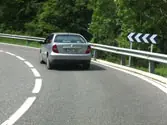
¿Qué significa este panel?
What does this panel mean?
- AEl sentido de la dirección por obras.The direction of travel due to roadworks.
- BEl sentido de la circulación.The direction of traffic.
- CQue la carretera está cortada.That the road is closed.
ExplanationPermanent direction panels are guidance devices: they mark the line of a bend, in relation to the reduction in speed needed, and show the direction of traffic (annex I of the RGC). They do not announce roadworks or that the road is closed.
Las señales que indican un tramo en obras...
Signs indicating a roadworks section...
- Asignifican lo mismo que las señales que se usan cuando no hay obras.mean the same as the signs used when there are no roadworks.
- Bsolo advierten de la necesidad de extremar la precaución.only warn of the need to take extra care.
- Csolo deben respetarse cuando hay personas trabajando.only have to be obeyed when people are working.
ExplanationRoad signs indicating a roadworks section are just as valid as regular signs, even if there are no workers on the road at that moment. This means that speed limits, traffic directions and other instructions must be strictly obeyed. Ignoring these signs can lead to fines or dangerous situations, as the signs and conditions on these stretches may differ from normal. Temporary signs are often used to mark lane reductions, diversions and limited visibility.
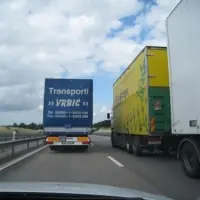
¿Existe la señal vertical de adelantamiento prohibido a camiones?
Is there a road sign for ‘no overtaking for lorries’?
- ASí, pero únicamente se encuentra en glorietasYes, but it is only found at roundabouts.
- BNo, solo existe la de adelantamiento prohibido para todos los vehículos en generalNo, there is only the ‘no overtaking’ sign for all vehicles in general.
- CSí, existeYes, there is.
ExplanationSign R-306 prohibits lorries with a maximum authorised mass of more than 3,500 kilograms from overtaking motor vehicles on the carriageway where the lorry is travelling.
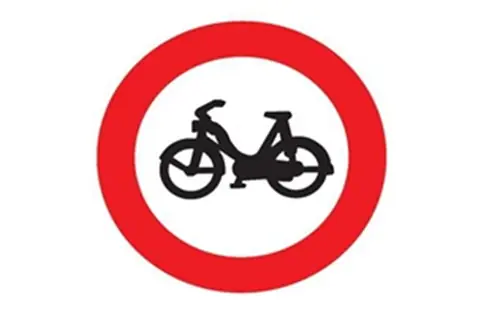
Si circula con un turismo, ¿le afecta esta señal?
If you are driving a car, does this sign apply to you?
- ASí.Yes.
- BNo; prohíbe la entrada a motocicletas.No; it prohibits entry for motorcycles.
- CNo; prohíbe la entrada a ciclomotores y a vehículos para personas de movilidad reducida.No; it prohibits entry for mopeds and vehicles for people with reduced mobility.
ExplanationThis sign (R-105) prohibits entry for mopeds and also for vehicles for people with reduced mobility. It does not apply to cars or motorcycles, which have their own prohibition signs.
Si al circular se encuentra con una señal que le obliga a detenerse, ¿hasta cuándo no podrá reanudar la marcha?
If, while driving, you find a sign requiring you to stop, until when may you not move off again?
- AHasta que no cumpla la obligación establecida por la señal.Until you have complied with the obligation set by the sign.
- BHasta pasado un tiempo prudencial, que no será inferior a diez segundos.Until a reasonable time has passed, of no less than ten seconds.
- CHasta que no se detengan los vehículos que se acercan por detrás.Until the vehicles approaching from behind have stopped.
ExplanationWhen you find a sign that requires you to stop, you may not move off again until you have obeyed what the sign requires. With a STOP sign, you must stop (even if no vehicles are coming) and give way at the junction.
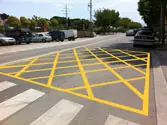
¿Podemos quedarnos detenidos encima de esta marca vial?
May we halt on top of this road marking?
- ANo, si la detención fuera previsible.No, if halting there was foreseeable.
- BSí podemos detenernos, pero no parar ni estacionar.Yes, we may halt there, but not stop or park.
- CParar sí, pero no estacionar.Stopping, yes, but not parking.
ExplanationA set of criss-cross yellow lines reminds drivers that they must not be held stationary in a way that blocks or obstructs crossing traffic.
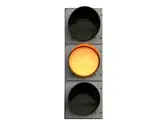
La luz amarilla no intermitente "FIJA" del semáforo, ¿qué indica?
What does a steady (non-flashing) amber traffic light indicate?
- AAcelerar para pasar antes de que se encienda la roja.Speed up to get through before the red light comes on.
- BPasar con precaución.Go through with caution.
- CDetenerme como si de rojo fijo se tratase.Stop as if it were a steady red light.
ExplanationA steady amber light requires you to stop just as a steady red light does, unless, when it comes on, the vehicle is so close to the stopping point that it cannot stop safely. The light that allows you to go through taking extreme care is the flashing amber light.
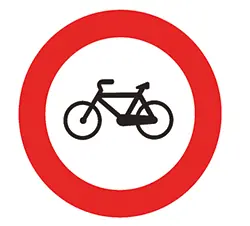
A una vía así señalizada, ¿qué vehículos no pueden acceder?
Which vehicles may not enter a road with this sign?
- ATurismos.Cars.
- BBicicletas.Bicycles.
- CMotocicletas.Motorcycles.
ExplanationThis is the no entry for cycles sign (R-114): it prohibits bicycles from entering. Cars and motorcycles may enter unless another sign prevents it.
Si conduce un vehículo para personas con movilidad reducida, ¿le afecta la señal de entrada prohibida a ciclomotores?
If you are driving a vehicle for people with reduced mobility, does the 'No entry for mopeds' sign apply to you?
- ANo, prohíbe sólo la entrada a motocicletas.No, it only prohibits entry to motorcycles.
- BNo, prohíbe sólo la entrada a ciclomotores.No, it only prohibits entry to mopeds.
- CSí.Yes.
ExplanationAccording to the official Catalogue of signs (Annex I of the General Traffic Regulations), the 'No entry for mopeds' sign (R-105) prohibits access to mopeds and also to vehicles for people with reduced mobility, which the General Vehicle Regulations treat, technically, in the same way as three-wheeled mopeds.
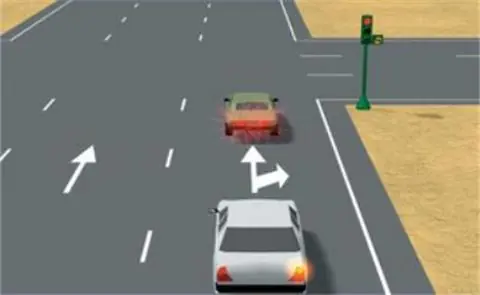
Cuando se encienda la luz verde del semáforo, ¿qué deben hacer estos vehículos?
When the traffic light turns green, what must these vehicles do?
- AGirar a la derecha o continuar de frente.Turn right or go straight on.
- BGirar a la derecha o girar a la izquierda.Turn right or turn left.
- CGirar a la izquierda o continuar de frente.Turn left or go straight on.
ExplanationThe arrows painted in the lane show the movements allowed for vehicles in it. In this lane the arrow points straight ahead and to the right, so when the light is green they may only go straight on or turn right.
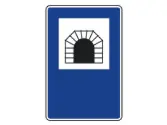
En un tramo de vía en el que existe esta señal, ¿está permitido cambiar el sentido?
On a stretch of road where this sign is placed, is it permitted to make a U-turn?
- ASí, si el túnel tiene dos carriles por sentido.Yes, if the tunnel has two lanes in each direction.
- BNo, en ningún caso.No, under no circumstances.
- CSí.Yes.
ExplanationIn tunnels and on stretches of road covered by this sign, making a U-turn is prohibited.
La luz verde en forma de flecha del semáforo significa que los vehículos pueden pasar en…
A green arrow-shaped light on a traffic light means that vehicles may go…
- ALa dirección de la flecha, y tienen prioridad en la intersección.In the direction of the arrow, and they have priority at the junction.
- BCualquier dirección.In any direction.
- CLa dirección de la flecha, dejando pasar a los vehículos que circulen por la vía transversal.In the direction of the arrow, letting vehicles on the crossing road pass.
ExplanationA lit green arrow allows you to proceed only in the direction it shows, even if another light on the same traffic light is lit. It does not give priority: you must proceed with caution, letting vehicles on the road you are joining pass and without endangering pedestrians.
En un tramo de vía con la señal "túnel", ¿se permite dar la vuelta?
On a stretch of road with the “Tunnel” sign, may you make a U-turn?
- ANo.No.
- BSí.Yes.
- CSí, si no se aproxima ningún vehículo.Yes, if no vehicle is approaching.
ExplanationArticle 79 of the General Traffic Regulations prohibits U-turns in tunnels, underpasses and stretches of road covered by the “Tunnel” sign (S-5), just as at level crossings. The ban applies even if no vehicle is approaching.
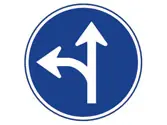
A la vista de la señal, ¿podremos realizar un cambio de sentido?
Given the sign, may we make a U-turn?
- ASí, la señal aconseja seguir de frente o girar a la izquierda.Yes, the sign recommends going straight on or turning left.
- BNo.No.
- CSí, la señal obliga a seguir de frente, girar a la izquierda o cambiar de sentido.Yes, the sign requires you to go straight on, turn left or make a U-turn.
ExplanationThe sign requires you to take only the directions shown by the arrows, so making a U-turn is prohibited.
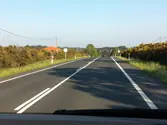
Si encontramos una línea longitudinal continua adosada a otra discontinua...
If you find a continuous longitudinal line next to a broken one...
- ANos indica que es un carril adicional.It shows that it is an additional lane.
- BNos indica que es un carril reversible.It shows that it is a reversible lane.
- CSolo tendremos en cuenta la línea más próxima al carril por el que circulamos.You only take into account the line nearer to the lane you are driving in.
ExplanationWhen a continuous longitudinal line runs next to a broken one, drivers need only take into account the line on the side on which they are driving.
¿Qué debe hacer un conductor que ya ha entrado en una intersección cuando un agente levanta el brazo en alto?
What must a driver who has already entered a junction do when a traffic officer raises their arm straight up?
- ADetenerse de inmediato, aunque esté dentro de la intersección.Stop immediately, even though they are inside the junction.
- BSeguir circulando por la intersección sin detenerse.Carry on through the junction without stopping.
- CDetenerse solo si puede hacerlo de forma segura y sin obstaculizar el tráfico.Stop only if they can do so safely and without blocking traffic.
ExplanationUnder section 1.1 of Annex I of the General Traffic Regulations, an arm raised vertically requires those approaching the officer to stop, but if the signal is given at a junction, it does not require drivers who have already entered the junction to stop. They must finish crossing.
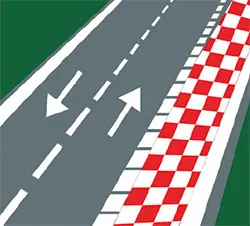
Las marcas blancas y rojas de la calzada, ¿qué indican?
What do the red and white markings on the carriageway indicate?
- AUna zona reservada para la salida de competiciones de coches.An area reserved for the start of car races.
- BUna zona reservada para el estacionamiento de camiones.An area reserved for lorry parking.
- CUna zona reservada para frenado de emergencia, donde no se puede parar ni estacionar.An area reserved for emergency braking, where you may not stop or park.
ExplanationThe red and white chequered pattern marks an area reserved for emergency braking (an arrester bed for vehicles whose brakes have failed): stopping and parking there are prohibited so that it is always kept clear.
¿Qué indica una flecha amarilla oblicua mirando hacia abajo en un semáforo cuadrado o de carril?
What does a downward-pointing diagonal yellow arrow on a square (lane-control) traffic light indicate?
- AIndica que en el carril al que apunta la flecha no se puede circularThat you may not drive in the lane the arrow points to
- BIndica la necesidad de incorporarse al carril que apunta la flechaThat you need to move into the lane the arrow points to
- CIndica que el carril al que apunta la flecha está destinado a servicios públicosThat the lane the arrow points to is for public services
ExplanationWhen a square or lane-control traffic light shows a downward-pointing diagonal yellow arrow, it means that you must move into the lane the arrow points to as quickly as possible, but always changing lanes safely.
En una intersección hay una señal vertical de STOP y una marca vial que dice "CEDA EL PASO". ¿Cuál debe obedecer?
At a junction there is a STOP sign and a road marking that says ‘CEDA EL PASO’ (give way). Which must you obey?
- ALa señal vertical de stop.The STOP sign.
- BNinguna de las dos, en este caso se aplicará la norma general de prioridad.Neither; in this case the general right-of-way rule applies.
- CLa marca vial de "CEDA EL PASO".The ‘CEDA EL PASO’ road marking.
ExplanationUnder Article 133 of the General Traffic Regulations (RGC), road signs take precedence over road markings. If a STOP sign and a give way marking contradict each other, the sign prevails: you must stop and then give way.
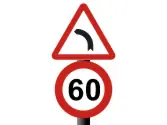
A la vista de la señalización, ¿cuándo finalizará la prohibición de circular a más de 60 km/h?
Given the signs, when will the prohibition on driving faster than 60 km/h end?
- ACuando termine el peligro indicado.When the danger shown ends.
- BCuando encuentre una señal de fin de prohibición.When you come to an end-of-prohibition sign.
- CCuando encuentre una señal de fin de obligación.When you come to an end-of-obligation sign.
ExplanationWhen the maximum speed sign is on the same post as a warning sign, the limit applies only for as long as the danger shown lasts. In this case, once you have passed the dangerous bend, the 60 km/h limit no longer applies.
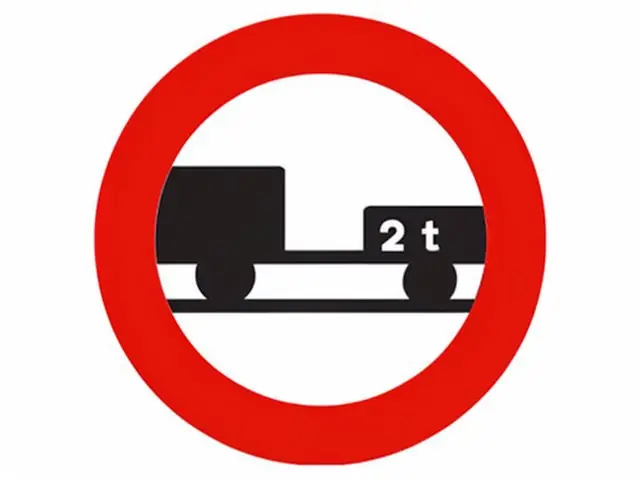
Conduce un coche con un remolque de un eje. ¿Le afecta esta señal?
You are driving a car towing a single-axle trailer. Does this sign apply to you?
- ANo.No.
- BSí, porque lleva un remolque de un eje.Yes, because you are towing a single-axle trailer.
- CNo, a menos que la masa máxima autorizada (M.M.A.) del remolque supere la cifra indicada en la señal.No, unless the trailer's maximum authorised mass (MAM) is over the figure shown on the sign.
ExplanationSign R-112 prohibits entry to motor vehicles towing a trailer, except single-axle trailers. A tonnage figure on the trailer only limits the ban to trailers whose MAM is over that figure. A car with a single-axle trailer is always exempt, so the sign does not apply to it.
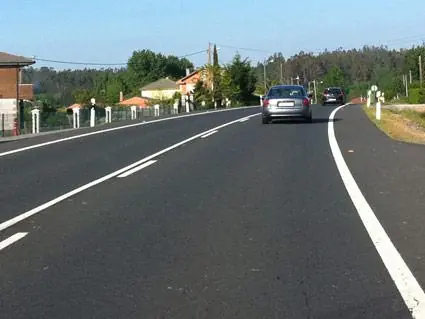
Hay una marca longitudinal continua adosada a otra discontinua, ¿cuál de las dos debe tener en cuenta el conductor?
There is a continuous longitudinal marking alongside a broken one. Which of the two must the driver take into account?
- ANinguna de las dos.Neither of them.
- BLa marca situada en el lado contrario por el que circula.The marking on the opposite side from the one they are driving on.
- CLa marca situada en el lado por el que circula.The marking on the side they are driving on.
ExplanationWhen a continuous line runs alongside a broken one, each driver must follow the one on their own side. If the broken line is on their side, they may cross both to overtake or turn; if the continuous line is on their side, they must not cross them.
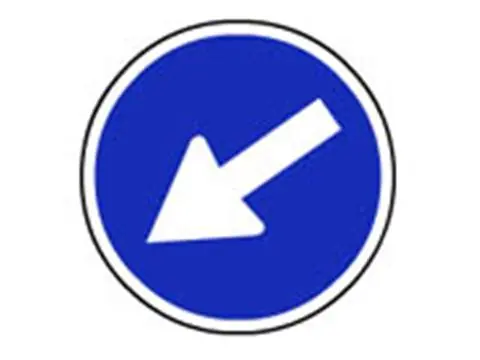
¿Por qué lado de la señal es obligatorio pasar?
On which side of the sign must you pass?
- APor la derecha.On the right.
- BPor la derecha o por la izquierda.On the right or on the left.
- CPor la izquierda.On the left.
ExplanationThis mandatory sign uses an arrow to show the side of the obstacle or traffic island on which you must pass. As the arrow points down to the left, you must pass on the left; if you could pass on either side, the sign would have two arrows.
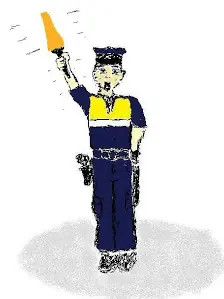
Cuando un agente balancea una luz amarilla, ¿cómo debe actuar el conductor a quien va dirigida esta señal?
When a traffic officer swings an amber light, how must the driver it is directed at act?
- ADebe detenerse.They must stop.
- BDebe disminuir la velocidad y extremar las precauciones.They must reduce speed and take extra care.
- CDebe aumentar su velocidad para favorecer la fluidez de la circulación.They must increase speed to help traffic flow.
ExplanationWhen a traffic officer swings a red or amber light, they are ordering the drivers towards whom the light is directed to stop. It is not just a warning to take care or a signal to speed up.
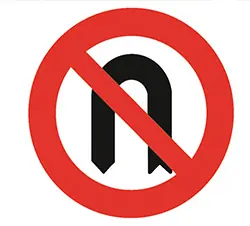
La señal que se observa en la fotografía prohíbe…
The sign in the photo prohibits...
- Acambiar el sentido de la marcha y girar a la izquierda.making a U-turn and turning left.
- Bgirar a la izquierda.turning left.
- Ccambiar el sentido de la marcha.making a U-turn.
ExplanationThis is the no U-turn sign: it prevents you from turning 180 degrees to change direction, but it does not prohibit turning left, which is shown by a different sign.
Un semáforo con una sola luz roja intermitente (por ejemplo, en un paso a nivel) obliga a:
A traffic light with a single flashing red light (for example, at a level crossing) requires you to:
- APasar con precaución sin detenerse.Go through with caution without stopping.
- BDetenerse; no se debe pasar mientras esté encendida.Stop; you must not go through while it is on.
- CAcelerar.Speed up.
ExplanationA flashing red light (common at level crossings or movable bridges) prohibits passing: you must stop.
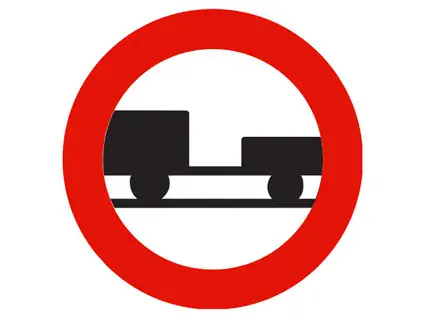
Su turismo arrastra un remolque de un solo eje. ¿Puede circular por una vía a cuya entrada se encuentra esta señal?
Your car is towing a single-axle trailer. May you drive on a road with this sign at its entrance?
- ANo.No.
- BSí.Yes.
- CNo, si la masa máxima autorizada del remolque supera los 750 kg.No, if the maximum authorised mass of the trailer exceeds 750 kg.
ExplanationThe sign in the picture is R-112, which prohibits entry to motor vehicles with a trailer, except single-axle trailers. A car with a single-axle trailer is exempt, so it may use that road.
All topics
- Definitions
- Documents and penalty points
- The driver's condition
- Duties of drivers and pedestrians
- Vehicle safety devices
- Vehicle controls and equipment
- Vehicle lights and horn
- The road and its lanes
- Speed and distances
- Manoeuvres
- Right of way
- Carrying passengers and loads
- Driving safely in difficult conditions
- Vehicle mechanics and maintenance
- Road accidents and first aid
- Defensive and eco-driving
Independent app: not affiliated with or endorsed by the DGT (Spain's Directorate-General for Traffic) or the Ministry of the Interior. The official exam is booked with the DGT and taken at its test centres. The questions here are practice material; the DGT's official question bank is not public.
Basado en datos de la Agencia Estatal Boletín Oficial del Estado (https://www.boe.es). Textos consolidados de carácter meramente informativo. La AEBOE no patrocina ni respalda este sitio.
Parte de las preguntas procede de los tests de la revista «Tráfico y Seguridad Vial» de la DGT, reproducidos con indicación de la fuente.