
DGT test · 1,397 questions
Traffic signs, markings and signals · Page 4 of 28
Road signs, road markings, traffic lights, police signals and temporary markings: what they mean and which one wins when they disagree. The topic with the most questions in the bank.
Questions in this topic, with answers
1,397 questions, 50 per page, with the correct answer and the explanation. Page 4 of 28.
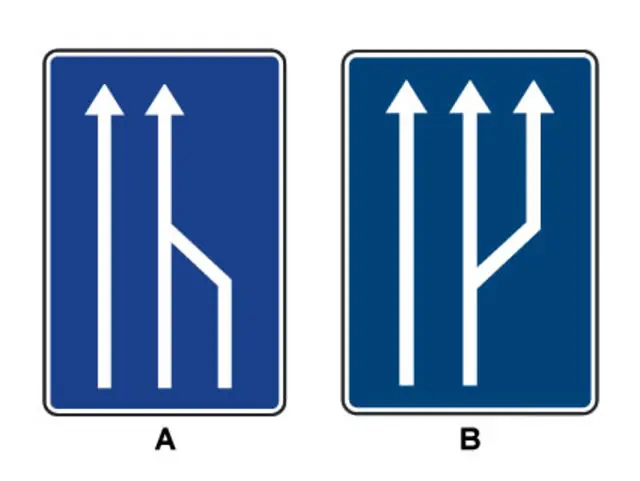
¿Alguna de estas señales indica que termina un carril destinado a la circulación?
Does either of these signs indicate that a traffic lane is ending?
- ASí, la señal A.Yes, sign A.
- BSí, la señal B.Yes, sign B.
- CNo, ninguna de las dos.No, neither of them.
ExplanationSign A is of type S-52 'End of traffic lane': it warns that a lane is disappearing and that you must change lanes. Sign B is S-53b 'Change from two to three traffic lanes', which indicates the opposite: a lane is added.
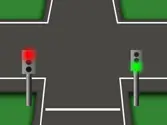
En esta situación, si pretende seguir de frente, ¿a cuál de los dos semáforos debe obedecer?
In this situation, if you intend to go straight on, which of the two traffic lights must you obey?
- AComo la señalización es contradictoria, prevalece la más restrictiva.As the signals contradict each other, the most restrictive one prevails.
- BAl semáforo de la izquierda.The traffic light on the left.
- CAl semáforo de la derecha.The traffic light on the right.
ExplanationWhen there are traffic lights showing different signals on the right and on the left, a driver who intends to turn left or go straight on must only obey the lights immediately to their left.
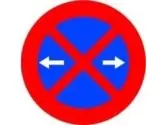
¿Qué indica esta señal de prohibición?
What does this prohibition sign show?
- AQue está prohibido parar y estacionar en el lado de la calzada donde se encuentra la señal, en el tramo comprendido entre las intersecciones o señales más próximas en el sentido de las flechas.That stopping and parking are prohibited on the side of the carriageway where the sign is placed, on the stretch between the nearest junctions or signs in the direction of the arrows.
- BQue está prohibido estacionar en el sentido de las flechas pero se permite la parada.That parking is prohibited in the direction of the arrows, but stopping is allowed.
- CQue está prohibida la circulación en el sentido de las flechas.That driving in the direction of the arrows is prohibited.
ExplanationThis sign shows that, on the side of the carriageway where it is placed, stopping and parking are prohibited along the stretch between the nearest junctions or specific signs. Drivers must respect this restriction along the whole of that stretch for traffic to flow properly and safely.
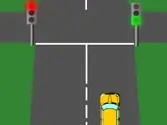
En este caso, con un semáforo a cada lado de la intersección, ¿a cuál tendremos que obedecer?
In this case, with a traffic light on each side of the junction, which one will we have to obey?
- ADepende de la dirección que queramos tomar.It depends on the direction we want to take.
- BAl más restrictivo.The most restrictive one.
- CSiempre al de la derecha.Always the one on the right.
ExplanationIn this case, if we want to turn right, we will have to obey the traffic light that is green, and if we wanted to go straight on or turn left, we would obey the traffic light that is red.
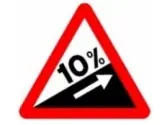
Esta señal indica el peligro por la existencia de un tramo de vía con una fuerte pendiente...
This sign warns of danger from a stretch of road with a steep gradient that is...
- ASuperior al 20 %.More than 20%.
- BAscendente.Uphill.
- CDescendente.Downhill.
ExplanationThe sign warns of danger from a stretch of road with a steep uphill gradient, in this case 10%.
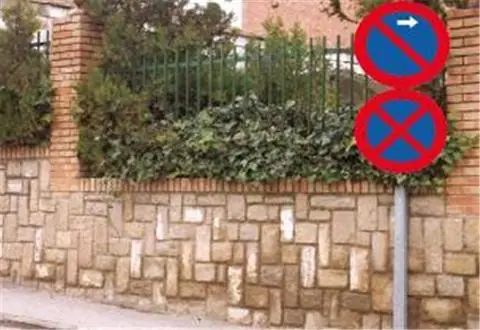
En esta situación, ¿a qué señal debe obedecer?
In this situation, which sign must you obey?
- AA la señal de prohibido parar y estacionar por ser la más restrictiva.The no stopping or parking sign, because it is the more restrictive.
- BA la señal de prohibido estacionar por ser la menos restrictiva.The no parking sign, because it is the less restrictive.
- CA ninguna, ya que en caso de contradicción, las señales se anulan.Neither, because when signs contradict each other they cancel each other out.
ExplanationWhen two signs of the same type seem to contradict each other, the more restrictive one prevails (Article 133 of the General Traffic Regulations (RGC)). Here you must obey the one that prohibits stopping and parking. Signs do not cancel each other out.
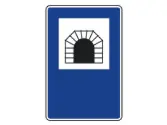
¿Podrá adelantar a partir de esta señal?
May you overtake after this sign?
- ASí, sólo estará prohibido cuando haya entrado en el túnel.Yes, it will only be prohibited once you have entered the tunnel.
- BNo, está prohibido en el tramo afectado por la señal de túnel.No, it is prohibited on the stretch covered by the tunnel sign.
- CNo, si se acercan vehículos en sentido contrario.No, if vehicles are coming in the opposite direction.
ExplanationAs a general rule, overtaking is prohibited in tunnels, underpasses and stretches of road covered by the tunnel sign, unless we have more than one lane in our direction and do not enter the side for oncoming traffic.
En una calzada con doble sentido de circulación y tres carriles, separados por marcas longitudinales discontinuas, ¿puede Ud. utilizar el tercer carril?
On a two-way carriageway with three lanes separated by broken longitudinal markings, may you use the third lane?
- APara circular, no, pero sí para hacer cualquier maniobra como cambio de sentido, adelantamiento, etcétera.Not for driving along, but yes for any manoeuvre such as a U-turn, overtaking, etc.
- BNo, en ningún caso.No, never.
- CSólo podré utilizarlo para adelantar en vías fuera de poblado. En poblado sí lo podré utilizar.I may only use it to overtake on roads outside built-up areas. In built-up areas I may use it.
ExplanationThis is the correct answer. On a two-way carriageway with three lanes, using the third lane is prohibited in all cases. This is because each lane has a specific purpose and the third lane may not be used for driving or for manoeuvres, which ensures the safety of all road users.
¿Qué indica un semáforo en el que se encuentra encendida una luz amarilla fija?
What does a traffic light showing a steady amber light indicate?
- AContinuar la marcha extremando las precauciones y, en ausencia de otras señales, aplicar las normas generales de prioridad.Continue, taking extra care and, if there are no other signs, applying the general right-of-way rules.
- BAcelerar para atravesar la intersección antes de que el semáforo cambie.Speed up to get across the junction before the light changes.
- CDetenerse en condiciones de seguridad, como si se tratase de una luz roja.Stop safely, as if it were a red light.
ExplanationA steady amber light requires you to stop just as a red one does, unless when it comes on the vehicle is so close that it cannot stop safely before the traffic light. It is not an invitation to speed up to get across.
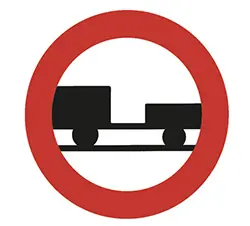
Circula con un turismo con remolque; ¿puede entrar en una vía con esta señal?
You are driving a car with a trailer. May you enter a road with this sign?
- ASí, cuando el remolque tenga un solo eje.Yes, if the trailer has only one axle.
- BNo, con ningún vehículo que arrastre un remolque.No, not with any vehicle towing a trailer.
- CSí, con cualquier conjunto de vehículos.Yes, with any combination of vehicles.
ExplanationThis is sign R-112, no entry for motor vehicles with a trailer, except those with a single axle. A car towing a single-axle trailer may enter; if the trailer has two or more axles, it may not.
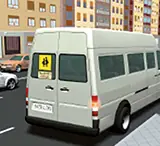
Al aproximarnos a un autobús con esta señal en su parte posterior y que se encuentra parado recogiendo pasajeros, se deberá...
When approaching a bus with this sign on its rear that is stopped picking up passengers, you must...
- AReducir la velocidad y si fuera preciso detener el vehículo.reduce speed and, if necessary, stop.
- BAvisar de nuestra presencia con ráfagas de luz.warn of your presence by flashing your headlights.
- CSiempre, parar detrás del vehículo hasta que reanude la marcha.always stop behind the vehicle until it moves off again.
ExplanationSign V-10 identifies school transport. When it is stopped picking up or dropping off passengers, children may cross unexpectedly, so you must reduce speed and stop only if necessary, not always.
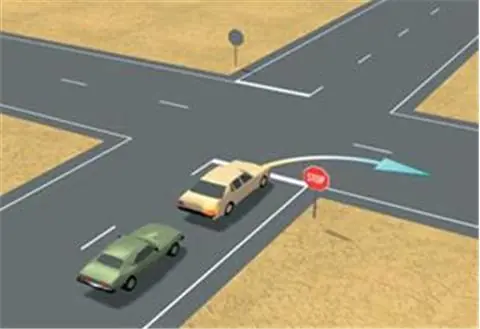
Cuando el vehículo amarillo gire a la derecha, ¿qué debe hacer el vehículo verde?
When the yellow vehicle turns right, what must the green vehicle do?
- AVolver a detenerse ante la línea transversal.Stop again at the transverse line.
- BAcercarse al cruce y detenerse solo si se acerca algún vehículo.Move up to the junction and stop only if a vehicle is approaching.
- CSeguir circulando detrás del vehículo amarillo sin detenerse.Keep driving behind the yellow vehicle without stopping.
ExplanationA STOP sign requires every vehicle to stop, not just the first one. When the yellow vehicle turns, the green vehicle must move up to the stop line and stop there again before giving way and crossing.
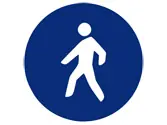
A la vista de la señal, sabrá…
Given the sign, you will know...
- Aque me aproximo a un paso de peatones.that I am approaching a pedestrian crossing.
- Bque se trata de un camino reservado para peatones y prohibido para los demás usuarios.that it is a path reserved for pedestrians and prohibited for other road users.
- Cque los peatones están obligados a transitar por el camino a cuya entrada se encuentra y los demás usuarios pueden entrar, aunque no están obligados.that pedestrians must use the path at whose entrance it stands, and other road users may enter it, although they are not required to.
ExplanationThis is sign R-410, path reserved for pedestrians and compulsory for them: it requires pedestrians to use the path at whose entrance it stands and prohibits other road users from using it. It does not announce a pedestrian crossing.
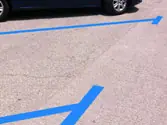
¿Tiene permitido una motocicleta estacionar en una zona delimitada por marcas viales azules?
Is a motorcycle allowed to park in an area marked out with blue road markings?
- ASí.Yes.
- BNo, el estacionamiento sólo está permitido a turismos.No, only cars are allowed to park there.
- CSí, pero sólo si la motocicleta es de dos ruedas.Yes, but only if it is a two-wheeled motorcycle.
ExplanationWhen the markings that mark out places where parking is allowed are blue instead of the usual white, they mean that during certain periods of the day the permitted parking time is limited. Any type of vehicle may park there, following the general parking rules.
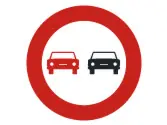
¿Esta señal prohíbe efectuar un cambio de dirección?
Does this sign prohibit turning?
- ANo, solamente prohíbe adelantar.No, it only prohibits overtaking.
- BSí, prohíbe adelantar y efectuar un cambio de dirección.Yes, it prohibits overtaking and turning.
- CNo, pero prohíbe adelantar y efectuar un cambio de sentido.No, but it prohibits overtaking and making a U-turn.
ExplanationThe sign in the picture prohibits overtaking. It does not prohibit turning right or left, but under article 79.1 of the General Traffic Regulations U-turns are prohibited on all stretches where overtaking is prohibited, unless expressly authorised.
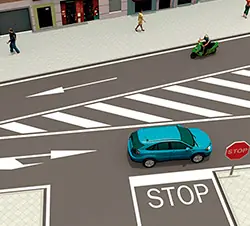
En esta zona cebreada, ¿pueden los conductores circular o pararse sobre ella?
May drivers drive or stop on this hatched area?
- APararse sí pueden, pero circular está prohibido.They may stop on it, but driving on it is prohibited.
- BSí, todos los conductores pueden tanto pararse como circular sobre ella.Yes, all drivers may both stop and drive on it.
- CNo, no pueden ni circular ni pararse sobre ella.No, they may neither drive nor stop on it.
ExplanationHatched markings bordered by a solid line mark out an area closed to traffic: drivers may neither drive nor stop on those diagonal stripes.
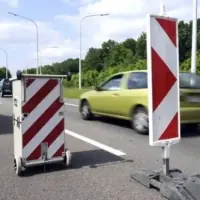
¿Por qué reciben ese nombre los elementos de señalización circunstancial?
Why do circumstantial signalling elements have that name?
- APorque modifican el régimen normal de uso de la víaBecause they change the normal use of the road.
- BPorque solo se utilizan en circunstancias atmosféricas adversasBecause they are only used in bad weather.
- CPorque solo se encuentran en travesías y glorietasBecause they are only found on travesías (stretches of road through a town) and roundabouts.
ExplanationUnder Articles 133.1.b and 142.1 of the General Traffic Regulations (RGC), circumstantial signalling changes the normal use of the road to adapt traffic to changing circumstances, such as roadworks, accidents, congestion or road closures.
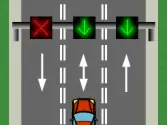
Un carril delimitado por marcas longitudinales dobles discontinuas es un carril...
A lane marked out by double broken longitudinal lines is...
- Areversible.a reversible lane.
- Badicional de circulación.an additional traffic lane.
- Cde utilización en sentido contrario al habitual.a lane for use in the opposite direction to the usual one.
ExplanationA lane marked out on both sides by double broken lines is a reversible lane: its direction of traffic can change and is controlled by lane signals above it. You may only use it if the signal shows a green arrow for your direction.
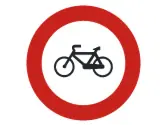
Por una vía así señalizada, ¿qué vehículos no pueden circular?
Which vehicles may not use a road signed like this?
- ATurismos.Cars.
- BMotocicletas.Motorcycles.
- CBicicletas.Bicycles.
ExplanationThe sign in the question prohibits entry to cycles. A bicycle is a two-wheeled cycle.
Una flecha verde iluminada en un semáforo indica:
A lit green arrow on a traffic light indicates:
- AQue se permite el movimiento en el sentido señalado por la flecha.That movement is allowed in the direction shown by the arrow.
- BQue está prohibido girar.That turning is prohibited.
- CQue hay que detenerse.That you must stop.
ExplanationA green arrow allows movement in the direction it shows, giving way to whoever has priority.
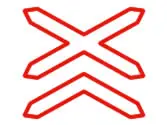
Esta señal advierte de peligro por...
This sign warns of danger because of...
- AProximidad de un paso a nivel sin barreras.The proximity of a level crossing without barriers.
- BPresencia inmediata de un paso a nivel sin barreras.The immediate presence of a level crossing without barriers.
- CPresencia inmediata de un paso a nivel sin barreras de más de una vía férrea.The immediate presence of a level crossing without barriers over more than one railway track.
ExplanationThe double St Andrew's cross indicates the immediate location of a level crossing without barriers over more than one railway track. You must take extreme care, because after one train has passed another may come on the other track. The single cross indicates a level crossing without barriers over only one track.
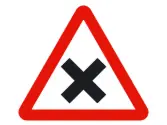
Si encontramos esta señal en una intersección, ¿qué tendremos que hace?
If you find this sign at a junction, what must you do?
- ACeder el paso a todos los vehículos.Give way to all vehicles.
- BAplicar las normas generales de prioridad.Apply the general priority rules.
- CPasar con prioridad.Go through with priority.
ExplanationThis sign does not change the priority rules; it warns you of the danger of an approaching junction.
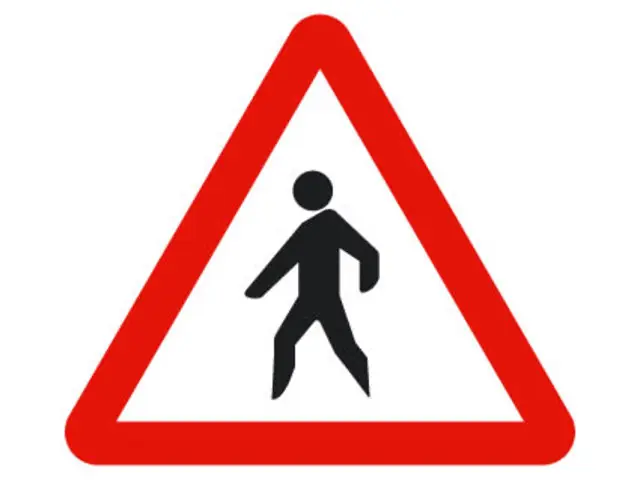
¿Qué peligro indica la señal?
What danger does the sign indicate?
- AQue hay un lugar frecuentado por peatones cerca.That there is a place frequented by pedestrians nearby.
- BQue hay un lugar frecuentado por niños cerca, como escuelas o parques infantiles.That there is a place frequented by children nearby, such as schools or playgrounds.
- CQue hay una zona reservada para peatones cerca.That there is a pedestrian zone nearby.
ExplanationThe sign warns that a place frequented by pedestrians is nearby. This is in line with Article 144 of the RGC, under which warning signs must alert road users to dangers they may not notice in time. This is essential for road safety, because pedestrians are vulnerable and their presence can increase the risk of accidents.
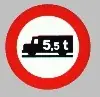
A un camión cuya MMA es de 3,5 toneladas, ¿le afecta esta señal?
Does this sign apply to a lorry with a MAM of 3.5 tonnes?
- ASí, al ser un vehículo destinado al transporte de mercancías.Yes, because it is a vehicle for carrying goods.
- BSí, ya que afecta a los vehículos cuya MMA sea igual o inferior a la indicada.Yes, because it applies to vehicles whose MAM is equal to or less than the one shown.
- CNo.No.
ExplanationThis sign prohibits entry to goods vehicles whose maximum authorised mass exceeds the one shown, 5.5 tonnes. A 3.5-tonne lorry does not exceed it, so it may pass. The inscription shows the mass from which the prohibition applies.
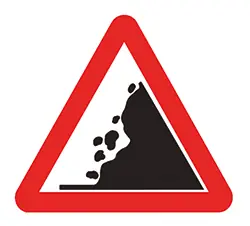
¿Qué medidas deberá adoptar ante esta señal?
What should you do when you see this sign?
- AAumentaré la atención por posibles desprendimientos y obstáculos en la calzada.I will pay more attention because of possible falling rocks and obstacles on the carriageway.
- BAceleraré, pasando la zona lo más rápidamente posible para dejar paso libre.I will speed up, getting through the area as quickly as possible to leave the way clear.
- CMe autoriza a circular en sentido contrario, extremando la precaución, en caso de desprendimientos.It allows me to drive on the opposite side of the road, taking extreme care, if there are rockfalls.
ExplanationThis is the falling rocks warning sign: it warns that stones may fall onto the carriageway or that there may be obstacles that have already fallen. The right thing to do is to pay more attention and adapt your speed, not to speed up or move onto the opposite side of the road.
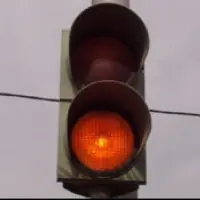
¿Qué significa un semáforo con dos luces amarillas intermitentes?
What does a traffic light with two flashing amber lights mean?
- AProximidad de un paso a nivelA level crossing is coming up
- BObligación de extremar la precauciónYou must take extreme care
- CDetención inmediata obligatoriaYou must stop immediately
ExplanationA traffic light with a flashing amber light requires road users to take extreme care and, if necessary, give way to vehicles coming along the crossing road from both the left and the right.
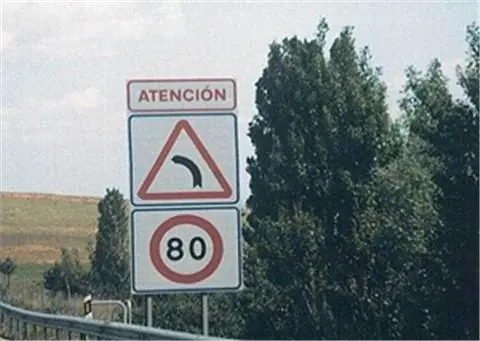
Estas señales indican la velocidad máxima...
These signs indicate the maximum speed...
- Aaconsejada en la curva.advised on the bend.
- Bpermitida en toda la vía.permitted on the whole road.
- Cpermitida en la curva.permitted on the bend.
ExplanationWhen a speed limit is on the same post as a warning sign, it applies only while that hazard lasts. Here, 80 km/h is the maximum speed permitted on the signposted bend, not on the whole road, and it is not a recommendation.
¿Dónde nos situaremos para cambiar el sentido en una carretera convencional sin marcas viales?
Where should we position ourselves to make a U-turn on a conventional road without road markings?
- AJunto al eje de la calzada.Next to the centre line of the carriageway.
- BA la derecha de la calzada.On the right of the carriageway.
- CEn un lugar adecuado, de forma que interceptemos la vía lo menos posible.At a suitable place, so that we block the road as little as possible.
ExplanationTo make a U-turn you must choose a suitable place, so that you block the road as little as possible. If staying on the carriageway would stop other vehicles from continuing, you must leave it on the right-hand side and wait until traffic conditions allow the U-turn.
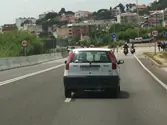
¿Circula correctamente este vehículo?
Is this vehicle being driven correctly?
- ASí, puesto que las líneas son discontinuas.Yes, because the lines are broken.
- BNo, tendrá que circular sin estar sobre la línea discontinua.No, it must be driven without being on the broken line.
- CSí, por ser un vehículo pesado.Yes, because it is a heavy vehicle.
ExplanationYou must not drive on a broken longitudinal line, except when it is necessary because of the width of the lanes and it is safe to do so. In the picture the lanes are wide, so the vehicle must be driven within its lane and not on the line.
Si quiere girar a la derecha y el semáforo está en rojo, ¿el semáforo le afecta?
If you want to turn right and the traffic light is red, does the light apply to you?
- ANo. El semáforo solo me afecta si sigo recto.No. The traffic light only applies to me if I go straight on.
- BSolo si hay peatones cruzando la calle de la derecha.Only if there are pedestrians crossing the street on the right.
- CSí. Debo esperar a que se ponga en verde.Yes. I must wait for it to turn green.
ExplanationUnder Annex I of the RGC, a steady red light prohibits passing: you must not go past the traffic light or enter the junction, whichever direction you are going to take. To turn right you must wait for the green light, unless a green arrow allows that turn.
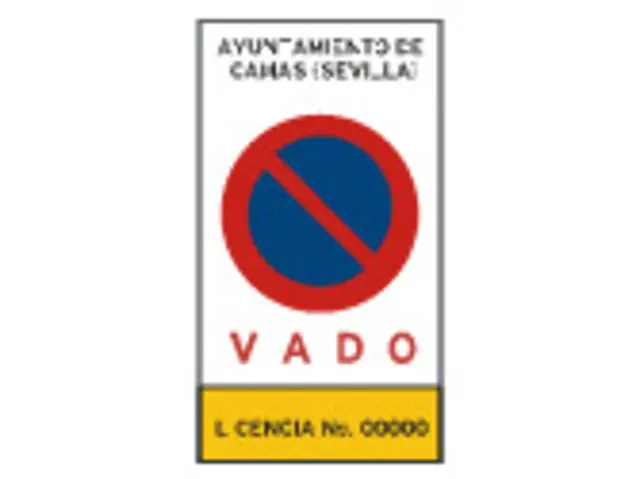
Frente a un vado (entrada para vehículos), esta señal prohíbe...
In front of a vado (vehicle entrance), this sign prohibits...
- Asolo estacionar.only parking.
- Bsolo detenerse.only stopping.
- Cdetenerse y estacionar.stopping and parking.
ExplanationThe sign in the picture, with a blue background, a single red stripe and the word 'Vado', prohibits parking in front of the vehicle entrance. Stopping briefly is allowed; a ban on stopping would require the sign with a red cross.
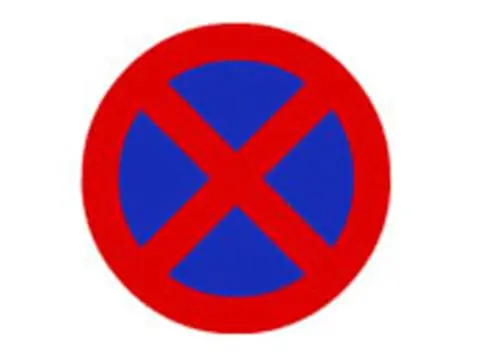
La señal prohíbe...
The sign prohibits...
- Ala parada de vehículos, pero permite estacionar.stopping, but allows parking.
- Bel estacionamiento de vehículos en días pares, pero permite la parada.parking on even-numbered days, but allows stopping.
- Cla parada y el estacionamiento de vehículos.stopping and parking.
ExplanationThis is sign R-307, ‘No stopping or parking’: with a red cross on a blue background, it prohibits stopping and parking on the side of the carriageway where it is placed. The sign that prohibits only parking, R-308, has a single diagonal stripe.
Si encontramos una señal de STOP y una de CEDA EL PASO juntas...
If you find a STOP sign and a GIVE WAY sign together...
- Atendremos que ceder el paso en cualquier caso.you will have to give way in any case.
- Bnos detendremos para ceder el paso.you will stop in order to give way.
- Ccederemos el paso a los vehículos que se aproximen por el lado derecho.you will give way to vehicles approaching from the right.
ExplanationWhen two signs of the same type appear to contradict each other, you must obey the more restrictive one: in this case the STOP sign, so you stop in order to give way.
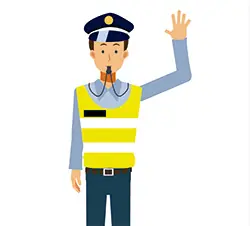
¿Qué debe hacer un peatón si, cuando va a cruzar una vía, se encuentra de frente a un agente con el brazo levantado verticalmente?
What must a pedestrian do if, when about to cross a road, they are facing a traffic officer with their arm raised vertically?
- ADetenerse.Stop.
- BCruzar. Las señales de los agentes sólo obligan a los conductores de vehículos.Cross. Traffic officers' signals only apply to drivers of vehicles.
- CDetenerse, excepto si un semáforo le da preferencia de paso, en cuyo caso debe cruzar.Stop, unless a traffic light gives them right of way, in which case they must cross.
ExplanationA traffic officer's arm raised vertically requires all road users to stop, including pedestrians; traffic officers' instructions prevail over traffic lights and any other signal.
¿Qué debe hacer un peatón si, al intentar cruzar la calle, se encuentra con un agente con el brazo levantado verticalmente?
What must a pedestrian do if, when about to cross the street, they see a traffic officer with their arm raised straight up?
- ADetenerse.Stop.
- BCruzar. Las señales de los agentes sólo obligan a los conductores de vehículos.Cross. Traffic officers' signals only apply to drivers of vehicles.
- CDetenerse, excepto si un semáforo da prioridad, en cuyo caso cruzar.Stop, unless a traffic light gives them priority, in which case cross.
ExplanationA traffic officer with their arm raised straight up means that all road users must stop. This rule is clearly set out in the General Traffic Regulations, which state that traffic officers' signals must be obeyed immediately. So when they see this signal, the pedestrian must stop before crossing the road, whatever any traffic light or other sign shows. This keeps both the pedestrian and the vehicles on the road safe.
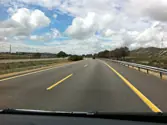
Estas marcas viales indican que...
These road markings indicate that...
- Aes una vía de servicio.it is a service road.
- Bes una vía de atención preferente.it is a road requiring special attention.
- Ces una zona que está en obras.it is an area with roadworks.
ExplanationWhen road markings are yellow or road signs have a yellow background, they tell us that we are in an area with roadworks. The meaning of the signs does not change.

Si encontramos esta señal, ¿podremos seguir circulando si disponemos de neumáticos con clavos?
If you find this sign, may you continue if you have studded tyres?
- ANo, los neumáticos con clavos están prohibidos en España.No, studded tyres are prohibited in Spain.
- BNo, debemos montar obligatoriamente cadenas en las ruedas motrices.No, you must fit chains on the driving wheels.
- CSí.Yes.
ExplanationSign R-412 “Snow chains” means you must not continue without snow chains or other approved anti-skid devices acting on at least one wheel on each side of the same driving axle, or without special snow tyres. Studded tyres are special snow tyres, so you may continue.
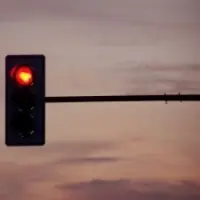
¿Qué indica una luz roja no intermitente en un semáforo circular para vehículos?
What does a steady (non-flashing) red light on a round traffic light for vehicles mean?
- AProhibido el paso temporalmente por obrasNo entry for the time being because of roadworks
- BObligación de extremar la precauciónYou must take extreme care
- CProhibido el pasoNo entry
ExplanationA traffic light showing a steady red light prohibits passing on the road where it is located, and vehicles must not go past either the traffic light or the nearest stop line before it.
Una zona marcada con franjas blancas oblicuas y paralelas, enmarcada por una línea continua (cebreado):
An area marked with parallel diagonal white stripes, framed by a continuous line (hatched markings):
- AEs un carril normal de circulaciónIs a normal traffic lane
- BEstá prohibido circular por él; es para canalizar el tráficoYou must not drive on it; it is used to channel traffic
- CSolo pueden usarlo motosOnly motorcycles may use it
ExplanationUnder the road-marking catalogue (RD 465/2025), no driver may enter hatched markings with their vehicle, except those required to drive on the hard shoulder. It is not a traffic lane: it is used to channel and separate traffic flows.
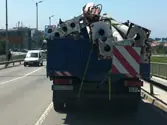
¿Qué indica la señalización de este vehículo?
What do the markings on this vehicle indicate?
- AQue se trata de un vehículo que transporta mercancías peligrosas.That it is a vehicle carrying dangerous goods.
- BQue tiene limitación de velocidad.That it has a speed limit.
- CQue transporta una carga que sobresale por detrás.That it is carrying a load that sticks out at the back.
ExplanationIn all cases, a load that sticks out from the back of a vehicle, except on vehicles less than 1 m wide, must be marked with a 50 by 50 cm panel with alternating red and white diagonal stripes, placed at the rear end of the load and perpendicular to the vehicle's axis. When the load sticks out lengthwise across the whole width of the back of the vehicle, we will place 2 panels (V-20) with their stripes forming an upside-down «V».
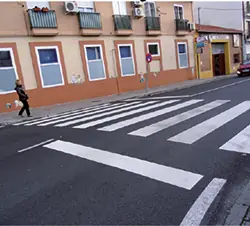
Este conjunto de marcas blancas pintadas en la calzada...
This set of white markings painted on the carriageway...
- Aobliga al vehículo a detenerse siempre.always requires the vehicle to stop.
- Bindica un paso para peatones.indicates a pedestrian crossing.
- Cindica que ningún conductor puede entrar con su vehículo o animal en esta zona.indicates that no driver may enter this area with their vehicle or animal.
ExplanationWide white bands parallel to the centre line of the carriageway are the pedestrian crossing marking. They require you to give way to pedestrians who are crossing or about to cross, but not to stop every time if the crossing is clear.
En una zona señalizada para carga y descarga, ¿está permitido estacionar?
Is parking allowed in an area marked for loading and unloading?
- ASí, en cualquier caso.Yes, in any case.
- BNo.No.
- CSí, pero solo fuera de las horas de utilización.Yes, but only outside the hours when it is in use.
ExplanationUnder Article 91.2.g of the General Traffic Regulations (RGC), parking in an area reserved for loading and unloading during its hours of use is considered dangerous or obstructive parking. Outside those hours, which are usually shown on a sign, you may park there.
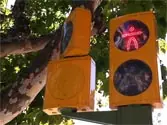
Las indicaciones de este semáforo en rojo están dirigidas a...
The signals of this red traffic light are meant for...
- Atodos los usuarios de la vía.all road users.
- Bpeatones y ciclistas.pedestrians and cyclists.
- Cpeatones exclusivamente.pedestrians only.
ExplanationA steady (non-flashing) red light in the shape of a standing pedestrian tells pedestrians that they must not start crossing the carriageway.
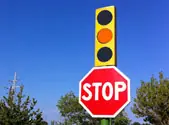
Estando el semáforo en amarillo intermitente, ¿cómo actuará usted?
With the traffic light flashing amber, what will you do?
- APasaré extremando la precaución.I will go through, taking extreme care.
- BMe detendré para respetar el STOP.I will stop to obey the STOP sign.
- CPasaré cediendo el paso a derecha e izquierda.I will go through, giving way to the right and left.
ExplanationA flashing amber light, or two alternately flashing amber lights, require drivers to take extreme care and, where necessary, give way. They also do not exempt drivers from complying with other signs that require them to stop. Therefore, in the situation in the picture, as there is a STOP sign, we must stop.
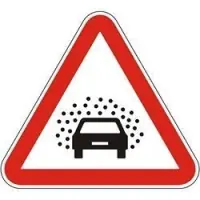
¿De qué previene la señal vertical de visibilidad reducida?
What does the reduced visibility warning sign warn you about?
- AZona escolar con niños cruzando la víaA school zone with children crossing the road.
- BCurva demasiado pronunciadaA very sharp bend.
- CFenómenos meteorológicos como la nieblaWeather conditions such as fog.
ExplanationSign P-33, ‘Reduced visibility’, warns of a stretch of road ahead where driving is made difficult by a significant loss of visibility due to fog, rain, snow, smoke, etc.
El orden de prioridad entre señales es...
The order of priority between signs is...
- ASemáforos, circunstanciales, señales verticales...Traffic lights, temporary signs, road signs...
- BAgentes, semáforos, señales circunstanciales...Traffic officers, traffic lights, temporary signs...
- CAgentes, señales circunstanciales, semáforos...Traffic officers, temporary signs, traffic lights...
ExplanationThe order of priority between signs is as follows: traffic officers; temporary signs; traffic lights; road signs; road markings.
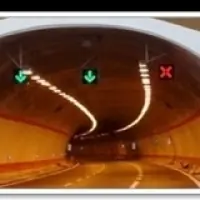
¿Qué forma puede tener la luz de un semáforo cuadrado o de carril?
What shape can the light of a square (lane) traffic light have?
- ATriánguloA triangle.
- BCirculoA circle.
- CAspaA cross (X).
ExplanationA red X-shaped light on a square or lane traffic light means you must not use that lane and must leave it as soon as possible. These lights can never be shaped like a circle or a triangle.
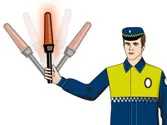
Un agente con una luz roja en movimiento indica...
A traffic officer with a moving red light indicates...
- Areducir la velocidad.that you must slow down.
- Bla zona por la que debe circular.the area where you must drive.
- Cobligación de detenerse.that you must stop.
ExplanationAn officer who swings a red light requires the road users towards whom the light is directed to stop. An officer holding out an arm and moving it up and down requires drivers approaching on the side of the arm giving the signal, at right angles to that arm, to slow down.
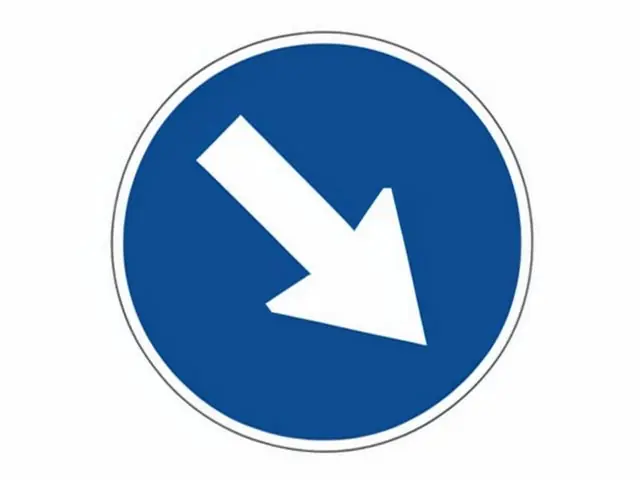
Señala obligatoriedad de...
This sign indicates an obligation to...
- Acircular por el lado del refugio indicado.pass on the side of the traffic island shown.
- Ba girar a la derecha en la próxima intersección.turn right at the next junction.
- Ca seguir el movimiento giratorio que indica.follow the circular movement it shows.
ExplanationThe correct answer is to pass on the side of the traffic island it shows, as required by the compulsory passing signs (R-401a and R-401b). These signs require vehicles to pass on the side of the refuge or traffic island they indicate, making traffic safer and more orderly. Under Article 132 of the RGC, all road users must obey traffic signs that establish obligations.
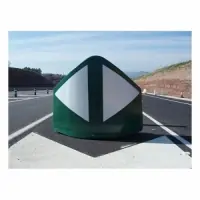
¿Cuál es la finalidad de los dispositivos de guía?
What is the purpose of guidance devices?
- AProhibir el paso temporalmenteTo prohibit passage temporarily.
- BAdvertir de una carretera de peaje cercanaTo warn of a toll road nearby.
- CIndicar los obstáculos de la víaTo indicate obstacles on the road.
ExplanationUnder Article 142.4.b of the General Traffic Regulations (RGC), guidance devices are used to indicate the edge of the carriageway, the presence of a bend and the direction of traffic, and the limits of structures or other obstacles, to mark out lanes and to warn of risks.
All topics
- Definitions
- Documents and penalty points
- The driver's condition
- Duties of drivers and pedestrians
- Vehicle safety devices
- Vehicle controls and equipment
- Vehicle lights and horn
- The road and its lanes
- Speed and distances
- Manoeuvres
- Right of way
- Carrying passengers and loads
- Driving safely in difficult conditions
- Vehicle mechanics and maintenance
- Road accidents and first aid
- Defensive and eco-driving
Independent app: not affiliated with or endorsed by the DGT (Spain's Directorate-General for Traffic) or the Ministry of the Interior. The official exam is booked with the DGT and taken at its test centres. The questions here are practice material; the DGT's official question bank is not public.
Basado en datos de la Agencia Estatal Boletín Oficial del Estado (https://www.boe.es). Textos consolidados de carácter meramente informativo. La AEBOE no patrocina ni respalda este sitio.
Parte de las preguntas procede de los tests de la revista «Tráfico y Seguridad Vial» de la DGT, reproducidos con indicación de la fuente.