
DGT test · 1,397 questions
Traffic signs, markings and signals · Page 8 of 28
Road signs, road markings, traffic lights, police signals and temporary markings: what they mean and which one wins when they disagree. The topic with the most questions in the bank.
Questions in this topic, with answers
1,397 questions, 50 per page, with the correct answer and the explanation. Page 8 of 28.
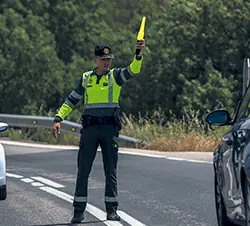
El agente balancea una luz amarilla; ¿qué indica?
The traffic officer is swinging a yellow light. What does it mean?
- APrecaución al circular.Drive with caution.
- BEl carril por el que se debe circular.The lane you must use.
- CObliga a detenerse a los conductores hacia los que dirige la luz.Drivers towards whom the light is directed must stop.
ExplanationA yellow (or red) light swung by a traffic officer requires the drivers it is directed at to stop; traffic officers' signals prevail over traffic lights and road signs.
Un agente realizando una serie de toques cortos y frecuentes con el silbato, ¿qué indica?
What does a traffic officer giving a series of short, frequent blasts on the whistle indicate?
- AQue tenemos que detenernos.That you must stop.
- BQue podemos reanudar la marcha.That you may move off again.
- CQue tenemos que circular con precaución.That you must drive with care.
ExplanationAccording to the officers' signals in Annex I of the General Traffic Regulations, a series of short, frequent whistle blasts orders vehicles to stop, while one long blast orders them to move off again.
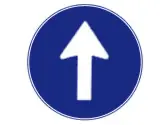
Esta señal, ¿nos indica que se trata de una vía de sentido único?
Does this sign tell us that the road is one-way?
- ASí.Yes.
- BNo.No.
- CDepende del lado de la vía donde se encuentre.It depends on which side of the road it is on.
ExplanationThis sign does not indicate that the road is one-way; it indicates the direction that vehicles are required to follow.
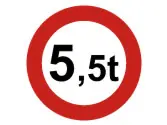
Esta señal impide el acceso a...
This sign prohibits access to...
- AExclusivamente camiones y furgones.Lorries and vans only.
- BCualquier vehículo cuya masa máxima autorizada exceda la indicada.Any vehicle whose maximum authorised mass exceeds the figure shown.
- CLos vehículos cuya masa en carga supere la indicada.Vehicles whose laden mass exceeds the figure shown.
ExplanationThe sign in the question prohibits the passage of vehicles whose laden mass exceeds the figure shown in tonnes. If the vehicle, with or without a load, weighs more than the figure shown, it may not pass. This sign applies to all vehicles. Do not confuse laden mass with maximum authorised mass: laden mass is the actual mass of the vehicle and its load, including the mass of the crew and passengers; maximum authorised mass is the maximum mass allowed for using a loaded vehicle on public roads.
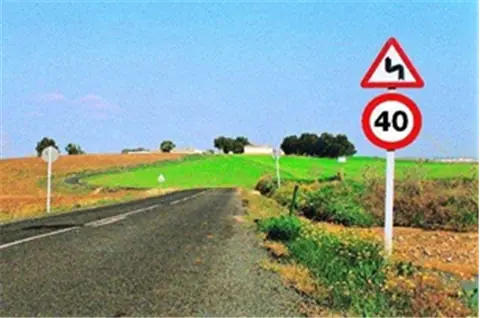
La señal prohíbe circular a más de 40 kilómetros por hora. ¿Hasta dónde está prohibido?
The sign prohibits driving at more than 40 km/h. Up to what point does the prohibition apply?
- AHasta que finalice la línea longitudinal continua.Until the continuous longitudinal line ends.
- BHasta que encuentre una señal de fin de prohibido adelantar.Until you come to an end-of-no-overtaking sign.
- CHasta que finalice el tramo de curvas.Until the stretch of bends ends.
ExplanationWhen a speed limit is on the same post as a danger warning sign, it applies only while that danger lasts. Here the dangerous bends sign limits speed to 40 km/h until the stretch of bends ends, not until a continuous line ends.
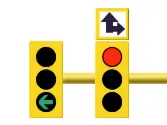
En una intersección con un semáforo con flecha verde hacia la izquierda y otro contiguo con luz roja, ¿qué haremos si pretendemos girar a la izquierda?
At a junction with one traffic light showing a green arrow to the left and another next to it showing a red light, what will we do if we intend to turn left?
- APasar ya que tenemos prioridad.Go, because we have priority.
- BEsperar, porque el semáforo está rojo.Wait, because the traffic light is red.
- CPasar cediendo el paso.Go, giving way.
ExplanationA green arrow indicates that vehicles may go in the direction shown by the arrow, even if a red light is lit at the same time. In this case the vehicle may move forward with caution, giving way.
Se aproxima conduciendo su vehículo a una intersección en la que un agente de circulación le hace señales con el brazo izquierdo extendido moviéndolo alternativamente de arriba abajo. ¿Qué debe hacer si Ud. se dirige al agente por el lado correspondiente al brazo que ejecuta la señal y perpendicularmente a dicho brazo?
You are driving towards a junction where a traffic officer is signalling to you with the left arm held out, moving it alternately up and down. What must you do if you are approaching the officer on the side of the arm giving the signal and perpendicular to that arm?
- ADetenerme antes de penetrar en la intersección ante la línea de detención.Stop at the stop line before entering the junction.
- BDisminuir la velocidad y circular con precaución.Slow down and drive with caution.
- CAcelerar la marcha para pasar rápido.Speed up to get through quickly.
ExplanationSlowing down and driving with caution is correct because the officer is telling you to continue, but safely. By reducing speed, you can observe the junction better and be ready for any unexpected situation, such as pedestrians or vehicles crossing.
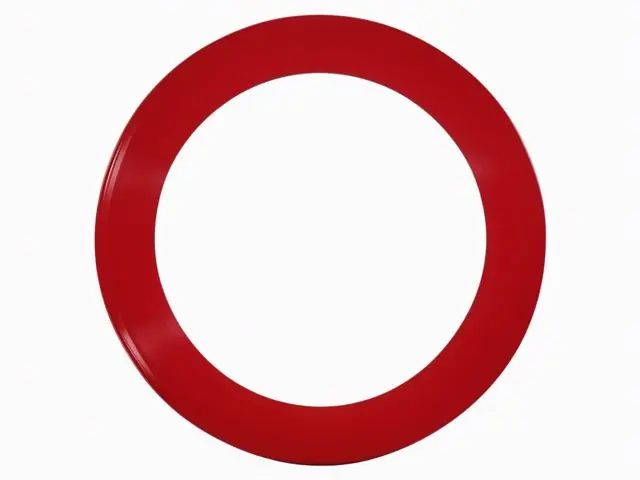
¿A qué tipos de vehículos prohíbe circular esta señal?
Which types of vehicle does this sign prohibit from travelling?
- AA los vehículos de motor.Motor vehicles.
- BA motocicletas y automóviles.Motorcycles and motor cars.
- CA toda clase de vehículos.All types of vehicle.
ExplanationThe 'no vehicles' prohibition sign means that no type of vehicle may travel on the road. It usually takes the form of a red circle with a white background and no other symbols. It is found on roads or in areas where traffic is restricted or prohibited, such as pedestrian streets, restricted areas or places that require a special permit. Example: in the historic centres of many Spanish cities this sign is used to restrict vehicle access and keep pedestrians safe.
¿puede un agente encargado de la vigilancia del tráfico, hacer señales distintas de las reglamentariamente establecidas?
Can an officer in charge of traffic control make signals other than those set out in the regulations?
- ANo, solamente puede hacer señales que estén reglamentariamente establecidas.No, they can only make signals set out in the regulations.
- BSi, siempre que sean claramente visibles y fáciles de entender.Yes, as long as they are clearly visible and easy to understand.
- CSi, pero en este caso, no estamos obligados a obedecerlas.Yes, but in that case we do not have to obey them.
ExplanationAny instruction given by a traffic officer that is clearly visible and easy to understand must be obeyed.
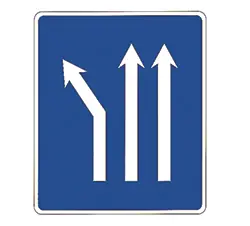
La flecha izquierda de la señal, ¿qué indica?
What does the left arrow on the sign indicate?
- AObliga a seguir la dirección de la flecha en la próxima intersección.It requires you to follow the direction of the arrow at the next junction.
- BQue en el próximo tramo se desvía el carril de la izquierda.That the left lane is diverted on the next stretch.
- CQue es obligatorio circular por el arcén izquierdo.That you must drive on the left hard shoulder.
ExplanationThe blue panel shows the state of the lanes on the next stretch: the curving arrow indicates that the left lane will soon be diverted, so that drivers in it can get ready or change lane in good time.
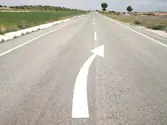
¿Qué indica esta flecha?
What does this arrow show?
- AObligación de girar a la derecha.An obligation to turn right.
- BRetorno.Move back in.
- CFin de carril.End of lane.
ExplanationThis is the «move back in» arrow (M-5.5): it announces that you are approaching a continuous line that prohibits driving to its left, so you must not start an overtaking manoeuvre or, if you have already started it, you must finish it as soon as possible.
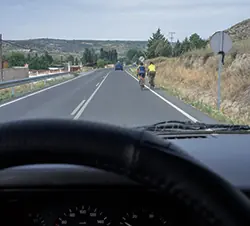
Para adelantar al grupo de ciclistas, el vehículo rebasa la línea continua y ocupa el carril destinado a la circulación en sentido contrario; ¿es correcto su comportamiento?
To overtake the group of cyclists, the vehicle crosses the solid line and moves into the lane for oncoming traffic. Is this correct?
- ASí, y debe guardar una separación lateral de, al menos, 1,5 metrosYes, and it must leave a lateral gap of at least 1.5 metres.
- BSolo es correcto si no existe una señal vertical que prohíba adelantar.It is only correct if there is no road sign prohibiting overtaking.
- CNo, porque en este tramo de vía está prohibido el adelantamiento.No, because overtaking is prohibited on this stretch of road.
ExplanationTo overtake cyclists, you are allowed to cross the solid line and enter the opposite side of the road if there is enough visibility and space, leaving a lateral gap of at least 1.5 metres. This exception is designed to protect cyclists.
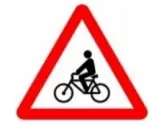
¿De qué nos advierte esta señal ?
What does this sign warn us of?
- ADel peligro por la proximidad de un tramo con circulación frecuente de ciclistasDanger because you are approaching a stretch where cyclists often ride.
- BDe la obligación para los conductores de ciclos de circular por la vía a cuya entrada está situada esta señal.An obligation for riders of cycles to use the road at whose entrance this sign is placed.
- CDe que la entrada está prohibida a ciclos y ciclomotores.That entry is prohibited for cycles and mopeds.
ExplanationThis triangular sign warns of danger because you are approaching a stretch where cyclists often ride.
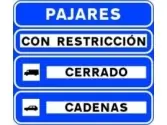
A partir de la señal que se muestra en la imagen, ¿qué medidas deben tomar los turismos?
Given the sign shown in the picture, what must cars do?
- ANo pueden circular, ya que el puerto está cerrado.They may not go through, because the mountain pass is closed.
- BTienen la obligación del uso de cadenas para nieve u otro dispositivo autorizado.They must use snow chains or another approved device.
- CPueden circular sólo por el carril derecho sin usar el izquierdo.They may only use the right lane, not the left.
ExplanationThe sign shown in the picture refers to a mountain pass and states that cars must carry chains or other approved anti-skid devices, to ensure safety in snow or ice. This obligation is temporary and depends on conditions on the stretch shown.
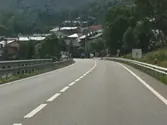
Cuando la separación entre los trazos de una línea discontinua es más corta que en el caso general, ¿qué indica?
When the gaps between the dashes of a broken line are shorter than normal, what does this indicate?
- AQue es un carril especial.That it is a special lane.
- BLa proximidad de un tramo que presenta un riesgo especial.That a stretch with a special risk is close.
- CQue la línea discontinua pasará a ser una línea adosada.That the broken line will become a double (solid and broken) line.
ExplanationShorter gaps between the dashes of a broken line indicate that a stretch of road with a special risk is close, or that the line is about to become a solid line.
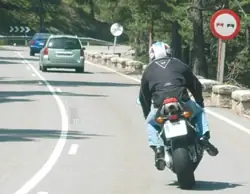
A partir de la señal de la fotografía, ¿Qué distancia de seguridad es obligatorio mantener, como mínimo, con la motocicleta?
After the sign in the photograph, what is the minimum safe distance you must keep from the motorcycle?
- A50 metros.50 metres.
- BUna separación que permita al vehículo que circula detrás adelantar con seguridad.A gap that allows the vehicle behind to overtake safely.
- CUna separación que permita detenerse sin colisionar con ella.A gap that allows you to stop without colliding with it.
ExplanationBehind another vehicle you must always leave enough space to stop without hitting it if it brakes sharply (Article 54 of the RGC). The extra gap so that the vehicle behind can overtake is not required where overtaking is prohibited, as after this sign, and there is no fixed distance of 50 metres for cars.
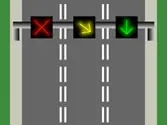
Circula por el carril izquierdo y se enciende el aspa roja. ¿Qué debe hacer?
You are driving in the left lane and the red cross lights up. What must you do?
- ACambiar de carril rápidamente.Change lane quickly.
- BDetenerme en el próximo cruce.Stop at the next junction.
- CDetenerme debajo del aspa roja.Stop under the red cross.
ExplanationOn a lane control signal, a red light in the shape of a cross prohibits using that lane: anyone driving in it must leave it as soon as possible and safely. It does not require you to stop under the cross or at the next junction.
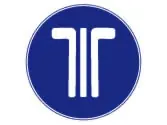
Un vehículo que no disponga de equipo de telepeaje, ¿podrá pasar por el carril así señalizado?
May a vehicle without electronic toll equipment go through the lane signed like this?
- ASí.Yes.
- BSí, si abona el peaje en efectivo al final del carril.Yes, if it pays the toll in cash at the end of the lane.
- CNo.No.
ExplanationThe sign in the question means that vehicles using the lane or lanes signed like this must pay the toll with the dynamic toll or electronic toll system.
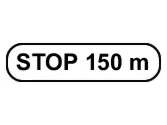
Este panel, colocado bajo la señal de ceda el paso, indica la distancia...
This panel, placed under the give way sign, indicates the distance...
- Aal final de la prescripción.to the end of the restriction.
- Ba la que se encuentra la señal de ceda el paso de la próxima intersección.to the give way sign at the next junction.
- Ca la que se encuentra la señal de detención obligatoria o stop de la próxima intersección.to the compulsory stop (STOP) sign at the next junction.
ExplanationThis panel, placed under the 'give way' sign, indicates the distance to the 'Compulsory stop' or 'STOP' sign at the next junction.
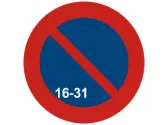
Hoy es primero de mes. Sin molestar a otros usuarios, ¿puede estacionar con su motocicleta junto a esta señal?
Today is the first day of the month. Without inconveniencing other road users, can you park your motorcycle next to this sign?
- ASí, pero solo a partir de las 9 h. de la mañana.Yes, but only from 9 in the morning.
- BNo.No.
- CSi, ya que la señal solo prohíbe hasta el día 31 a las 24.00h.Yes, because the sign only prohibits parking until 24:00 on the 31st.
ExplanationThe 'no parking from the 16th to the 31st' sign prohibits parking on that side from 9:00 on the 16th until 9:00 on the 1st of the following month. That is why on the 1st you may only park from 9 in the morning. This sign does not prohibit stopping.
Una línea longitudinal continua pintada en el centro de la calzada. Selecciona la afirmación correcta.
A continuous longitudinal line is painted in the centre of the carriageway. Choose the correct statement.
- ANo puede ser rebasada ni pisada por los vehículosVehicles may not cross it or drive on it
- BNo puede ser rebasada, aunque sí pisada para adelantarIt may not be crossed, although you may drive on it to overtake
- CPuede rebasarse cuando no venga nadie de frenteIt may be crossed when nobody is coming the other way
ExplanationA continuous longitudinal line may not be crossed or driven on; only a broken line may be crossed, with caution.
¿Qué restricciones se aplican a la circulación en un puerto de montaña así señalizado?
What traffic restrictions apply on a mountain pass with this sign?
- ALos camiones no podrán circular.Lorries may not use it.
- BLos turismos pueden circular sin restricciones.Cars may use it without restrictions.
- CNingún vehículo puede acceder al puerto de montaña.No vehicle may enter the mountain pass.
ExplanationSign S-21 «Road conditions on a stretch or mountain pass» gives the state of the pass: here it is closed to lorries, which may not use it, and cars may only get through with chains. So access is not closed to everyone, and cars do not travel without restrictions.
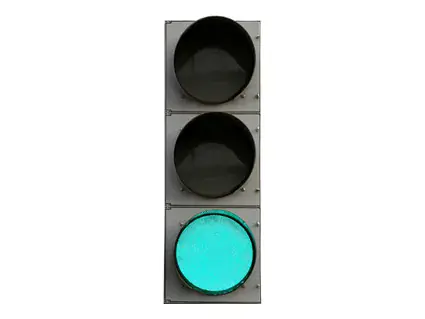
La luz verde de un semáforo circular...
A green light on a circular traffic light...
- APermite pasar pero cediendo el paso a otros vehículos.Allows you to go, but giving way to other vehicles.
- BProhíbe pasar.Prohibits you from going.
- CPermite pasar con prioridad.Allows you to go with priority.
ExplanationA green light on a circular traffic light allows you to go with priority, because it means that drivers may proceed without obstructing traffic, as long as they do not block the junction or end up stopped in the middle of a pedestrian crossing.
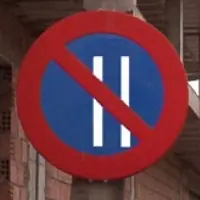
¿Existe la señal vertical de estacionamiento prohibido los días pares?
Is there a road sign for ‘no parking on even-numbered days’?
- ANo; para el estacionamiento alterno solo existen las señales de primera y segunda quincena.No; for alternate-side parking there are only the signs for the first and second half of the month.
- BSí.Yes.
- CNo, únicamente existe la de estacionamiento prohibido los días impares.No, there is only the ‘no parking on odd-numbered days’ sign.
ExplanationThe 2025 sign catalogue abolished the signs for no parking on odd-numbered days and on even-numbered days, which had to be removed within one year. For alternate-side parking, R-308c (first half of the month) and R-308d (second half of the month) remain.
Una línea continua en la calzada significa que, como norma general...
A continuous line on the carriageway means that, as a general rule...
- ANo debe atravesarseIt must not be crossed
- BPuede cruzarse para adelantar siempreIt may always be crossed to overtake
- CSolo afecta a peatonesIt only affects pedestrians
ExplanationA continuous line must not be crossed, except in exceptional cases allowed by the rules.
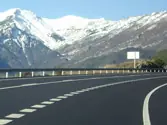
¿Qué indica la marca vial discontinua?
What does the broken road marking show?
- AUn carril Bus.A bus lane.
- BUn carril de aceleración.An acceleration lane.
- CUn carril especial.A special lane.
ExplanationA road marking that is noticeably wider than usual shows that there is a special lane. When the gaps between the dashes of a broken line are shorter, it announces a continuous line or a special risk.
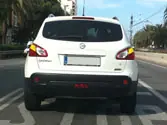
Si está detenido en una señal de stop, ¿puedes usar su teléfono móvil?
If you are stopped at a stop sign, may you use your mobile phone?
- ASí, porque el vehículo está detenido.Yes, because the vehicle is stopped.
- BSolo con un dispositivo manos libres y sin usar auriculares.Only with a hands-free device and without using earphones.
- CNo, en absoluto.No, not at all.
ExplanationWhen you are stopped at a STOP sign you are still driving. Under Article 18.2 of the General Traffic Regulations, using a mobile phone while driving is prohibited, unless the communication takes place without using your hands and without using headsets, earphones or similar devices.
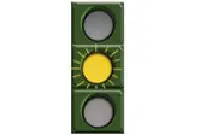
Un semáforo con luces amarillas intermitentes,¿qué indica?
What does a traffic light with flashing amber lights indicate?
- ASe prohibe la circulación en esa dirección.Traffic is prohibited in that direction.
- BQue debe extremarse la precaución, permitiéndose el paso pero sin prioridad.You must take extra care; you may pass, but without priority.
- CAconseja acelerar la marcha para agilizar la circulación.It advises you to speed up to keep traffic moving.
ExplanationA flashing amber light allows you to pass, but requires you to take extra care and to give way when the right-of-way rules require it (Annex I of the RGC). It does not prohibit traffic or invite you to speed up.
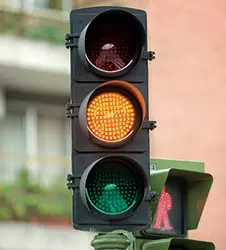
En un semáforo se apaga la luz verde y se enciende la luz amarilla fija; ¿puede pasar?
At a traffic light, the green light goes out and a steady amber light comes on. May you go through?
- ASí, en todo caso.Yes, in any case.
- BSí, porque todavía no ha cambiado la luz a rojo.Yes, because the light has not turned red yet.
- CNo, excepto si no puede detenerse en condiciones de seguridad suficiente.No, unless you cannot stop with sufficient safety.
ExplanationA steady amber light requires you to stop just like a red one, unless your vehicle is so close when it comes on that you cannot stop safely. It is not a signal to speed up, nor permission to go through because the red has not come on yet.
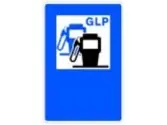
Esta señal indica que en el lugar señalado hay:
This sign indicates that at the place shown there is:
- AUna zona de repostaje exclusiva para vehículos eléctricos.A refuelling area for electric vehicles only.
- BUna estación de servicio con carburantes y disponibilidad de GLP (autogás).A service station with fuels and LPG (autogas) available.
- CSolo un surtidor de gasolina sin otros combustibles.Only a petrol pump, with no other fuels.
ExplanationThe sign shows the location of a pump or service station that offers conventional fuels and liquefied petroleum gas (LPG or autogas). It is useful for drivers of vehicles that run on LPG, as it tells them that this fuel is available alongside the usual ones, making refuelling easier.
¿Qué le indica la flecha si circula por el carril izquierdo?
What does the arrow tell you if you are driving in the left-hand lane?
- AQue puede circular en paralelo.That you may drive side by side.
- BQue está cerca de la próxima salida.That you are near the next exit.
- CQue tiene que incorporarse al carril derecho lo antes posible.That you must move into the right-hand lane as soon as possible.
ExplanationAn arrow placed roughly on the centre line of a two-way carriageway and pointing to the right announces that you are approaching a continuous line that prohibits driving to its left, and therefore shows that every driver must move as soon as possible into the lane to the right of the arrow.
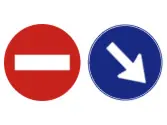
A partir de la señal de obligación, ¿podrá usted cambiar de dirección hacia la izquierda?
After this mandatory sign, may you turn left?
- ANo, salvo que un agente lo autorice.No, unless a traffic officer allows it.
- BSí.Yes.
- CNo.No.
ExplanationThe compulsory passing side sign we see in the photo shows the side of the traffic island on which vehicles must pass. It allows turning. Do not confuse it with the compulsory direction sign, which requires us to follow the direction shown by the arrow and prohibits both turning and U-turns.
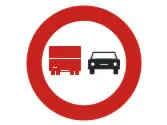
Esta señal prohíbe que adelanten...
This sign prohibits overtaking by...
- Asolo los camiones de más de 3500 kg.lorries over 3,500 kg only.
- Blos camiones y autobuses de más de 3500 kg.lorries and buses over 3,500 kg.
- Ctodos los vehículos de más de 3500 kg.all vehicles over 3,500 kg.
ExplanationThis sign (R-306) only prohibits lorries whose maximum authorised mass exceeds 3,500 kg from overtaking. It does not affect cars, motorcycles or buses, which may overtake if there is no other prohibition.
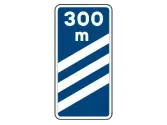
¿Qué indica este panel en una autovía?
What does this panel show on an autovía (dual carriageway)?
- AQue nos aproximamos a una intersección dentro de 300 metros.That we are 300 metres from a junction.
- BQue a 300 metros podemos hacer un cambio de sentido.That in 300 metres we can make a U-turn.
- CQue a 300 metros está situada la próxima salida.That the next exit is 300 metres away.
ExplanationThe panel in the picture, with three diagonal stripes and the text «300 m», announces on autopistas (motorways) and autovías (dual carriageways) that the next exit is about 300 metres away. It is followed by panels with two stripes and with one stripe, placed about 200 and 100 metres from the exit.
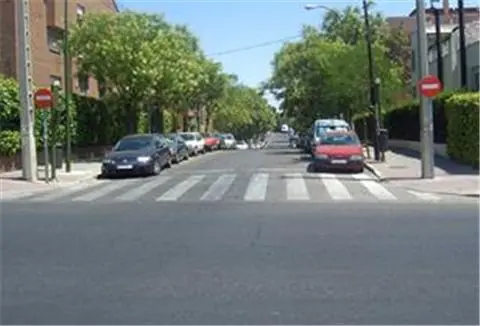
¿Puede entrar en esta calle?
May you enter this street?
- ANo, porque circulan vehículos en sentido contrario.No, because vehicles are coming the other way.
- BSí, pero respetando la prioridad de los vehículos que circulan en sentido contrario.Yes, but respecting the priority of vehicles coming the other way.
- CNo, porque la señal me lo prohíbe.No, because the sign prohibits it.
ExplanationAt the entrance to the street there are no entry signs, round and red with a white horizontal bar. They prohibit access to all vehicles in that direction, so you may not enter even if you respect those coming the other way.
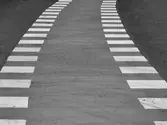
Estas marcas viales, ¿qué indican?
What do these road markings indicate?
- AUn paso para peatones y ciclistas.A crossing for pedestrians and cyclists.
- BUn paso para ciclistas.A cycle crossing.
- CUn paso obligatorio para vehículos de dos ruedas.A compulsory crossing for two-wheeled vehicles.
ExplanationThe lines shown in the picture mark out a cycle crossing. At these crossings, cyclists have right of way.
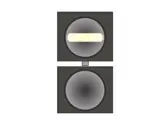
Un semáforo con línea blanca sobre fondo negro, ¿a qué vehículos afecta?
Which vehicles does a traffic light with a white line on a black background apply to?
- AA tranvías y autobuses.Trams and buses.
- BA bicicletas y ciclomotores.Bicycles and mopeds.
- CA todos los vehículos.All vehicles.
ExplanationWhen a traffic light has a lit white bar on a black circular background, its signals apply only to trams and regular-service buses, unless there is a lane reserved for buses or for taxis and other vehicles, in which case they apply only to those using it.
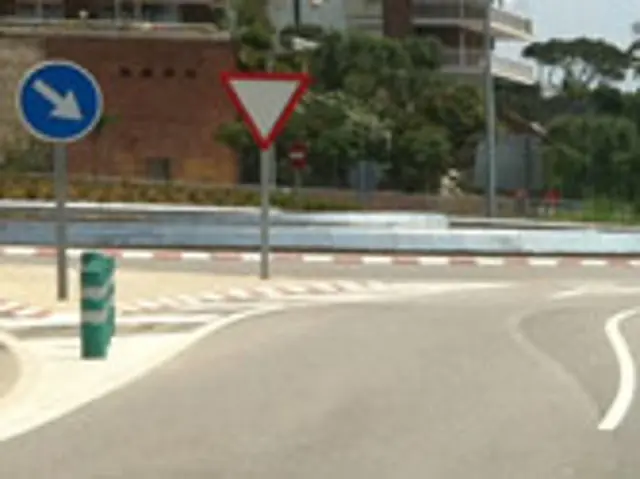
Teniendo en cuenta la señalización que se muestra en la imagen, ¿está permitido realizar un cambio de sentido?
Given the signs shown in the picture, may you make a U-turn?
- ANo, está prohibido.No, it is prohibited.
- BSí, está permitido.Yes, it is allowed.
- CSí, pero únicamente si el cambio de dirección es a la derecha.Yes, but only if the change of direction is to the right.
ExplanationThe picture shows the entrance to a roundabout with a give way sign and a sign requiring you to pass to the right of the traffic island. Neither of them prohibits a U-turn: you can make one by going all the way round the roundabout, after giving way to vehicles already on it.
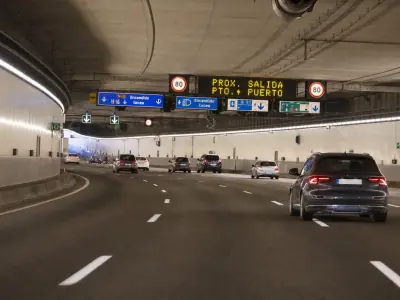
¿De qué informan habitualmente las señales de seguridad dentro de un túnel?
What do the safety signs inside a tunnel usually give information about?
- ADe la velocidad máxima y mínima a la que se puede circularThe maximum and minimum speed at which you may drive.
- BDe la posibilidad de adelantamiento dentro del túnelWhether overtaking is possible inside the tunnel.
- CDe dónde se encuentra el puesto SOS más cercanoWhere the nearest SOS point is.
ExplanationSafety signs inside a tunnel show where the SOS points, fire extinguishers, emergency exits and emergency stopping areas are, so you know where to go if there is an incident.
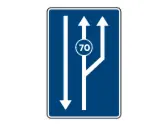
Si ve esta señal y su vehículo puede superar los 70 km/h, ¿por qué carril debe circular, como norma general?
If you see this sign and your vehicle can go faster than 70 km/h, which lane should you use as a general rule?
- APor el carril derecho.The right-hand lane.
- BPor el carril donde hay menos vehículos.The lane with fewer vehicles.
- CPor el carril que nace a la izquierda, porque la señal me obliga a ello.The lane that starts on the left, because the sign requires me to.
ExplanationThe sign in the question, a lane reserved according to the signed speed, is placed on roads to improve traffic flow, organise traffic and make overtaking easier. Vehicles must drive in the right-hand lane. Not using it when it is free is illegal as well as dangerous. So the sign means that the lane above which the minimum speed sign is placed may only be used by vehicles travelling at or above the speed shown, although, if circumstances allow, you must drive in the right-hand lane.
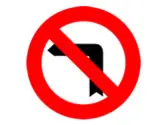
A partir de esta señal, ¿se podrá realizar un cambio de sentido?
From this sign onwards, may you make a U-turn?
- ASí, si no circulan vehículos en sentido contrario.Yes, if no vehicles are coming the other way.
- BNo, esta señal prohíbe tanto el cambio de dirección como de sentido.No, this sign prohibits both turning and U-turns.
- CSí, esta señal prohíbe solamente el cambio de dirección.Yes, this sign only prohibits turning.
ExplanationThe sign in the question prohibits turning left. It also includes a ban on making a U-turn.
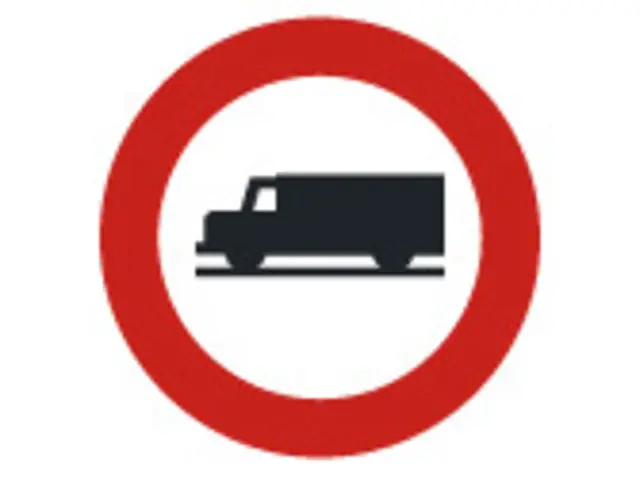
Esta señal prohíbe el acceso a vehículos destinados al transporte de mercancías. Se consideran tales:
This sign prohibits entry to vehicles used for carrying goods. These are:
- Acamiones, exclusivamente.lorries only.
- Bcamiones y furgonetas según su masa.lorries and vans, depending on their mass.
- Ccamiones y furgonetas independientemente de su masa.lorries and vans, whatever their mass.
ExplanationThe sign prohibiting entry to goods vehicles covers lorries, tractor units and vans, whatever their mass. This rule comes from the General Traffic Regulations (RGC), which state that goods vehicles means any lorry or van, with no weight limit. So the correct option is that entry is prohibited to lorries and vans, whatever their mass.
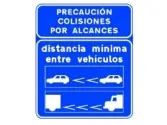
Esta señal indica que dentro de un túnel en autopista o autovía:
This sign indicates that inside a tunnel on a motorway (autopista) or dual carriageway (autovía):
- ASe recomienda mantener una distancia prudencial, sin referencia concreta.It is advisable to keep a reasonable distance, with no specific reference.
- BEs obligatorio mantener entre vehículos el número de marcas viales de galón que la señal indique.You must keep between vehicles the number of chevron road markings shown on the sign.
- CDistancia mínima que afecta a turismos y camiones pero no al resto de vehículos.There is a minimum distance that applies to cars and lorries but not to other vehicles.
ExplanationThe sign informs drivers that, inside a tunnel on a motorway or dual carriageway, they must keep a compulsory minimum distance from the vehicle in front. To make this easier, the carriageway is marked with chevron symbols that serve as a reference. This measure aims to prevent collisions in enclosed spaces, where an accident can have serious consequences because of the lack of visibility and the difficulty of evacuation.
¿Qué significa una línea longitudinal continua amarilla en el borde de la calzada de una vía?
What does a continuous yellow longitudinal line at the edge of the carriageway mean?
- AProhibido parar y/o estacionar.No stopping and/or parking.
- BProhibido estacionar.No parking.
- CProhibido parar.No stopping.
ExplanationA continuous yellow longitudinal line at the edge of the carriageway or on the kerb (marking M-7.8) prohibits stopping and parking along its whole length on the side of the carriageway where it is placed.
Se aproxima conduciendo su vehículo a una intersección en la que un Agente de circulación le hace señales balanceando una luz roja o amarilla. ¿Qué debe hacer si el Agente dirige a Ud. dicha luz?
You are approaching a junction where a traffic officer is signalling to you by swinging a red or yellow light. What must you do if the officer points that light at you?
- ADetenerme.Stop.
- BCambiar el sentido de la marcha, porque la señal prohíbe el paso.Turn around, because the signal prohibits passing.
- CReducir la velocidad y continuar la marcha despacio hasta franquear la intersección.Slow down and continue slowly until you have crossed the junction.
ExplanationStopping is the correct action, because when a traffic officer uses a red or yellow light, they are telling you to stop. These lights are signals that take precedence over any other traffic sign, and their purpose is to ensure safety at the junction.
Los conos colocados en la vía ...
Cones placed on the road...
- Asirven solo para indicar un nuevo carril.are only used to indicate a new lane.
- Btienen prioridad sobre el resto de señales.take precedence over all other signals.
- Ctienen prioridad sobre el resto de señales, salvo las de los agentes de la autoridad.take precedence over all other signals, except those of traffic officers.
ExplanationCones are temporary beacons. Under Article 133.1 of the RGC, temporary signs and beacons take precedence over traffic lights, road signs and road markings, but not over the signals and orders of traffic officers, which come first.
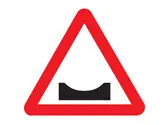
Esta señal advierte de un peligro por...
This sign warns of danger because of...
- ABadén.A dip.
- BResalto.A hump.
- CPavimento deslizante.A slippery road surface.
ExplanationThe sign in the question is the dip sign. Do not confuse it with the hump sign.
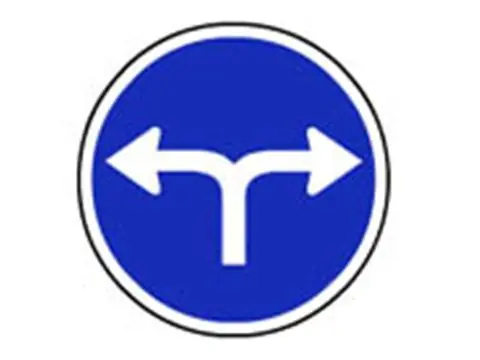
La señal obliga a...
The sign requires you to...
- Adar media vuelta, porque la vía no tiene salida.turn back, because the road is a dead end.
- Bseguir de frente.go straight on.
- Cgirar a la derecha o la izquierda.turn right or left.
ExplanationThis mandatory sign indicates that at the next junction you may only turn right or left: going straight on and making a U-turn are prohibited. It does not indicate that the road is a dead end.
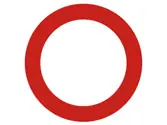
Esta señal, ¿permite circular con un ciclomotor?
Does this sign allow you to ride a moped?
- ASí, porque solo prohíbe los vehículos de motor.Yes, because it only prohibits motor vehicles.
- BSí.Yes.
- CNo.No.
ExplanationThis sign prohibits all kinds of vehicles, including mopeds and bicycles.
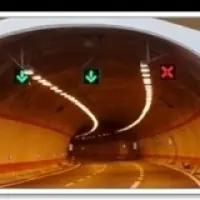
¿Qué significa una luz verde en forma de flecha en un semáforo cuadrado o de carril?
What does a green arrow-shaped light in a square (lane-control) traffic light mean?
- AProhibición de circular por ese carrilYou must not drive in that lane
- BDetención obligatoria ante el semáforoYou must stop at the traffic light
- CEstá permitido circular por ese carrilYou may drive in that lane
ExplanationWhen a square or lane-control traffic light shows a lit green arrow, it means that the lane is open and you may drive freely in it.
All topics
- Definitions
- Documents and penalty points
- The driver's condition
- Duties of drivers and pedestrians
- Vehicle safety devices
- Vehicle controls and equipment
- Vehicle lights and horn
- The road and its lanes
- Speed and distances
- Manoeuvres
- Right of way
- Carrying passengers and loads
- Driving safely in difficult conditions
- Vehicle mechanics and maintenance
- Road accidents and first aid
- Defensive and eco-driving
Independent app: not affiliated with or endorsed by the DGT (Spain's Directorate-General for Traffic) or the Ministry of the Interior. The official exam is booked with the DGT and taken at its test centres. The questions here are practice material; the DGT's official question bank is not public.
Basado en datos de la Agencia Estatal Boletín Oficial del Estado (https://www.boe.es). Textos consolidados de carácter meramente informativo. La AEBOE no patrocina ni respalda este sitio.
Parte de las preguntas procede de los tests de la revista «Tráfico y Seguridad Vial» de la DGT, reproducidos con indicación de la fuente.