
DGT test · 1,397 questions
Traffic signs, markings and signals · Page 13 of 28
Road signs, road markings, traffic lights, police signals and temporary markings: what they mean and which one wins when they disagree. The topic with the most questions in the bank.
Questions in this topic, with answers
1,397 questions, 50 per page, with the correct answer and the explanation. Page 13 of 28.
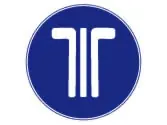
Un vehículo que circule por un carril así señalizado...
A vehicle travelling in a lane signed like this...
- APodrá pagar con el sistema de telepeaje o con tarjeta, pero no en metálico.May pay with the electronic toll system or by card, but not in cash.
- BSólo podrá efectuar el pago del peaje mediante el sistema de telepeaje.May only pay the toll with the electronic toll system.
- CPodrá efectuar el pago en metálico, con el telepeaje o con tarjeta.May pay in cash, by electronic toll or by card.
ExplanationThe sign in the question means that vehicles using a lane signed like this must pay at the toll only with the electronic toll system. Do not confuse it with the same sign in square form, which shows that you can pay by electronic toll but do not have to; in other words, you can also pay using other systems.
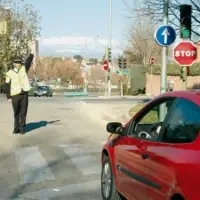
En una intersección en la que hay señales que regular la prioridad y también hay un agente que regula el tráfico temporalmente, ¿qué debe hacer?
At a junction where there are signs regulating priority and there is also an officer temporarily directing traffic, what must you do?
- AAplicar las normas generales de prioridad de paso de los vehículos que se acerquen por la derecha.Apply the general priority rule of giving way to vehicles approaching from the right.
- BObedecer las señales del agente.Obey the officer's signals.
- CObedecer las señales de tráfico que regulan la prioridad.Obey the traffic signs that regulate priority.
ExplanationUnder Article 133 of the General Traffic Regulations (RGC), officers' signals and instructions take precedence over any other sign, including traffic lights and priority signs. If an officer is directing traffic at the junction, you must obey the officer.
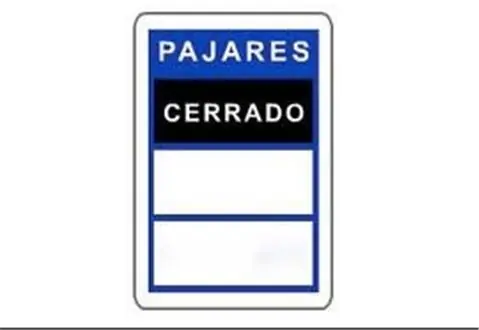
En un puerto de montaña, ¿qué indica esta señalización?
On a mountain pass, what does this sign indicate?
- AQue la carretera se encuentra intransitable para todos los vehículos.That the road is impassable for all vehicles.
- BQue la carretera solo está transitable para los vehículos de más de 3500 kg de MMA.That the road is only passable for vehicles with a maximum authorised mass (MAM) of more than 3,500 kg.
- CQue para poder circular es necesario utilizar cadenas o neumáticos de invierno.That you need chains or winter tyres to drive on it.
ExplanationThis is sign S-21, ‘Road conditions on a stretch or mountain pass’, which shows the status of the pass named at the top. The word ‘Cerrado’ (closed) means that the pass cannot be used by any vehicle, even one with chains or winter tyres.
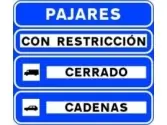
Si conduce un turismo y no lleva cadenas, ¿qué debe hacer ante esta señal?
If you are driving a car and do not have chains, what should you do on seeing this sign?
- ADar la vuelta o detenerse antes de acceder al puerto de montaña.Turn back or stop before entering the mountain pass.
- BPuede continuar, reduciendo mucho la velocidad.You may continue, slowing right down.
- CPasar detrás de un vehículo para mejorar el agarre.Drive behind another vehicle to get better grip.
ExplanationSign S-21 shows that the pass is restricted for cars, so they may only use it if they have chains or winter tyres. If they do not have them, they must not enter the pass until the restriction is lifted or road conditions improve.
Un agente con el brazo levantado verticalmente...
A traffic officer with an arm raised vertically...
- AObliga a detenerse solo a los vehículos que se acercan de frente al agente.Requires only vehicles approaching the officer from the front to stop.
- BObliga a detenerse a todos los usuarios de la vía que se acerquen al agente.Requires all road users approaching the officer to stop.
- CObliga a detenerse solo a los vehículos que se acercan al agente.Requires only vehicles approaching the officer to stop.
ExplanationAn officer with an arm raised vertically requires all road users approaching the officer from any direction to stop. An officer with one or both arms held out horizontally requires users approaching from any direction that crosses the direction shown by the outstretched arm or arms to stop, whichever way they are travelling.
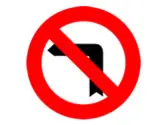
¿Esta señal prohíbe efectuar un cambio de sentido hacia la izquierda?
Does this sign prohibit making a U-turn to the left?
- ANo, solo prohíbe el cambio de dirección.No, it only prohibits turning.
- BSí, pero solo en las horas de mayor tráfico.Yes, but only at the busiest times.
- CSí.Yes.
ExplanationThe sign prohibits turning left and also making a U-turn.
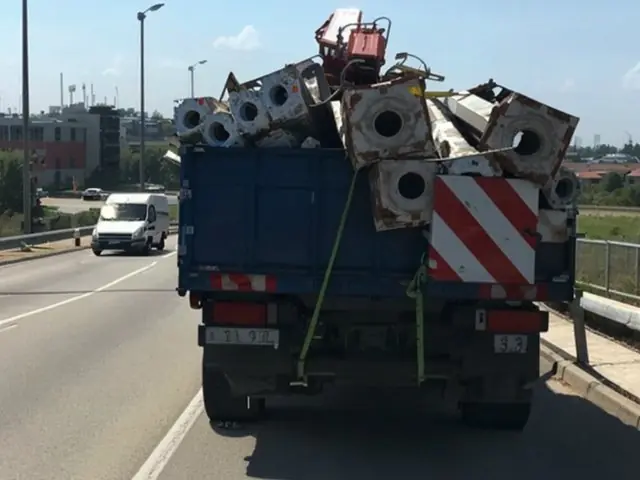
¿Qué indican las señales de este vehículo?
What do the signs on this vehicle indicate?
- AQue transporta mercancías peligrosas.That it is carrying dangerous goods.
- BQue tiene una limitación de velocidad.That it has a speed restriction.
- CQue transporta una carga que sobresale por la parte trasera.That it is carrying a load that projects at the rear.
ExplanationThe red and white striped panel in the picture is sign V-20, which shows that the load projects beyond the rear of the vehicle. Under Article 15.6 of the RGC, it is placed at the rear end of the load, at right angles to the vehicle's axis.
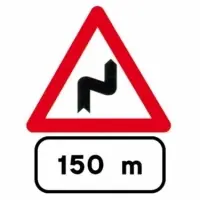
¿Qué indica el panel situado debajo de la señal?
What does the panel under the sign indicate?
- ALa distancia al inicio de un tramo de la vía con curvas peligrosas a la derecha.The distance to the start of a stretch of road with dangerous bends to the right.
- BLa duración del tramo con curvas peligrosas a la derecha.The length of the stretch with dangerous bends to the right.
- CLa distancia al inicio de un tramo de la vía con curvas peligrosas a la izquierda.The distance to the start of a stretch of road with dangerous bends to the left.
ExplanationThe additional panel S-800 with this ‘dangerous bends to the right’ sign shows the distance from the sign to the point where the hazard begins or where the sign's rule starts to apply. If it were placed under the ‘road narrows’ warning sign, it could show the width available at the narrowing.
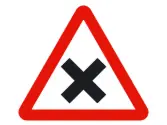
A la vista de esta señal...
Given this sign...
- ATenemos prioridad de paso.we have right of way.
- BNo tenemos prioridad de paso.we do not have right of way.
- CTenemos que ceder el paso a los vehículos de la derecha.we must give way to vehicles on the right.
ExplanationThe sign warns of danger because we are approaching a junction where the general rule of right of way applies, which requires giving way to vehicles approaching from the right.
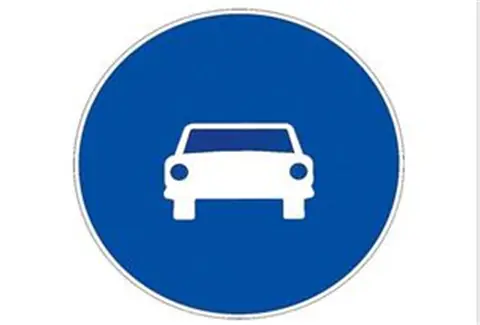
Esta señal indica calzada obligatoria para...
This sign indicates a compulsory carriageway for...
- Aautomóviles de todo tipo.all types of motor vehicles (automóviles).
- Bautomóviles, excepto motocicletas de dos ruedas.motor vehicles (automóviles), except two-wheeled motorcycles.
- Cturismos.cars.
ExplanationThis is sign R-404, ‘Compulsory carriageway for motor vehicles, except two-wheeled motorcycles’: it requires drivers of motor vehicles, except two-wheeled motorcycles and similar three-wheeled vehicles, to use the carriageway at whose entrance it is placed.
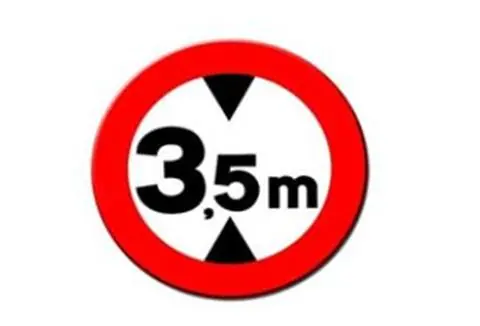
Esta señal prohíbe el paso a los vehículos que superen...
This sign prohibits vehicles that exceed...
- ALa altura máxima, sin incluir la carga, indicada en la señal.the maximum height shown on the sign, not including the load.
- BLa anchura máxima indicada en la señal.the maximum width shown on the sign.
- CLa altura máxima, incluida la carga, indicada en la señal.the maximum height shown on the sign, including the load.
ExplanationThis sign prohibits vehicles whose maximum height, including the load, exceeds the height shown, in this case 3.5 metres. You must always include the load, for example anything carried on the roof rack.
Fuera de poblado, en una calzada con dos carriles para el mismo sentido, un turismo circula por el carril izquierdo a 70 km/h sin estar adelantando y con el carril derecho libre. ¿Es correcto?
Outside built-up areas, on a carriageway with two lanes in the same direction, a car is driving in the left lane at 70 km/h, not overtaking, with the right lane free. Is this correct?
- ASí.Yes.
- BNo, debería circular por el carril derecho.No, it should be driving in the right lane.
- CSí, puede circular por cualquiera de los dos carriles.Yes, it may drive in either of the two lanes.
ExplanationOutside built-up areas, on carriageways with more than one lane in the same direction, you normally drive in the lane furthest to the right, and the others are only used when traffic or road conditions make it advisable (Article 31.1 of the RGC). If you are not overtaking and the right lane is free, you must use it.
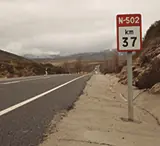
La línea de borde de la calzada, ¿se puede atravesar?
May you cross the edge line of the carriageway?
- ASí, cuando sea necesario y las circunstancias lo permitan.Yes, when necessary and circumstances allow.
- BNo, está prohibido.No, it is prohibited.
- CSí, cuando la línea es discontinua; no, cuando es continua.Yes when the line is broken; no when it is solid.
ExplanationEdge lines mark the edge of the carriageway and may be crossed occasionally when necessary, for example to stop on the hard shoulder in an emergency. Whether they are solid or broken makes no difference to the use of the hard shoulder, according to the road marking catalogue of the General Traffic Regulations (RGC).
¿Qué indica una línea transversal continua situada antes de un paso para peatones?
What does a continuous transverse line before a pedestrian crossing indicate?
- AEl inicio del paso para peatones regulado por semáforo.The start of a pedestrian crossing controlled by traffic lights.
- BUn paso para peatones regulado por semáforo.A pedestrian crossing controlled by traffic lights.
- CQue no se debe franquear si tenemos que cumplir con lo dispuesto por la marca vial de paso para peatones.That it must not be crossed if we have to comply with the pedestrian crossing marking.
ExplanationThe continuous white transverse marking before a pedestrian crossing shows that, if we have to stop to give way to a pedestrian, we must do so before that continuous transverse line.
Cuando los trazos de una línea discontinua pintada sobre la calzada son más anchos de lo normal, indican...
When the dashes of a broken line painted on the carriageway are wider than normal, they indicate...
- ALa proximidad de una línea continua.That a continuous line is coming up.
- BLa existencia de un carril especial, como, por ejemplo, un carril reservado a determinados vehículos, un carril de entrada, salida u otro.A special lane, for example a lane reserved for certain vehicles, an entry or exit lane, or another.
- CLa proximidad de un tramo de vía con riesgo especial.That a stretch of road with a special risk is coming up.
ExplanationDashes wider than normal (M-1.6 and M-1.7 in the road-marking catalogue) separate a special lane. An approaching continuous line or a stretch with a special risk is announced by a different marking: the one with long dashes and short gaps (M-1.9 and M-1.10).
¿Qué indica una línea amarilla continua pintada en el bordillo de la acera?
What does a continuous yellow line painted on the kerb indicate?
- AProhibido estacionar, pero se permite la parada para subir pasajeros.No parking, but stopping to pick up passengers is allowed.
- BProhibido tanto parar como estacionar.Both stopping and parking are prohibited.
- CZona reservada para carga y descarga en días laborables.An area reserved for loading and unloading on working days.
ExplanationUnder the road-marking catalogue in Annex I of the RGC, a continuous yellow line next to the kerb prohibits stopping and parking along its whole length on that side of the carriageway. A broken yellow line, on the other hand, only prohibits parking.
En caso de encontrar una marca longitudinal continua adosada a otra discontinua, el conductor debe respetar las indicaciones de...
If you find a continuous longitudinal marking alongside a broken one, the driver must obey...
- ALa marca situada en el lado contrario por el que circula.The marking on the opposite side from the one they are driving on.
- BNinguna de las dos marcas.Neither of the two markings.
- CLa marca situada en el lado por el que circula.The marking on the side they are driving on.
ExplanationWhen a continuous line runs alongside a broken one, each driver only takes into account the line on their own side. If the broken line is on their side, they may cross both to overtake; if it is the continuous one, they must not cross them.
Si en un paso a nivel sin barreras se encuentra una señal de STOP, ¿cómo actuará?
If you find a STOP sign at a level crossing without barriers, what should you do?
- AEfectuaremos la detención por imponerlo la señal.Stop, because the sign requires it.
- BSi no se aproxima el tren, podemos pasar sin detenernos.If no train is coming, you may cross without stopping.
- CSolo nos detendremos si las barreras están bajadas.Stop only if the barriers are down.
ExplanationWhen there is a STOP sign, you must stop, whether or not a train is approaching.

Un policía montado en una motocicleta, que lleva una bandera amarilla en la mano.¿Qué indíca?
A police officer on a motorcycle is holding a yellow flag. What does this indicate?
- ALa necesidad de extremar la atención o la proximidad de un peligro.The need to take extra care or that there is a danger nearby.
- BIndica la obligación de detenerse en el lado derecho a aquellos usuarios a los que va dirigida la señal.Road users to whom the signal is directed must stop on the right-hand side.
- CA partir del paso del vehículo que la porta, la calzada queda temporalmente cerrada al tráfico de todos los vehículos y usuarios.Once the vehicle carrying it has passed, the carriageway is temporarily closed to all vehicles and road users.
ExplanationThe yellow flag tells other road users to take extra care or that there is a danger nearby. The red flag temporarily closes the carriageway, and an arm stretched downwards from a vehicle orders drivers to stop on the right.
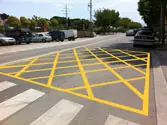
¿Qué indica esta cuadrícula de marcas amarillas?
What does this grid of yellow markings show?
- AProhíbe parar y estacionar encima de estas marcas viales.It prohibits stopping and parking on these road markings.
- BRecuerda que no se tiene que penetrar en la intersección si previsiblemente podemos quedar detenidos y obstruir la circulación transversal.It reminds you not to enter the junction if you are likely to be held there and block crossing traffic.
- CIndican el lugar donde empieza una zona de frenado de emergencia.It shows where an emergency braking area begins.
ExplanationA set of criss-cross yellow lines reminds drivers that they must not be held stationary in a way that blocks or obstructs crossing traffic.
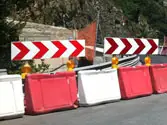
Este panel direccional provisional está indicando...
This temporary direction panel indicates...
- AQue la vía está totalmente cerrada al tráfico.That the road is completely closed to traffic.
- BQue existe una curva peligrosa.That there is a dangerous bend.
- CEstá prohibido el paso y además informa sobre el sentido de la circulación.That passing is prohibited, and it also shows the direction of traffic.
ExplanationThe temporary direction panel prohibits passing and also shows the direction of traffic.
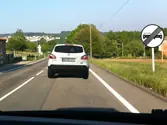
Después de la señal vertical, ¿está permitido adelantar al vehículo blanco?
After the road sign, is it permitted to overtake the white vehicle?
- ANo, porque la señal prohíbe adelantar.No, because the sign prohibits overtaking.
- BSí, porque la señal es de «fin de prohibido adelantar».Yes, because the sign means 'end of no overtaking'.
- CNo, porque la línea continua me lo prohíbe.No, because the solid line prohibits it.
ExplanationThe sign marks the point from which an earlier 'No overtaking' sign no longer applies, so from there on we may overtake the white vehicle.
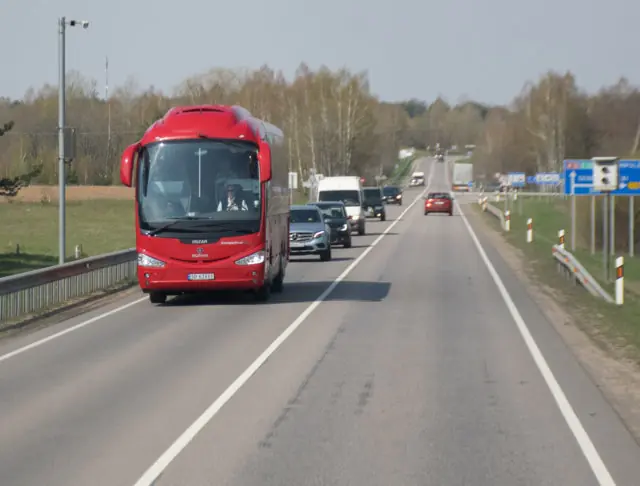
¿Está permitido circular sobre las líneas del centro de la calzada?
Is it allowed to drive on the lines in the centre of the carriageway?
- ASí. Porque son líneas discontinuas.Yes, because they are broken lines.
- BSí. Porque es un tramo recto y seguro.Yes, because it is a straight and safe stretch.
- CNo.No.
ExplanationCentre lines separate directions of traffic or lanes, and you must not drive on them. A solid line must not be driven on or crossed; a broken line may only be crossed to overtake or change lanes, not driven along.
En caso de que exista una contradicción entre un semáforo y una señal vertical, ¿a cuál obedeceremos?
If a traffic light and a road sign contradict each other, which one will we obey?
- AAl semáforo.The traffic light.
- BA la señal vertical.The road sign.
- CA la señal más restrictiva.The most restrictive sign.
ExplanationIf different types of signs contradict each other, we follow this order of priority: signals and orders from traffic officers; temporary signs and fixed markers (beacons); traffic lights (round ones); road signs; road markings. Therefore we will obey the traffic light rather than the road sign.
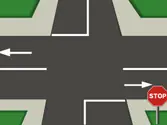
¿Dónde deberá detenerse para obedecer la señal de Stop en la intersección de la imagen?
Where must you stop to obey the Stop sign at the junction in the picture?
- AAntes de la señal vertical de Stop.Before the upright Stop sign.
- BAnte la línea de detención.At the stop line.
- CDonde tengamos suficiente visibilidad directamente.Wherever we have enough direct visibility.
ExplanationCompulsory stop (STOP): every driver must stop the vehicle at the next stop line or, if there is none, immediately before the junction, and give way there to vehicles travelling on the road being approached. If, in exceptional circumstances, there is not enough visibility from the place where the driver stopped, the driver must stop again at a place from which there is visibility, without endangering any road user.
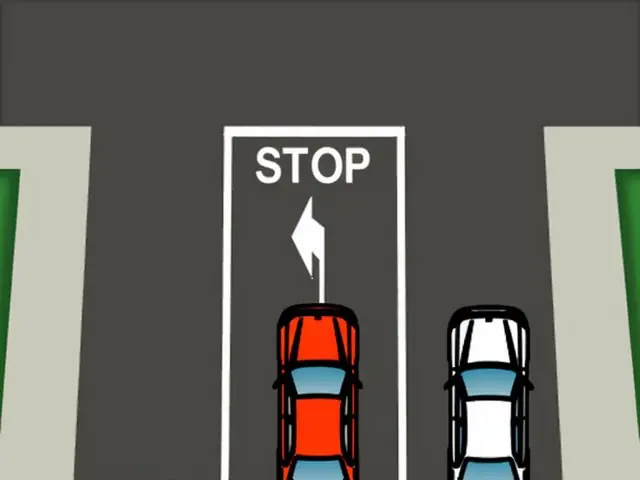
¿Debe el conductor del coche blanco respetar la señal de STOP al llegar al cruce?
Must the driver of the white car obey the STOP sign when reaching the junction?
- ANo, porque el STOP pintado solo obliga a los vehículos que circulan por el carril en el que está situado.No, because a painted STOP only applies to vehicles travelling in the lane where it is painted.
- BSí, debe respetar la señal de STOP existente.Yes, they must obey the STOP sign that is there.
- CSí, pero solo si continúa de frente.Yes, but only if they go straight on.
ExplanationThe STOP is painted in the left-hand lane, which is for turning left. According to the road marking catalogue in Annex I of the RGC, if the marking is in a lane marked out by longitudinal lines, it only applies to those driving in that lane. The white car is in the other lane.
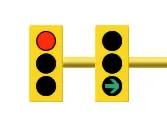
Si al llegar a una intersección, encuentra señales distintas a la derecha e izquierda, ¿a cual obedecerá, si pretende seguir de frente?
If, on reaching a junction, you find different signs on the right and on the left, which do you obey if you intend to go straight on?
- AA la situada a la derecha.The one on the right.
- BA la situada a la izquierda.The one on the left.
- CA la más restrictiva.The most restrictive one.
ExplanationWhen there are signs with different instructions on the right and on the left, drivers who intend to go straight on or turn left must obey the ones immediately on their left.
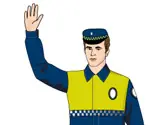
¿Cuál es la acción correcta que debe tomar un conductor si ya ha ingresado en una intersección y un agente levanta el brazo verticalmente?
What should a driver do if they have already entered a junction and a traffic officer raises an arm vertically?
- ADetenerse de inmediato, independientemente de su ubicación en la intersección.Stop immediately, wherever they are in the junction.
- BContinuar su trayectoria a través de la intersección sin detenerse.Continue through the junction without stopping.
- CDetenerse solo si puede hacerlo de manera segura sin obstruir el tráfico.Stop only if they can do so safely without obstructing traffic.
ExplanationAn arm raised vertically requires those approaching the officer to stop, but if the signal is given at a junction, it does not require drivers who have already entered it to stop (Annex I of the General Traffic Regulations, section 1.1): they must finish crossing it without blocking the way.
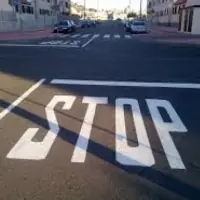
¿Pueden los animales rebasar la línea continua horizontal de stop?
May animals cross the solid horizontal STOP line?
- ASí, todos los vehículos deben rebasarlaYes, all vehicles must cross it
- BSi pueden los animales, pero no los vehículos a motorAnimals may, but motor vehicles may not
- CNoNo
ExplanationThe STOP symbol tells the driver that they must stop their vehicle at the next stop line or, if there is none, immediately before the carriageway they are approaching, and first give way to vehicles travelling along that carriageway. The solid horizontal line may not be crossed by vehicles or by animals approaching it.
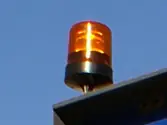
Los vehículos obligados a utilizar la señal V-2 la usarán...
Vehicles required to use signal V-2 must use it...
- ASolo durante la noche.Only at night.
- BTanto de día como de noche.Both by day and at night.
- CSolo en las vías fuera de poblado.Only on roads outside built-up areas.
ExplanationSignal V-2 shows that the vehicle is providing a service or doing an activity or work, while stopped or parked, or moving at no more than 40 km/h. Signal V-2 must always be used both by day and at night.
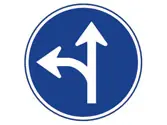
A la vista de esta señal, ¿podrá usted efectuar un cambio de sentido?
Given this sign, may you make a U-turn?
- ASí.Yes.
- BNo.No.
- CSí, tanto por el lado derecho como por el izquierdo.Yes, on either the right or the left side.
ExplanationThe sign only allows going straight on or turning left, so it prohibits making a U-turn and turning right.
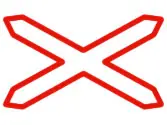
Esta señal indica la situación de un paso a nivel...
This sign indicates the location of a level crossing...
- ACon barreras.With barriers.
- BSin barreras.Without barriers.
- CPuede ser con o sin barreras.That may be with or without barriers.
ExplanationThe sign in the picture, an X-shaped cross with a red border, indicates the exact location of a level crossing without barriers. You must take extreme care and not cross without making sure that no train is approaching. If there were more than one track, the cross would be double.
En un cruce regulado por un agente de tráfico, ¿qué prevalece?
At a junction controlled by a traffic officer, what takes precedence?
- ALas indicaciones del agente sobre las señales y semáforos.The officer's instructions, over signs and traffic lights.
- BEl semáforo sobre el agente.The traffic light, over the officer.
- CLa regla de la derecha sobre el agente.The give-way-to-the-right rule, over the officer.
ExplanationOfficers' instructions take precedence over signs, traffic lights and the general priority rules.
Si en una carretera con línea continua nos encuentramos con un turismo que va delante, circula lentamente, ¿qué se debe hacer?
On a road with a continuous line, if we come across a car ahead of us driving slowly, what should we do?
- AMantener la distancia de seguridad hasta que sea posible adelantarle correctamente.Keep a safe distance until it is possible to overtake it correctly.
- BAproximarse a él, y hacerle señales acústicas.Get close to it and sound the horn.
- CAumentar la velocidad, aproximarse a él, y adelantarle atravesando la línea continua.Speed up, get close to it and overtake it by crossing the continuous line.
ExplanationWith a continuous line you may not overtake by crossing it, so you must keep a safe distance behind the slow car until you reach a stretch where you can overtake correctly. Driving right up behind it, sounding the horn or crossing the continuous line is dangerous and prohibited.
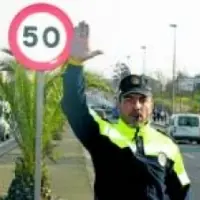
¿Qué significan una serie de toques cortos y frecuentes con un silbato realizados por un agente?
What does a series of short, frequent whistle blasts from an officer mean?
- AObligación de detener el vehículoYou must stop the vehicle
- BObligación de reanudar la marchaYou must move off again
- CObligación de ceder el pasoYou must give way
ExplanationA series of short, frequent whistle blasts from an officer orders you to stop the vehicle. One long blast, on the other hand, indicates that you may move off again.
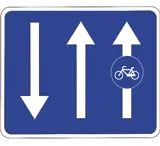
La señal indica que el carril derecho ...
The sign indicates that the right lane...
- ASólo pueden utilizarlo los ciclos.may only be used by cycles.
- BEs obligatorio para los vehículos de dos ruedas.is compulsory for two-wheeled vehicles.
- CEs obligatorio para bicicletas, pudiendo ser utilizado por otros usuarios.is compulsory for bicycles, but may be used by other road users.
ExplanationThe lane sign with a bicycle symbol in the right lane indicates that this lane is reserved for cycles, so no other vehicle may use it. It does not refer to all two-wheeled vehicles, nor does it allow other road users to use it.
Una línea longitudinal discontinua en la calzada permite:
A broken longitudinal line on the carriageway allows you to:
- ATraspasarla cuando la maniobra sea segura (por ejemplo, para adelantar).Cross it when the manoeuvre is safe (for example, to overtake).
- BNunca traspasarla.Never cross it.
- CEstacionar sobre ella.Park on it.
ExplanationA broken line may be crossed when road safety allows, for example to overtake.
¿Qué indica una flecha verde en un semáforo reservado para un carril?
What does a green arrow on a traffic light for a particular lane indicate?
- AQue los vehículos de ese carril deben detenerseThat vehicles in that lane must stop
- BQue los vehículos de ese carril pueden pasarThat vehicles in that lane may go
- CQue solo autobuses pueden pasarThat only buses may go
ExplanationUnder Annex I of the General Traffic Regulations (RGC), a downward-pointing green arrow on a lane-control traffic light indicates that you may drive in that lane. It does not exempt you from stopping at a red circular light or from giving way when required.
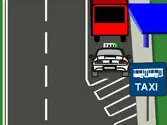
Las marcas viales en la calzada de la imagen, ¿qué significan?
What do the road markings on the carriageway in the picture mean?
- AIndican el comienzo de un carril reservado para determinados vehículos.They mark the start of a lane reserved for certain vehicles.
- BAnuncian al conductor que se aproxima a una bifurcación.They warn the driver of an approaching fork in the road.
- CRecuerdan a los conductores la prohibición establecida de penetrar con sus vehículos en una intersección cuando previsiblemente puedan quedar detenidos impidiendo o obstaculizando la situación transversal.They remind drivers that it is prohibited to enter a junction with their vehicle if they are likely to be stuck there, blocking or obstructing cross traffic.
ExplanationThe road markings in the picture mark the start of a lane reserved for certain vehicles, for example taxis or buses.
Si ante una intersección encontramos una línea transversal discontinua, ¿qué tendremos que hacer?
If you find a broken transverse line before a junction, what must you do?
- ADetenernos siempre.Always stop.
- BDetenernos si debemos ceder el paso.Stop if you must give way.
- CDetenernos solo si el semáforo está en rojo.Stop only if the traffic light is red.
ExplanationA broken transverse line shows where you should stop if you have to give way.
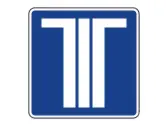
Circulando por un carril así señalizado, ¿debemos usar obligatoriamente el sistema de telepeaje?
When driving in a lane marked like this, must we use the electronic toll system?
- ASí.Yes.
- BNo.No.
- CSí, pero solo en las horas punta.Yes, but only at peak times.
ExplanationThis sign indicates that a vehicle in the lane marked like this may pay the toll using the electronic toll system, although other means of payment can also be used.
¿Qué significa la marca vial amarilla de la imagen?
What does the yellow road marking in the picture mean?
- AProhíbe detenerse y pararse encima de ella.It prohibits halting and stopping on top of it.
- BRecuerda la prohibición de no penetrar con el vehículo en una intersección si previsiblemente pueda quedar detenido, impidiendo la circulación transversal.It is a reminder of the ban on entering a junction if the vehicle is likely to be held there, blocking crossing traffic.
- CProhíbe estacionar pero permite parar.It prohibits parking but allows stopping.
ExplanationA set of criss-cross yellow lines reminds drivers that they must not be held stationary in a way that blocks or obstructs crossing traffic.
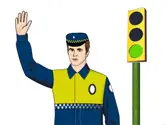
No debe entrar en una intersección, aunque el semáforo esté en verde, si...
You must not enter a junction, even if the traffic light is green, if...
- Ase aproximan vehículos por la derecha.vehicles are approaching from the right.
- Bun agente le ordena detenerse.a traffic officer orders you to stop.
- Chay una señal de stop o de ceda el paso.there is a stop or give way sign.
ExplanationSignals and orders from traffic officers must always be carried out, so drivers and other road users must obey them immediately. They take precedence over any other sign and over the traffic rules, even when they contradict those rules and signs.
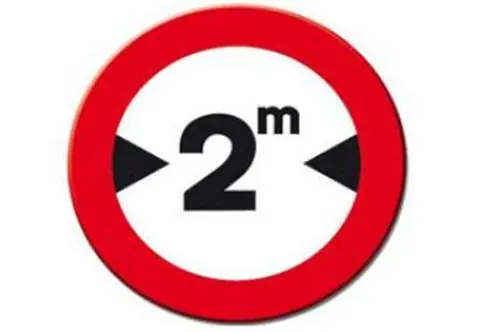
La señal prohíbe el paso a los vehículos que...
The sign prohibits vehicles whose...
- Asu longitud máxima, incluida la carga, supere la indicadamaximum length, including the load, exceeds the length shown.
- Bsu anchura máxima, incluida la carga, supere la indicada.maximum width, including the load, exceeds the width shown.
- Csu altura máxima, incluida la carga, supere la indicada.maximum height, including the load, exceeds the height shown.
ExplanationThis sign prohibits vehicles whose maximum width, including the load, exceeds the width shown, in this case 2 metres. Horizontal arrows indicate width; vertical arrows would indicate height.
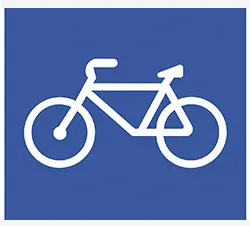
¿Está permitido circular con un turismo por una vía en cuyo acceso está situada esta señal?
Is it allowed to drive a car on a road with this sign at its entrance?
- ANo, porque es una vía reservada para todos los vehículos de dos ruedas.No, because it is a road reserved for all two-wheeled vehicles.
- BNo, porque es una vía reservada para ciclos.No, because it is a road reserved for cycles.
- CSí, porque es una vía permitida para todos los vehículos, excepto ciclos.Yes, because it is a road open to all vehicles except cycles.
ExplanationThe blue sign with a white bicycle indicates a road reserved for cycles, or cycle path: only cycles may use it, so a car is prohibited from driving on it.
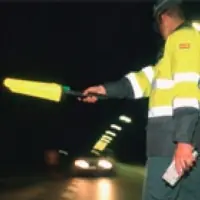
¿Qué significa la señal de balanceo de una luz roja o amarilla realizada por un agente de circulación?
What does it mean when a traffic officer swings a red or yellow light?
- AObligación de que todos los usuarios hacía los que se dirija la luz disminuyan la velocidadAll road users towards whom the light is directed must slow down
- BObligación de que todos los usuarios hacía los que se dirija la luz cambien de sentidoAll road users towards whom the light is directed must turn around
- CObligación de que todos los usuarios hacía los que se dirija la luz se detenganAll road users towards whom the light is directed must stop
ExplanationWhen you see a traffic officer signalling by swinging a red or yellow light, it means that all road users on that road who are heading towards the light must stop their vehicles until they receive another instruction.
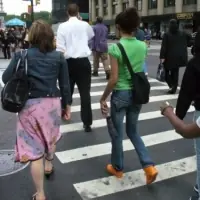
¿Es aconsejable hacer señales a un peatón para que cruce la calzada?
Is it advisable to signal to a pedestrian to cross the carriageway?
- ASi, para garantizar su seguridad en el cruceYes, to ensure their safety when crossing.
- BNo, porque el resto de conductores pueden no verlasNo, because other drivers may not see the signals.
- CSi, incluso cuando no existe un paso de peatonesYes, even when there is no pedestrian crossing.
ExplanationIt is not advisable to signal to a pedestrian to cross: it may confuse them and make them overconfident, and the fact that you have seen them does not mean that other drivers, for example those in the next lane, have noticed them and will stop in time.
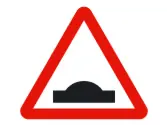
Esta señal nos advierte de peligro por la proximidad de...
This sign warns us of danger because we are approaching...
- AUn resalto en la vía.A hump in the road.
- BUn badén en la vía.A dip in the road.
- CUna bajada con fuerte pendiente.A steep downhill slope.
ExplanationThe sign warns of danger because you are approaching a hump in the road. Do not confuse it with the sign for a dip in the road or the one for a steep descent.
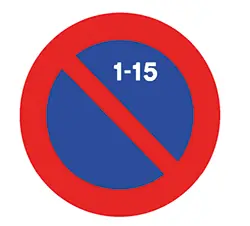
Esta señal prohíbe…
This sign prohibits...
- AEl estacionamiento entre la 1 y las 15 horas.parking between 1:00 and 15:00.
- BEl estacionamiento desde las 9 horas del día 1 hasta las 9 horas del día 16.parking from 9:00 on the 1st of the month until 9:00 on the 16th.
- CLa parada los días indicados en la señal.stopping on the days shown on the sign.
ExplanationThis is the sign for no parking in the first half of the month: it applies from 9:00 on the 1st until 9:00 on the 16th, on the side of the road where it is placed.
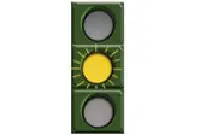
¿Qué debo hacer si me encuentro con un semáforo con luz amarilla intermitente?
What should I do if I come to a traffic light with a flashing amber light?
- AReducir paulatinamente la velocidad y avanzar con precaución, si con ello no altero el recorrido y/ o velocidad de los vehículos que circulen por la vía lateral.Gradually reduce speed and proceed with caution, provided I do not alter the path and/or speed of vehicles on the side road.
- BAcelerar y trasponer la intersección lo antes posible.Speed up and get across the junction as quickly as possible.
- CFrenar y detener el vehículo, y luego de constatar que no circula nadie por la vía lateral, avanzar.Brake and stop the vehicle, and then, after checking that nobody is driving on the side road, proceed.
ExplanationA flashing amber light requires you to take extra care and, where appropriate, to give way: you slow down and proceed carefully without altering the progress of those who have priority. It does not always require you to stop, but it does not allow you to speed up to cross quickly either.
All topics
- Definitions
- Documents and penalty points
- The driver's condition
- Duties of drivers and pedestrians
- Vehicle safety devices
- Vehicle controls and equipment
- Vehicle lights and horn
- The road and its lanes
- Speed and distances
- Manoeuvres
- Right of way
- Carrying passengers and loads
- Driving safely in difficult conditions
- Vehicle mechanics and maintenance
- Road accidents and first aid
- Defensive and eco-driving
Independent app: not affiliated with or endorsed by the DGT (Spain's Directorate-General for Traffic) or the Ministry of the Interior. The official exam is booked with the DGT and taken at its test centres. The questions here are practice material; the DGT's official question bank is not public.
Basado en datos de la Agencia Estatal Boletín Oficial del Estado (https://www.boe.es). Textos consolidados de carácter meramente informativo. La AEBOE no patrocina ni respalda este sitio.
Parte de las preguntas procede de los tests de la revista «Tráfico y Seguridad Vial» de la DGT, reproducidos con indicación de la fuente.