
DGT test · 1,397 questions
Traffic signs, markings and signals · Page 24 of 28
Road signs, road markings, traffic lights, police signals and temporary markings: what they mean and which one wins when they disagree. The topic with the most questions in the bank.
Questions in this topic, with answers
1,397 questions, 50 per page, with the correct answer and the explanation. Page 24 of 28.
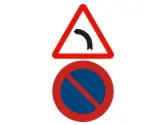
La prohibición de estacionar, ¿terminará cuando finalice el peligro indicado por la señal superior?
Will the parking prohibition end when the danger indicated by the upper sign ends?
- ASí.Yes.
- BNo.No.
- CNo, terminará a los 100 metros de la señal.No, it will end 100 metres after the sign.
ExplanationSign R-308 'No parking', unless otherwise indicated, applies from the point where it stands to the next junction in the direction of travel, even if it is placed under a warning sign. Only the maximum speed sign (R-301) placed on the same post as a warning sign ends when the danger ends.
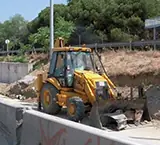
Un vehículo especial de reparación o conservación de vías, al entrar en una autopista, debe utilizar la luz de señalización V-2...
A special road repair or maintenance vehicle entering a motorway must use the V-2 warning light...
- ASólo cuando llegue al lugar de trabajo.only when it reaches the work site.
- BDesde la entrada de la autopista.from the motorway entrance.
- CSólo de noche.only at night.
ExplanationRoad maintenance vehicles travel at very low speed, which is a danger on a motorway: so they must have the amber V-2 light on from the moment they enter the road, not only when they reach the work site, to warn other road users.
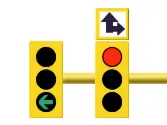
¿Podrá cambiar de dirección a la izquierda a la vista de los semáforos?
May you turn left, given these traffic lights?
- ANo, porque el semáforo contiguo está con luz roja y esta es más restrictiva.No, because the adjacent traffic light is showing red and that is more restrictive.
- BSí, dejando pasar a los vehículos que circulen por el carril al que me incorporo.Yes, letting vehicles in the lane I am joining go first.
- CSí, porque la luz verde significa que está permitido el paso con prioridad.Yes, because the green light means you may go through with priority.
ExplanationA green arrow on a black background means that you may go in the direction shown by the arrow, whatever light is showing on the adjacent traffic light, but you must go carefully, letting vehicles in the lane you are joining go first.
Un turismo que ostenta la señal V-15 (persona de movilidad reducida), ¿podrá circular por un carril VAO?
May a car displaying sign V-15 (person with reduced mobility) use an HOV (VAO) lane?
- ASolo si va ocupado como mínimo por dos personas.Only if there are at least two people in it.
- BSí, aun viajando solo el conductor.Yes, even if only the driver is travelling.
- CSí, cuando cumpla la condición de ocupación del carril VAO.Yes, when it meets the occupancy requirement of the HOV lane.
ExplanationUnder Article 35.2.a) of the General Traffic Regulations (RGC), cars that display sign V-15 or the parking card for people with disabilities and reduced mobility may use the HOV (VAO) lane even if only the driver is travelling, without meeting the minimum occupancy set for that stretch.
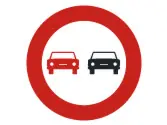
A la vista de esta señal, ¿qué distancia debemos mantener con el vehículo que nos precede?
Given this sign, what distance must we keep from the vehicle in front?
- A100 metros como mínimo.At least 100 metres.
- B150 metros como mínimo.At least 150 metres.
- CLa que permita frenar sin colisionar con el vehículo que nos precede.One that allows us to brake without hitting the vehicle in front.
ExplanationWhere overtaking is prohibited, the safe distance is enough, meaning one that allows you to stop without hitting the vehicle in front; you do not need to leave a gap for someone else to overtake. In tunnels, at least 100 metres or 4 seconds is required, and 150 metres or 6 seconds if the MAM exceeds 3,500 kg.
El semáforo de la derecha está en verde y el de la izquierda está en rojo. ¿Qué debe hacer para seguir de frente?
The traffic light on the right is green and the one on the left is red. What must you do to go straight on?
- AEsperar a que el semáforo de la izquierda esté en verde.Wait until the traffic light on the left is green.
- BEsperar a que ambos semáforos estén en verde.Wait until both traffic lights are green.
- CSeguir de frente porque el semáforo de la derecha lo permite.Go straight on because the traffic light on the right allows it.
ExplanationUnder Article 132.3 of the General Traffic Regulations, if the traffic lights on the right and on the left show different signals, anyone who wants to go straight on or turn left must only obey the one on their left. As it is red, you must wait for it to turn green.
Si las indicaciones del GPS contradicen las señales de tráfico, ¿qué debe hacer el conductor?
If the GPS directions contradict the traffic signs, what should the driver do?
- ASeguir únicamente las indicaciones del GPS, porque está diseñado para encontrar la ruta más eficiente.Follow only the GPS directions, because it is designed to find the most efficient route.
- BPriorizar las señales de tráfico y, si es necesario, ajustar la ruta.Give priority to the traffic signs and, if necessary, adjust the route.
- CReiniciar el dispositivo GPS para corregir posibles errores.Restart the GPS device to correct possible errors.
ExplanationUnder Article 132 of the General Traffic Regulations, all road users must obey traffic signs that set an obligation or prohibition, even if they seem to contradict other instructions, such as those given by a GPS. This is because traffic signs are essential for keeping roads safe. So if the GPS and the traffic signs contradict each other, the right thing is to give priority to the traffic signs and adjust the route if necessary.
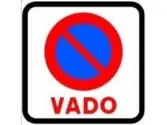
Ante un vado señalizado, ¿qué podemos hacer?
In front of a signposted driveway entrance (vado), what may we do?
- AEstacionar un tiempo limitado.Park for a limited time.
- BNo podemos parar.We may not stop.
- CNo podemos estacionar, pero sí parar.We may not park, but we may stop.
ExplanationIn front of a driveway entrance correctly marked with the corresponding sign, parking is prohibited, but stopping is allowed.
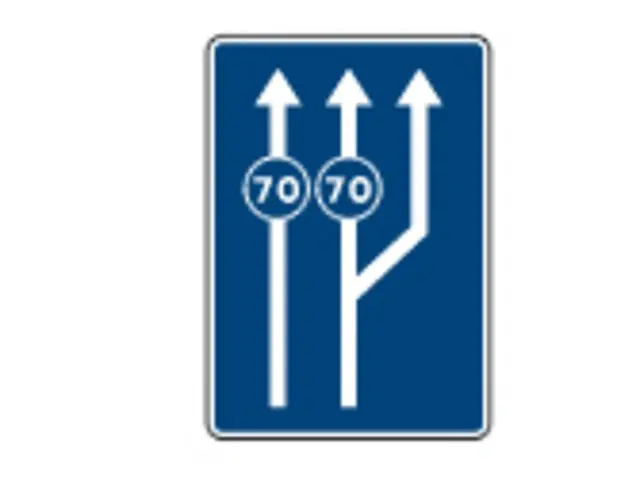
A la vista de la señal, ¿puede un coche circular a más de 70 km/h por el carril de la derecha?
Looking at the sign, may a car drive at more than 70 km/h in the right-hand lane?
- ANo, porque el carril derecho es para los vehículos que van más despacio.No, because the right-hand lane is for slower vehicles.
- BSí, porque debo circular por la derecha siempre que sea posible.Yes, because I must drive on the right whenever possible.
- CSí, porque los carriles de la izquierda son para vehículos que circulan a menos de 70 km/h.Yes, because the left-hand lanes are for vehicles travelling at less than 70 km/h.
ExplanationThe sign indicates that the lanes marked with 70 may only be used by vehicles travelling at that speed or faster; the right-hand lane has no such restriction. Under Article 31.1 of the RGC, outside built-up areas you normally drive in the right-hand lane, so you may use it at more than 70 km/h.
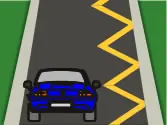
¿Podremos estacionar sobre esta línea amarilla en zigzag?
May we park on this yellow zigzag line?
- ANo, no puede estacionar ningún vehículo.No, no vehicle may park there.
- BNo, sólo pueden estacionar los vehículos de transporte colectivo.No, only public transport vehicles may park there.
- CNo podremos estacionar ni parar.We may neither park nor stop there.
ExplanationThe yellow zigzag marking (M-7.9) shows that parking is prohibited for vehicles in general, because the place is kept for a special short-stay use, such as bus stops or loading and unloading. Stopping is allowed.
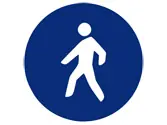
¿Podremos circular con una bicicleta o un ciclomotor por la vía así señalizada?
May we ride a bicycle or a moped on a road marked like this?
- ACon una bicicleta sí, con un ciclomotor no.A bicycle, yes; a moped, no.
- BSí, tanto con una bicicleta como con un ciclomotor.Yes, both a bicycle and a moped.
- CNo.No.
ExplanationThe sign requires pedestrians to use the road marked in this way and prohibits other users from using it.
Un agente de tráfico que va por delante muestra una bandera amarilla. ¿Qué indica?
A traffic officer travelling ahead shows a yellow flag. What does it indicate?
- ANecesidad de extremar la atención o aviso de peligro próximo.The need to take extra care, or a warning of danger ahead.
- BQue la calzada está abierta al tráfico.That the carriageway is open to traffic.
- CQue la calzada está temporalmente cerrada al tráfico.That the carriageway is temporarily closed to traffic.
ExplanationUnder Annex I of the RGC (section 1.2), a yellow flag shown from a vehicle tells other drivers and road users that they must take extra care or that there is danger ahead. The red flag closes the carriageway and the green one opens it again.
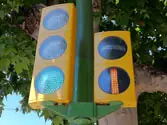
¿Qué significa el semáforo con la franja blanca vertical?
What does the traffic light with a vertical white bar mean?
- APermite el paso a los tranvías y los autobuses de líneas regulares.It allows trams and scheduled buses to go through.
- BProhíbe el paso a todos los vehículos que circulan por esa vía.It prohibits all vehicles on that road from going through.
- CPermite girar a la izquierda a todos los vehículos que circulen por esta vía.It allows all vehicles on this road to turn left.
ExplanationThis traffic light applies only to trams and scheduled buses, unless there is a lane also reserved for taxis or other vehicles, in which case it would apply only to those travelling in it. The vertical bar shows that it allows going straight ahead.
¿Cuál es el orden de prioridad correcto entre los siguientes tipos de señales?
What is the correct order of precedence between the following types of signs?
- AAgentes, semáforos, circunstanciales y balizamiento.Traffic officers, traffic lights, temporary signs and marker devices.
- BSemáforos, verticales, circunstanciales y balizamiento.Traffic lights, upright signs, temporary signs and marker devices.
- CAgentes, circunstanciales y balizamiento, semáforos.Traffic officers, temporary signs and marker devices, traffic lights.
ExplanationThe order of precedence between signs is as follows: - Signals and orders from traffic officers. - Temporary signs and marker devices. - Traffic lights. - Upright signs. - Road markings.
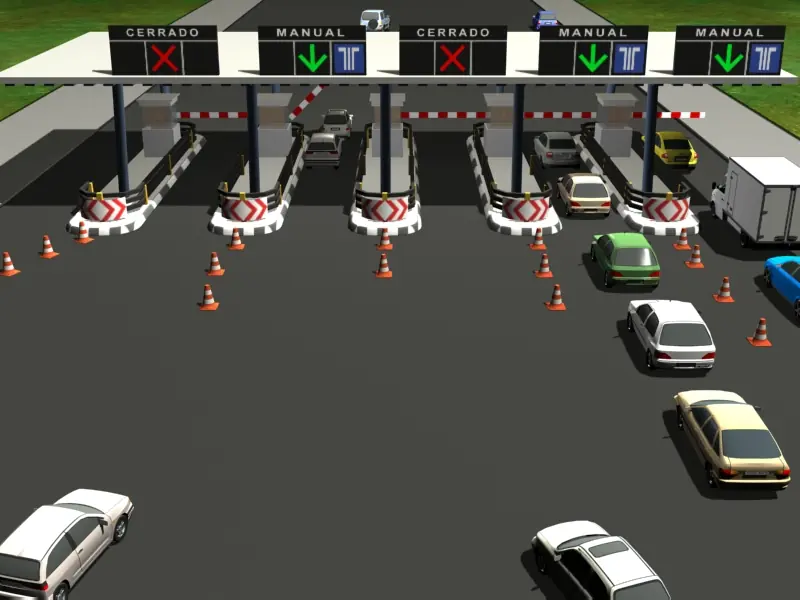
Para pagar en un puesto de peaje, debe pasar...
To pay at a toll plaza, you must go through...
- Apor el carril que indica la flecha verde.the lane shown by the green arrow.
- Bpor el carril que indica el aspa roja.the lane shown by the red cross.
- Cpor cualquier carril, indistintamente.any lane, it makes no difference.
ExplanationTo reach the different booths at a toll plaza there are usually several lanes, one for each booth, each controlled by its own traffic light. A green light in the shape of an arrow pointing downwards means you may use the lane above which it is lit.
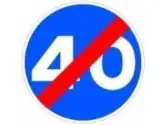
Esta señal indica el lugar en el que...
This sign indicates the place where...
- Atermina la obligación de circular, al menos, a 40 km/h.the obligation to drive at least at 40 km/h ends.
- Bfinaliza la recomendación de circular a velocidad superior a 40 km/h.the recommendation to drive faster than 40 km/h ends.
- Ccomienza la obligación de circular a más de 40 km/h.the obligation to drive faster than 40 km/h begins.
ExplanationThe sign marks the point from which an earlier 'Minimum speed' sign, in this case 40 km/h, no longer applies. Do not confuse it with the advisory maximum speed sign, which recommends an approximate speed, in km/h, that it is advisable not to exceed even if weather, road and traffic conditions are favourable.
En una intersección regulada por semáforo con luz verde:
At a junction controlled by a traffic light showing green:
- APuedes pasar directamente sin precauciónYou may go straight through without taking care
- BPuedes pasar pero con precauciónYou may go, but with caution
- CDebes parar si hay otros vehículosYou must stop if there are other vehicles
ExplanationA green light allows you to go with caution. You must give way to vehicles that may still be in the junction and to pedestrians who are crossing.
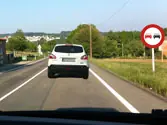
A la vista de la señal, ¿podremos iniciar el adelantamiento?
Given the sign, may we start overtaking?
- ASí, porque aún no hemos sobrepasado la señal y está prohibido a partir de ella.Yes, because we have not yet passed the sign, and overtaking is prohibited from the sign onwards.
- BNo.No.
- CSí, si no se acercan vehículos en sentido contrario.Yes, if no vehicles are coming the other way.
ExplanationYou cannot overtake because there is a solid line. Even if the line were broken, we would not start overtaking, because we could not complete it before the no overtaking sign.
¿Podemos pasar entre señales de balizamiento consistentes en luces amarillas?
May we pass between marker beacons consisting of yellow lights?
- ASí, si la luz es intermitente.Yes, if the light is flashing.
- BNo, si la luz es fija.No, if the light is steady.
- CNo podemos pasar a través de la línea imaginaria que las une, tanto si la luz es fija como intermitente.We may not pass through the imaginary line that joins them, whether the light is steady or flashing.
ExplanationMarker beacons consisting of steady or flashing yellow lights prohibit passing through the imaginary line that joins them.
¿Qué significa una luz amarilla no intermitente?
What does a steady (non-flashing) amber light mean?
- AQue los vehículos tienen que pasar extremando la precaución.That vehicles must go through taking extreme care.
- BQue los vehículos deben detenerse.That vehicles must stop.
- CQue los vehículos deben ceder el paso.That vehicles must give way.
ExplanationA steady (non-flashing) amber light means that vehicles must stop in the same way as for a steady red light, unless, when the light comes on, the vehicle is so close to the stopping point that it cannot stop safely.
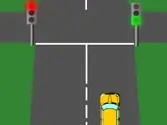
Si el vehículo amarillo pretende seguir de frente deberá respetar el semáforo situado a su...
If the yellow vehicle intends to go straight on, it must obey the traffic light on its...
- ADerecha e izquierda.Right and left.
- BDerecha.Right.
- CIzquierda.Left.
ExplanationWhen traffic lights or upright signs on the right and on the left show different instructions, vehicles that want to go straight on or turn left must obey the sign or traffic light on the left, while those that want to turn right must obey the upright sign or traffic light on their right.
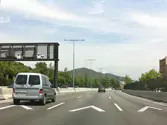
¿Qué función tienen las marcas viales "galones" en la carretera?
What is the purpose of «chevron» road markings on the road?
- AIndican zonas de estacionamiento permitido.They show areas where parking is allowed.
- BMarcan la distancia mínima de seguridad entre vehículos.They mark the minimum safe distance between vehicles.
- CSeñalan áreas de obras o trabajos en la vía.They mark areas of roadworks or work on the road.
ExplanationThe road markings known as «chevrons» are painted on the carriageway in the shape of an upside-down V. Their main purpose is to set the minimum safe distance between vehicles, which helps to reduce rear-end collisions on risky stretches. They are usually accompanied by road signs saying how many chevrons must be kept between you and the vehicle in front.
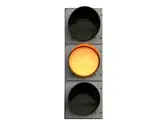
Al aproximarse a un semáforo con una o dos luces amarillas intermitentes, ¿qué hay que hacer?
When approaching a traffic light with one or two flashing amber lights, what must you do?
- APasar con precaución.Go through with caution.
- BExtremar la precaución y, si es necesario, ceder el paso.Take extra care and, if necessary, give way.
- CDetenerse en las mismas condiciones que si se tratara de una luz roja fija.Stop in the same way as for a steady red light.
ExplanationOne amber light, or two amber lights flashing alternately, require drivers to take extra care and, where appropriate, give way. In addition, they do not exempt you from obeying other signs that require you to stop.
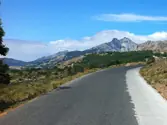
En una vía de doble sentido, no hay señales ni marcas viales que prohíban cambiar el sentido. ¿Cuándo se permite cambiar de sentido?
On a two-way road, there are no signs or road markings prohibiting U-turns. When is it permitted to make a U-turn?
- ANunca.Never.
- BCuando quieras, porque siempre está permitido.Whenever you like, because it is always permitted.
- CCuando no pongan en peligro a otros usuarios.When it does not endanger other road users.
ExplanationMaking a U-turn is prohibited in any situation that prevents you from checking that you will not endanger or obstruct other road users, even if there is no specific sign, for example on bends and brows of hills with reduced visibility, or in fog or heavy rain. U-turns are also prohibited: at level crossings (but not near them); in tunnels, underpasses and on stretches of road covered by the 'Tunnel' sign; on motorways (autopistas) and dual carriageways (autovías), except at places provided for it; on one-way carriageways and stretches of road; and on all stretches of road where overtaking is prohibited, unless the U-turn is expressly authorised.
¿Qué indica una luz roja intermitente o dos luces rojas alternativamente intermitentes de un semáforo?
What does one flashing red light, or two alternately flashing red lights, on a traffic light indicate?
- AProhibido temporalmente el pasoPassing is temporarily prohibited
- BPermitido el paso con precauciónYou may pass with caution
- CObligación de moderar la velocidad antes de pasarYou must reduce speed before passing
ExplanationOne flashing red light, or two alternately flashing red lights, on a traffic light temporarily prohibit vehicles from passing before a level crossing or the entrance to a movable bridge.
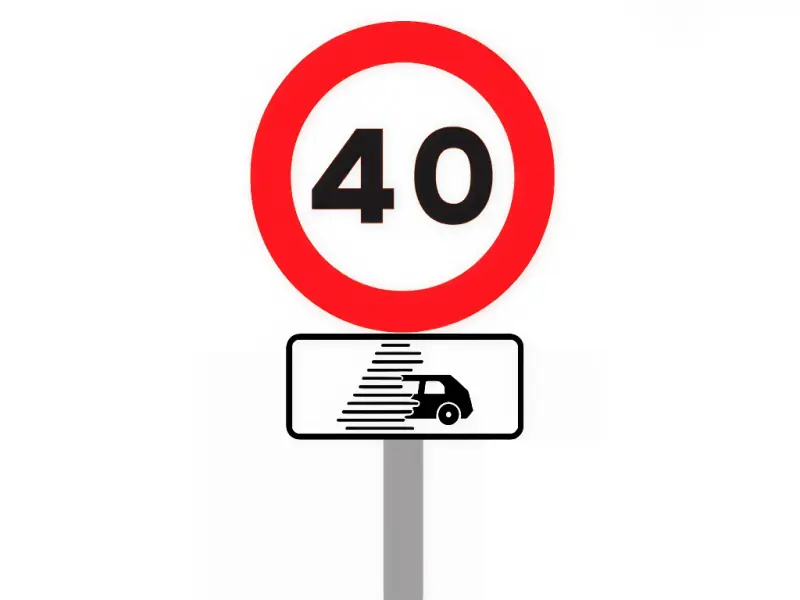
¿Qué significan estas señales?
What do these signs mean?
- AQue no se puede ir a más de 40 kilómetros por hora cuando llueve.You must not go faster than 40 kilometres per hour when it is raining.
- BQue no se puede ir a más de 40 kilómetros por hora cuando la calzada está inundada.You must not go faster than 40 kilometres per hour when the carriageway is flooded.
- CQue no se puede ir a más de 40 kilómetros por hora cuando hay niebla.You must not go faster than 40 kilometres per hour when there is fog.
ExplanationThe maximum speed sign comes with an additional panel showing a vehicle and horizontal stripes that represent fog. The panel restricts the sign to that situation: in fog you must not drive faster than 40 km/h.
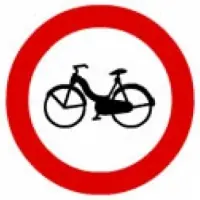
¿Cuál es la finalidad de las señales de prohibición de entrada?
What is the purpose of no entry signs?
- ARegular el tráfico en autopistas y autovíasTo regulate traffic on motorways (autopistas) and dual carriageways (autovías).
- BRegular la prioridad de paso en interseccionesTo regulate right of way at junctions.
- CProhibir el acceso a vehículos y peatonesTo prohibit access to vehicles and pedestrians.
ExplanationThe group of no entry signs restricts access to a road, prohibiting entry to vehicles and pedestrians.
En un tramo en obras hay marcas viales blancas y amarillas, además de conos y señales. ¿Qué marcas viales debe respetar?
On a roadworks section there are white and yellow road markings, as well as cones and signs. Which road markings must you follow?
- ALas amarillas, porque es una zona de obras.The yellow ones, because it is a roadworks area.
- BNinguna, porque el trazado está marcado por conos y señales, y las marcas no son obligatorias.None, because the route is marked by cones and signs, and the markings are not compulsory.
- CLas blancas.The white ones.
ExplanationAccording to the road markings catalogue, new markings painted on roadworks sections are yellow, and the earlier white ones are only kept if they still apply. When they do not match, traffic during the works is governed by the yellow ones.
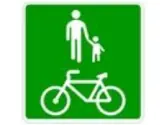
¿Qué indica la señal de la imagen?
What does the sign in the picture indicate?
- ALa existencia de una vía para peatones, ciclos y, en su caso, VMP, segregada del tráfico motorizado.A route for pedestrians, cycles and, where applicable, PMVs, separated from motor traffic.
- BLa intersección con una vía ciclista.A junction with a cycle route.
- CQue el acceso está prohibido a ciclos.That access is prohibited to cycles.
ExplanationThis is sign S-33, which the 2025 catalogue calls 'Senda ciclopeatonal' (shared pedestrian and cycle path; previously 'senda ciclable'). It indicates a route for pedestrians, cycles and, where applicable, PMVs, separated from motor traffic, which usually runs through open spaces, parks, gardens or woods.
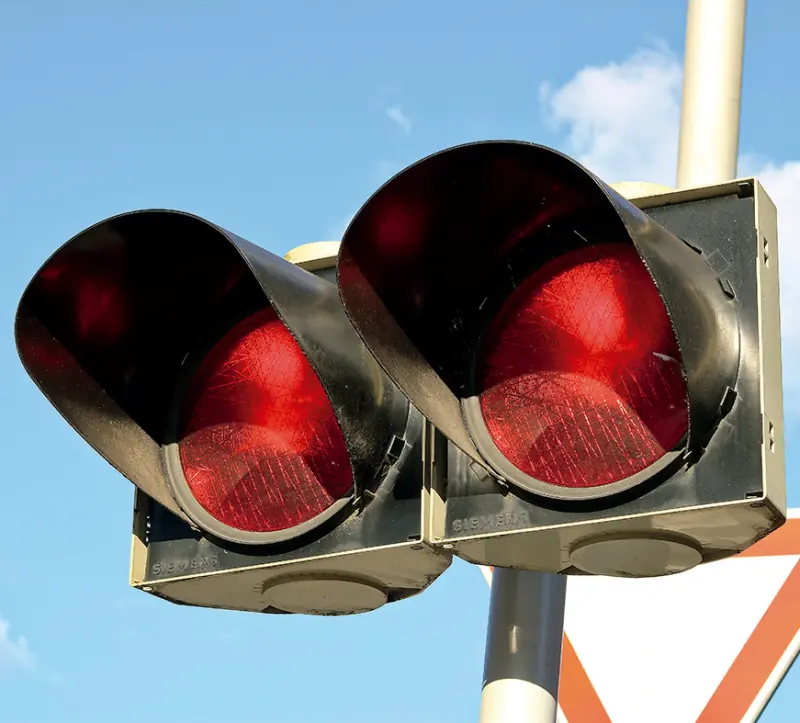
Una luz roja intermitente o dos luces rojas alternativamente intermitentes de un semáforo...
A flashing red light, or two red lights flashing alternately, on a traffic light...
- Apermiten el paso con precaución.allow you to go through with caution.
- Bprohíben temporalmente el paso.temporarily prohibit going through.
- Cobligan a moderar la velocidad antes de pasar.require you to slow down before going through.
ExplanationAccording to Annex I of the General Traffic Regulations (RGC), a flashing red light, or two red lights flashing alternately, temporarily prohibit going through. They are used before a level crossing, a movable bridge or a ferry landing, next to fire engine exits or when an aircraft is approaching.
Cuando existe contradicción entre señales tenemos que obedecer...
When signs contradict each other, we must obey...
- AA la más restrictiva.The most restrictive one.
- BA la más prioritaria.The one with the highest priority.
- CA la menos restrictiva.The least restrictive one.
ExplanationWhen signs contradict each other, we must obey the one with the highest priority and, if they are of the same type, the most restrictive one.
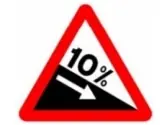
Esta señal nos advierte de un peligro...
This sign warns us of a danger...
- Adebido a la existencia de un tramo de vía de fuerte pendiente descendente.due to a stretch of road with a steep downhill gradient.
- Bdebido a la existencia de un tramo de vía con fuerte pendiente ascendente.due to a stretch of road with a steep uphill gradient.
- Cdebido a la proximidad de un badén en la vía.due to a dip in the road ahead.
ExplanationThe sign indicates danger from a stretch of road with a steep downhill gradient. The figure shows the gradient as a percentage.
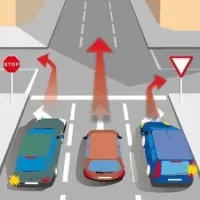
En esta intersección, ¿Qué señal debe obedecer el vehículo azul para girar a la derecha?
At this junction, which sign must the blue vehicle obey in order to turn right?
- ALa señal de ceda el paso.The give way sign.
- BLa señal de STOP porqué está situada a la izquierda.The STOP sign, because it is on the left.
- CLa señal de STOP porque es más restrictiva.The STOP sign, because it is more restrictive.
ExplanationUnder Article 132.3 of the General Traffic Regulations, you obey the signs on your right; if the signs on the right and on the left are different, those on the left apply only to drivers turning left or going straight on. The blue vehicle is turning right, so it obeys the give way sign.
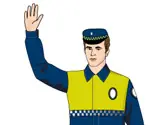
¿Qué le indica el agente?
What is the traffic officer telling you?
- AObliga a detenerse a todos los usuarios de la vía.All road users must stop.
- BObliga a detenerse a los vehículos que se acerquen de frente al agente.Vehicles approaching the officer head-on must stop.
- CObliga a detenerse a todos los usuarios de la vía que se acerquen al agente.All road users approaching the officer must stop.
ExplanationAll road users approaching the officer must stop, except drivers who cannot do so safely. They must stop at the nearest stop line or, if there is none, immediately before the officer. At a junction, they must stop before entering it. After this signal, the officer may show, where necessary, the place where they must stop.
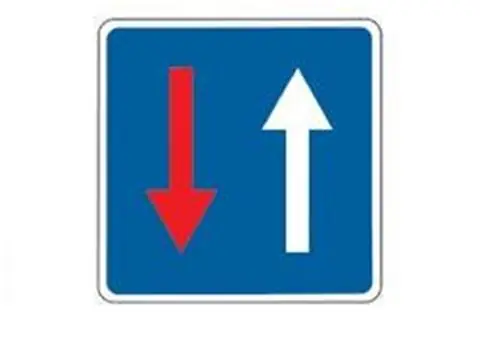
La señal indica...
The sign indicates...
- Aprioridad respecto al sentido contrario.priority over oncoming traffic.
- Bque hay que detenerse siempre.that you must always stop.
- Cque no se puede pasar cuando se obligue a los vehículos que vengan en sentido contrario a detenerse.that you may not go through if this forces oncoming vehicles to stop.
ExplanationThe square blue sign with a white arrow pointing up and a red arrow pointing down indicates priority over oncoming traffic: in the narrow section ahead, oncoming vehicles must give way. Even so, you must go through with care.
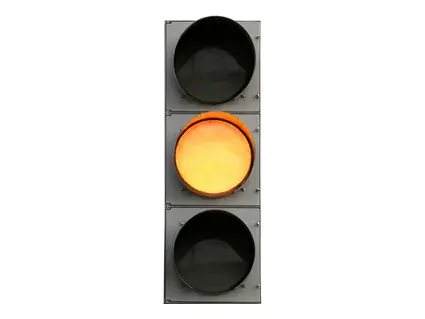
¿Qué indica la luz amarilla fija iluminada en un semáforo circular?
What does a lit steady amber light on a circular traffic light indicate?
- APaso permitido sin prioridad.You may go, without priority.
- BDetención, salvo que no pueda realizarse de forma segura.Stop, unless this cannot be done safely.
- CPaso permitido con prioridad.You may go, with priority.
ExplanationA lit steady amber light on a circular traffic light means that the driver must stop the vehicle, unless it is so close to the traffic light that it cannot brake safely. So the correct answer is to stop, unless this cannot be done safely.
La línea amarilla en zigzag...
The yellow zigzag line...
- APermite parar pero no estacionar.Allows stopping but not parking.
- BSólo permite parar para carga y descarga.Only allows stopping for loading and unloading.
- CSe puede estacionar pero no parar.Allows parking but not stopping.
ExplanationA yellow zigzag line prohibits parking but allows stopping.
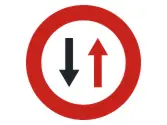
Si encontramos esta señal al entrar en un estrechamiento...
If you find this sign when entering a narrow section...
- Atendrá prioridad el sentido contrario.traffic coming the other way will have priority.
- Btendremos prioridad nosotros.you will have priority.
- Ctendrá prioridad el vehículo que llegue antes.the vehicle that arrives first will have priority.
ExplanationThis sign shows that traffic coming the other way has priority when it is not possible to pass through the narrow section at the same time as traffic in the other direction.
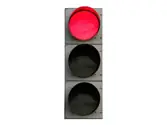
¿Qué significado tiene una luz roja intermitente en un semáforo?
What does a flashing red light on a traffic light mean?
- ANos obliga a extremar la precaución.We must take extreme care.
- BPodemos pasar cediendo el paso tanto a los vehículos que se aproximan por la derecha como por la izquierda.We may go through, giving way to vehicles approaching from both the right and the left.
- CQue se prohíbe temporalmente el paso.That passing is temporarily prohibited.
ExplanationA flashing red light, or two red lights flashing alternately, temporarily prohibit vehicles from passing before a level crossing, the entrance to a swing or lift bridge, a ferry, near an exit used by fire engines, or because of a low-flying aircraft.
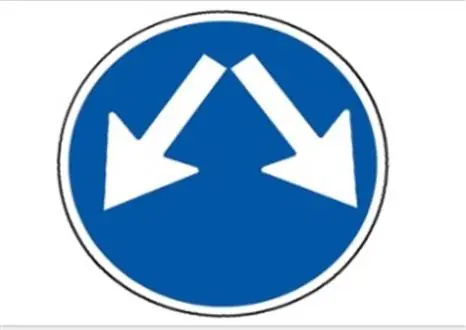
¿Qué indica esta señal situada sobre un refugio?
What does this sign placed on a traffic island indicate?
- ALos lados del refugio por donde los vehículos han de pasar.The sides of the island on which vehicles must pass.
- BLos lados del refugio por donde está prohibido pasar.The sides of the island on which passing is prohibited.
- CLos lados de la calzada en los que está permitido estacionar.The sides of the carriageway on which parking is allowed.
ExplanationThis blue sign with two diagonal arrows, placed on a traffic island, indicates the sides on which you may pass. It is a mandatory sign: the driver may go round the obstacle on either of the two sides shown.
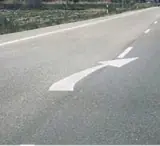
Si la separación entre los trazos de una línea longitudinal discontinua es sensiblemente más corta que en el caso general, anuncia...
If the gap between the dashes of a broken longitudinal line is noticeably shorter than usual, it warns of...
- ALa proximidad de un tramo de vía que presenta un riesgo especial.an approaching stretch of road with a special risk.
- BLa proximidad de un tramo con una pendiente mayor al cinco por ciento.an approaching stretch with a gradient of more than five per cent.
- CLa proximidad de una travesía.an approaching travesía (a stretch of road through a town).
ExplanationWhen the gap between the dashes of a broken line is noticeably shorter than usual, it tells the driver that they are approaching a solid line or a stretch of road with a special risk.
Si el recorrido que va a realizar con su vehículo es corto, ¿está permitido llevar a un niño pequeño en brazos?
If the journey you are going to make in your vehicle is short, may you carry a small child in your arms?
- ASí, cuando todo el recorrido es por vías urbanas.Yes, when the whole journey is in built-up areas.
- BNo, es obligatorio usar un sistema de retención infantil.No, a child restraint system must be used.
- CSolo si se circula a una velocidad muy reducida.Only if you are driving at a very low speed.
ExplanationIf you carry a child in your arms, in sudden braking or an accident the child can be thrown out of your arms and seriously injured. Vehicle seats are built and designed to carry adults, in both height and weight. When carrying children, you must fit a restraint system suited to the child's weight and height. That way, in an accident or sudden braking, the restraint system will work properly.
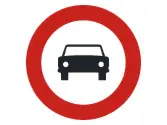
¿A qué vehículos prohíbe esta señal?
Which vehicles does this sign prohibit?
- AA todos los vehículos automóviles.All motor cars.
- BSolamente a los turismos.Only cars.
- CA los vehículos de motor, excepto a las motocicletas de 2 ruedas.Motor vehicles, except two-wheeled motorcycles.
ExplanationThis is sign R-103 “No entry for motor vehicles, except two-wheeled motorcycles”: it prohibits access to motor vehicles, but not to two-wheeled motorcycles or to three-wheeled vehicles treated as motorcycles. It does not apply to vehicles without a motor either.
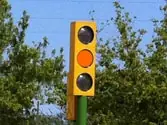
Ante un semáforo circular de color amarillo fijo, ¿hay que detenerse?
At a round traffic light showing steady amber, must you stop?
- ANo, pero sí obliga a pasar con precaución.No, but it requires you to go through with caution.
- BSí, a no ser que no pueda hacerse en condiciones de seguridad.Yes, unless you cannot do so safely.
- CNo, porque únicamente avisa que va a cambiar a color rojo.No, because it only warns that it is going to turn red.
ExplanationA non-flashing amber light means vehicles must stop in the same way as for a steady red light, unless, when it comes on, the vehicle is so close to the stopping point that it cannot stop before it with sufficient safety.
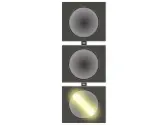
Este semáforo, ¿a qué vehículos afecta?
Which vehicles does this traffic light apply to?
- ASólo a tranvías.Only trams.
- BA tranvías y autobuses de líneas regulares.Trams and regular-service buses.
- CA ciclos y ciclomotores.Cycles and mopeds.
ExplanationA traffic light with an illuminated white bar on a round black background applies only to trams and regular-service buses; if there is a lane reserved for buses, taxis or other vehicles, it applies only to the vehicles using that lane (Annex I of the RGC, section 4.4).
Si la línea lateral es continua, ¿se puede cruzarla?
If the edge line is solid, may you cross it?
- ANo, cuando la línea es continua; sí, cuando es discontinua.No when the line is solid; yes when it is broken.
- BSí, cuando sea necesario y las circunstancias lo permitan.Yes, when necessary and if the circumstances allow it.
- CNo, está prohibido.No, it is prohibited.
ExplanationUnder the road-marking catalogue in Annex I of the RGC, carriageway edge lines, whether solid or broken, do not change the rules on using the hard shoulder, and a solid edge line may occasionally be crossed when necessary, for example to move onto the hard shoulder in an emergency.
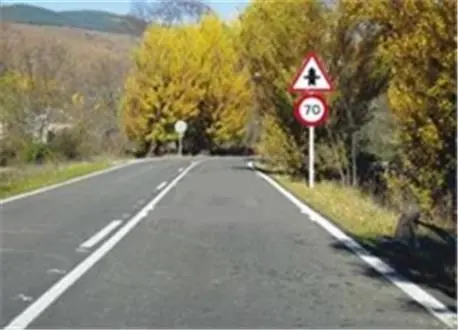
Si encuentra esta señal, ¿hasta cuándo mantendrá la limitación de velocidad?
If you see this sign, until when will you keep to the speed limit?
- AHasta que termine el peligro señalizado.Until the signposted hazard ends.
- BHasta una nueva señal de limitación de velocidad.Until a new speed limit sign.
- CÚnicamente, hasta una nueva señal de limitación de velocidad diferente.Only until a new, different speed limit sign.
ExplanationWhen a maximum speed sign is on the same post as a warning sign, the limit applies only while that hazard lasts. In other cases it applies until an end-of-limit sign, an end-of-all-prohibitions sign or another maximum speed sign.
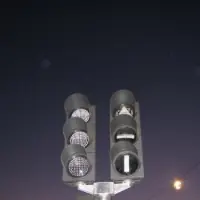
¿Qué significa una franja blanca horizontal en un semáforo para tranvías y autobuses?
What does a horizontal white bar on a traffic light for trams and buses mean?
- APermitido el pasoVehicles may go
- BObligación de ceder el pasoVehicles must give way
- CProhibido el pasoVehicles may not go
ExplanationTraffic lights showing a white bar on a black circular background apply only to trams and buses on regular routes. When the bar is horizontal, these vehicles may not go, under the same conditions as a steady red light.
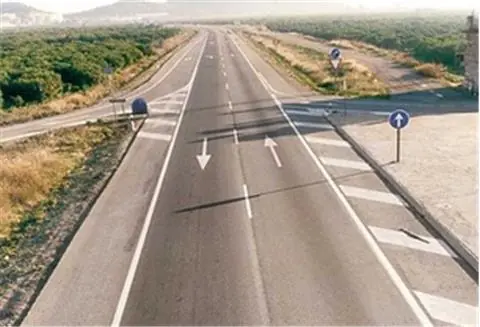
Si conduce un ciclomotor, ¿le está permitido circular por este cebreado?
If you are riding a moped, are you allowed to ride over this hatched area?
- ASí, porque está obligado a circular por el arcén.Yes, because you are required to ride on the hard shoulder.
- BNo, ningún vehículo puede circular por el cebreado.No, no vehicle may drive over the hatched area.
- CSólo cuando la vía está saturada.Only when the road is congested.
ExplanationNo vehicle may enter the hatched area, except those required to use the hard shoulder, such as mopeds or bicycles, for which this area is a continuation of the hard shoulder (road-marking catalogue of the General Traffic Regulations). That is why the moped may ride over it.
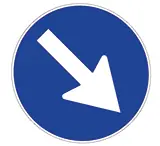
¿Qué señala la flecha de la señal?
What does the arrow on the sign show?
- AEl lado del refugio por el que los vehículos han de pasar.The side of the traffic island on which vehicles must pass.
- BSentido único.One-way traffic.
- CRecomienda el lado del refugio por el que los vehículos pueden pasar.It recommends the side of the traffic island on which vehicles may pass.
ExplanationThis sign, blue with a diagonal arrow, is a compulsory passing side sign: the arrow shows the side of the refuge, traffic island or obstacle on which vehicles must pass. As it is a mandatory sign, it is not a recommendation, and it does not indicate one-way traffic either.
All topics
- Definitions
- Documents and penalty points
- The driver's condition
- Duties of drivers and pedestrians
- Vehicle safety devices
- Vehicle controls and equipment
- Vehicle lights and horn
- The road and its lanes
- Speed and distances
- Manoeuvres
- Right of way
- Carrying passengers and loads
- Driving safely in difficult conditions
- Vehicle mechanics and maintenance
- Road accidents and first aid
- Defensive and eco-driving
Independent app: not affiliated with or endorsed by the DGT (Spain's Directorate-General for Traffic) or the Ministry of the Interior. The official exam is booked with the DGT and taken at its test centres. The questions here are practice material; the DGT's official question bank is not public.
Basado en datos de la Agencia Estatal Boletín Oficial del Estado (https://www.boe.es). Textos consolidados de carácter meramente informativo. La AEBOE no patrocina ni respalda este sitio.
Parte de las preguntas procede de los tests de la revista «Tráfico y Seguridad Vial» de la DGT, reproducidos con indicación de la fuente.