
DGT test · 1,397 questions
Traffic signs, markings and signals · Page 21 of 28
Road signs, road markings, traffic lights, police signals and temporary markings: what they mean and which one wins when they disagree. The topic with the most questions in the bank.
Questions in this topic, with answers
1,397 questions, 50 per page, with the correct answer and the explanation. Page 21 of 28.
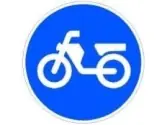
Una motocicleta, ¿puede circular por la vía señalizada con esta señal?
May a motorcycle use the road signed with this sign?
- ASí, porque se trata de una vía reservada a vehículos de dos ruedas con motor.Yes, because it is a road reserved for two-wheeled motor vehicles.
- BNo, porque se trata de una vía reservada exclusivamente a los ciclomotores.No, because it is a road reserved only for mopeds.
- CSí, si se trata de una motocicleta sin sidecar.Yes, if it is a motorcycle without a sidecar.
ExplanationSign R-407b “Road reserved for, and compulsory for, mopeds” requires moped riders to use the road at whose entrance it stands and prohibits all other users from using it. So a motorcycle may not use it.
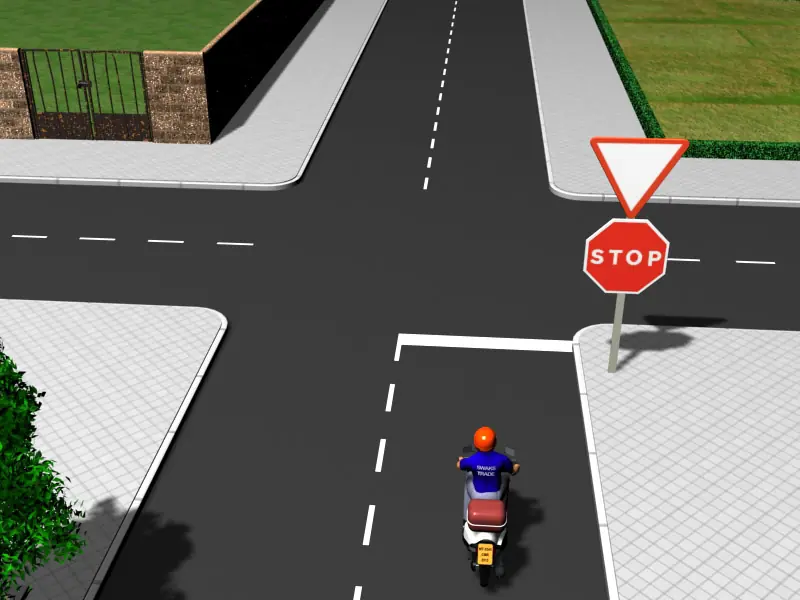
Cuando dos señales del mismo tipo parezcan estar en contradicción, los conductores obedecerán...
When two signs of the same type seem to contradict each other, drivers must obey...
- Aa ninguna de las dos.neither of them.
- Ba la señal más restrictiva.the more restrictive sign.
- Ca las dos señales, ya que son del mismo tipo.both signs, because they are of the same type.
ExplanationUnder Article 133 of the General Traffic Regulations (RGC), if two signs of the same type seem to contradict each other, the more restrictive one prevails. So if a give way sign and a STOP sign appear together, you must stop. Between signs of different types, the order of priority applies: traffic officers, temporary signs and markers, traffic lights, road signs and road markings.
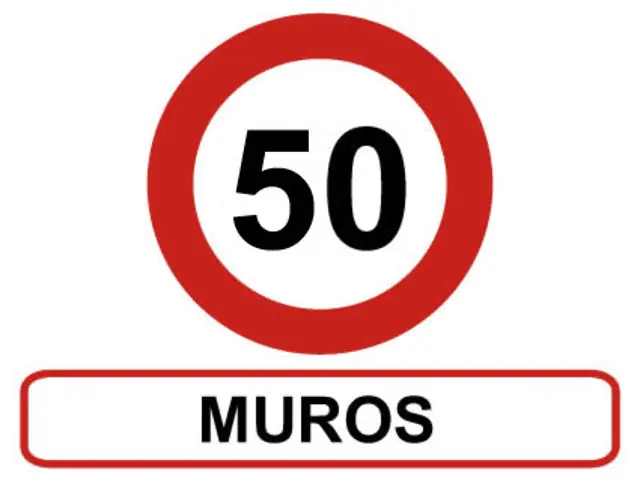
La señal que se ve en la fotografía obliga a mantener esa velocidad máxima dentro del poblado...
The sign in the photograph requires you to keep to that maximum speed inside the built-up area...
- Aindependientemente de otras señales de velocidad que haya dentro del poblado.regardless of any other speed signs inside the built-up area.
- Bse puede sobrepasar en 20 km/h para adelantar.it may be exceeded by 20 km/h to overtake.
- Cexcepto donde se indique otra velocidad.except where a different speed is shown.
ExplanationUnder Article 145.3 of the General Traffic Regulations (RGC), a regulatory sign placed next to the sign showing the name of the town applies to the whole built-up area, except on stretches where other signs set something different. You may not exceed the limit to overtake.
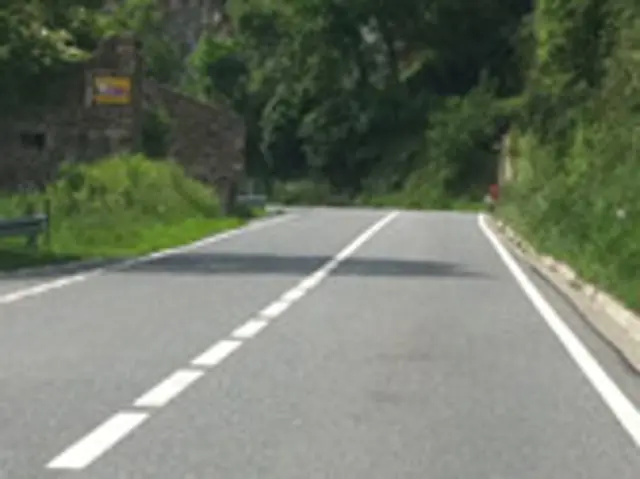
Cuando la separación entre los trazos de una línea discontinua es mucho más corta de lo normal, ¿qué puede indicar?
When the gaps between the dashes of a broken line are much shorter than normal, what can this indicate?
- ALa proximidad de un tramo de la vía que presenta un riesgo especial.That a stretch of road with a particular risk is coming up.
- BLa proximidad de una intersección.That a junction is coming up.
- CLa proximidad de un carril reservado.That a reserved lane is coming up.
ExplanationUnder the road-marking catalogue (RD 465/2025), the advance-warning broken line (M-1.9 and M-1.10), with long dashes and gaps shorter than normal, announces that a solid marking or a stretch of road with a particular risk is coming up.
¿Qué deben hacer los conductores que se acerquen a un agente de circulación que tiene el brazo levantado verticalmente?
What must drivers do when approaching a traffic officer who has one arm raised vertically?
- AReanudar la marcha.Move off again.
- BDisminuir la velocidad.Slow down.
- CDetenerse.Stop.
ExplanationUnder section 1.1 of Annex I of the General Traffic Regulations (RGC), an arm raised vertically requires all road users approaching the officer to stop, except drivers who cannot do so with sufficient safety.
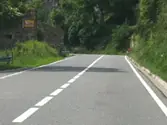
Cuando la separación entre los trazos de una línea discontinua sea sensiblemente más corta de lo normal, ¿qué podrá indicar?
When the gaps between the dashes of a broken line are noticeably shorter than normal, what may this indicate?
- AQue no se puede atravesar dicha línea.That the line may not be crossed.
- BQue debemos reducir la velocidad.That we must reduce speed.
- CQue se aproxima a un tramo con un peligro especial, pudiendo llegar a ser una línea continua.That you are approaching a stretch with a special hazard, and the line may become a solid line.
ExplanationA shorter distance between the dashes of a broken line tells the driver that a solid line or a stretch of road with a special risk is close.
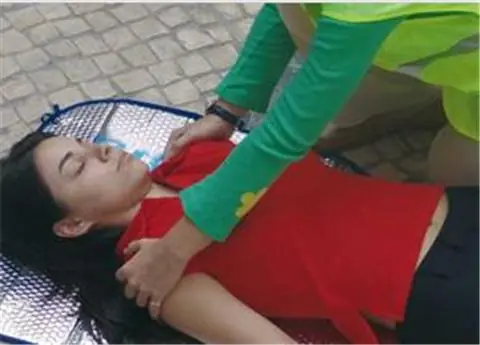
El traslado de un accidentado de tráfico a un hospital debe realizarse...
Taking a road accident casualty to hospital should be done...
- Aen el vehículo que pueda circular más rápido.in whichever vehicle can go fastest.
- Ben vehículos particulares, porque lo importante es que el herido llegue al hospital.in private vehicles, because what matters is that the injured person reaches hospital.
- Cpor personal especializado, para que el traslado se realice con los medios adecuados.by trained staff, so that the transfer is made with the right equipment.
ExplanationAn injured person should be moved by trained staff with the right equipment, because inappropriate transport can make their injuries worse. Only in very exceptional cases is a private vehicle used, and the traffic rules must still be obeyed.
En caso de contraindicaciones entre las indicaciones de distintas señales, primero obedeceremos las de...
If the instructions of different signs contradict each other, we will give precedence to...
- Asemáforos sobre circunstanciales.traffic lights over temporary signs.
- Bvehículos sobre semáforos.vehicles over traffic lights.
- Csemáforos sobre verticales.traffic lights over road signs.
ExplanationThe order of priority between signs is as follows: signals from traffic officers; temporary signs; traffic lights; road signs; road markings.
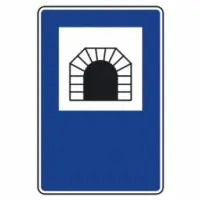
¿Esta señal puede indicar el inicio de un paso inferior?
Can this sign indicate the start of an underpass?
- ASí, y también el principio de un túnel o de un tramo equiparado al túnel.Yes, and also the start of a tunnel or of a stretch of road treated as a tunnel.
- BNo, indica el final de un túnel o paso inferior.No, it indicates the end of a tunnel or underpass.
- CNo, indica únicamente el principio de un túnel.No, it only indicates the start of a tunnel.
ExplanationThe tunnel sign indicates the start of a tunnel, an underpass or a stretch of road treated as a tunnel. Its rules apply on that stretch: lights on, and no stopping, parking, U-turns or reversing.
Una línea amarilla discontinua en el borde de la calzada significa:
A broken yellow line at the edge of the carriageway means:
- AProhibido estacionarNo parking
- BProhibido detenerseNo stopping
- CCarga y descargaLoading and unloading
ExplanationUnder the road-marking catalogue (RD 465/2025), a broken yellow line next to the kerb or on the carriageway (M-7.7) prohibits parking along its whole length on that side, but not stopping. A continuous yellow line (M-7.8) also prohibits stopping.
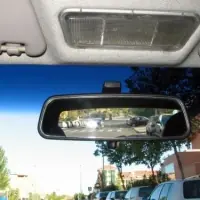
¿Que tipo de vestimenta está recomendada para el conductor en viajes largos?
What type of clothing is recommended for the driver on long journeys?
- ACon gabardina y abrigo en inviernoA raincoat and overcoat in winter.
- BVestimenta cómoda y relajadaComfortable, loose clothing.
- CPrendas ajustadas que amortigüen el movimientoTight clothes that cushion movement.
ExplanationWhen setting off on what is expected to be a long road journey, the driver should choose loose, comfortable clothes that allow them to move their arms and legs freely. Heavy coats should be avoided in winter, as they restrict arm movement, and so should clothes that are too tight.
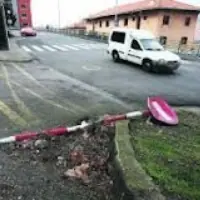
¿Se puede retirar de la vía una señal de circulación si nos molesta para transitar?
May you remove a road sign from the road if it gets in your way?
- ANoNo
- BSí, pero siempre con un motivo justificadoYes, but always for a justified reason
- CSí, pero únicamente las señales verticalesYes, but only vertical road signs
ExplanationUnder Article 140.2 of the General Traffic Regulations (RGC), except for a justified reason, nobody may remove, move, cover up or alter road signs without permission from the owner of the road or the traffic authority. A sign being in your way is not a justified reason, and removing it is a very serious offence (Article 140.4).
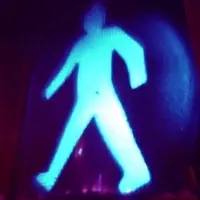
¿Cuál de éstos tipo de semáforos para vehículos NO existe?
Which of these types of traffic light for vehicles does NOT exist?
- ACuadradosSquare.
- BCircularesCircular.
- CTriangularesTriangular.
ExplanationThere are two types of traffic lights: for pedestrians and for vehicles. Traffic lights for vehicles include circular lights, square (lane) lights and lights reserved for certain vehicles. So there are no triangular traffic lights for vehicles.
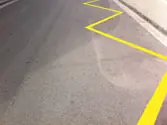
Una línea amarilla en zigzag, ¿qué significa?
What does a yellow zigzag line mean?
- AQue está prohibido parar y estacionar.That stopping and parking are prohibited.
- BQue está prohibido estacionar.That parking is prohibited.
- CQue está prohibido parar.That stopping is prohibited.
ExplanationA yellow zigzag line means that you may stop but not park.
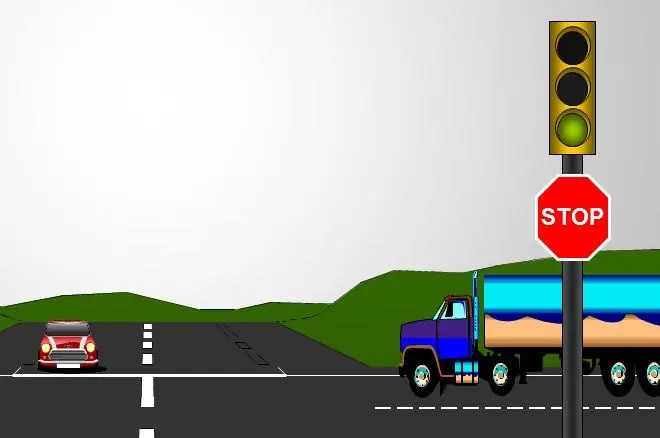
En caso de que las prescripciones indicadas por diferentes señales parezcan estar en contradicción...
If the instructions given by different signs appear to contradict each other...
- APrevalecerá la prioritaria.The one with priority will prevail.
- BPrevalecerá la más restrictiva.The most restrictive one will prevail.
- CSiempre prevalecerán las señales de los semáforos.Traffic light signals will always prevail.
ExplanationAccording to Article 133 of the General Traffic Regulations, if several signs appear to contradict each other, the one with priority prevails, in this order: traffic officers, temporary signs, traffic lights, road signs and road markings. Only between signs of the same type does the most restrictive one prevail. That is why a traffic light prevails over a STOP sign.
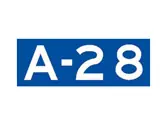
Esta señal indica que estás circulando por...
This sign indicates that you are driving on...
- Auna autopista.a motorway (autopista).
- Buna autopista o autovía.a motorway (autopista) or dual carriageway (autovía).
- Cuna autopista de peaje.a toll motorway.
ExplanationThis sign shows that we are driving on a motorway or dual carriageway. If it were a toll motorway, as well as the 'A' there would also be the letter 'P' (AP).
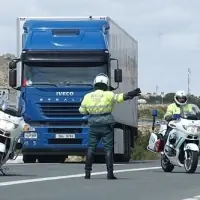
¿Qué significa la señal de brazo extendido horizontalmente realizada por un agente de circulación?
What does the signal of an arm held out horizontally by a traffic officer mean?
- AObligación de que se detengan aquellos vehículos que corten la dirección indicada por el brazoVehicles crossing the direction indicated by the arm must stop
- BObligación a todos los vehículos de disminuir la velocidadAll vehicles must slow down
- CObligación a todos los vehículos de ceder el pasoAll vehicles must give way
ExplanationWith one or both arms held out horizontally, the officer requires those approaching from directions that cross the direction indicated by the arm to stop, whichever way they are travelling (Annex I of the General Traffic Regulations). Those travelling in the direction of the arm may continue.
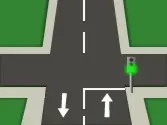
En una intersección señalizada con semáforo en verde, ¿es correcto realizar un adelantamiento?
At a junction controlled by a green traffic light, is it correct to overtake?
- ASí, por tener preferencia de paso indicado por el semáforo.Yes, because the traffic light gives right of way.
- BNo, siempre está prohibido adelantar en las intersecciones.No, overtaking at junctions is always prohibited.
- CSí, a condición de que no invada el sentido contrario.Yes, provided you do not move into the opposite side of the road.
ExplanationArticle 87.1.c of the RGC prohibits overtaking at junctions except, among other cases, when the carriageway has priority at the junction and there is a specific sign indicating this. A green light allows you to go through with priority (Annex I, section 4.2), so you may overtake, taking due care.
Si encontramos una señal de Stop y otra de ceda el paso juntas en una misma intersección...
If you find a Stop sign and a give way sign together at the same junction...
- ANos detendremos para ceder el paso.You will stop in order to give way.
- BTendremos que ceder el paso pero sin obligación de detenernos.You will have to give way, but without having to stop.
- CCederemos el paso a los vehículos que se acerquen por la derecha.You will give way to vehicles approaching from the right.
ExplanationWhen two signs of the same type contradict each other, you obey the more restrictive one, in this case the Stop sign, so you must stop in order to give way.
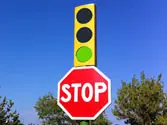
¿Tendrá que parar siempre ante una señal se Stop?
Must you always stop at a STOP sign?
- ANo, solo si vienen vehículos por la vía preferente.No, only if vehicles are coming along the priority road.
- BSí, siempre.Yes, always.
- CSí, salvo que exista un semáforo o un agente que dé prioridad de paso.Yes, unless there is a traffic light or a traffic officer giving you right of way.
ExplanationAt a STOP sign you must always stop, as long as it is not contradicted by another signal with a higher order of priority.
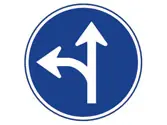
A la vista de esta señal, ¿podremos efectuar un cambio de sentido?
Given this sign, may we make a U-turn?
- ASí.Yes.
- BNo.No.
- CSí, si no circulan vehículos en sentido contrario.Yes, if there are no vehicles coming the other way.
ExplanationThe arrows show the only directions vehicles may take. So a U-turn is not allowed, as it is not shown by the arrows.
En una zona de obras, una persona de la obra le pide que se detenga. ¿Está usted obligado a obedecer?
In a roadworks area, a road worker asks you to stop. Must you obey?
- ASí, porque está autorizado para regular el paso de vehículos en la zona de obras.Yes, because they are authorised to control the passage of vehicles in the roadworks area.
- BSolo si circulan vehículos en sentido contrario.Only if there are vehicles coming the other way.
- CNo, porque no es un agente de tráfico.No, because they are not a traffic officer.
ExplanationUnder Article 141.4 of the General Traffic Regulations, roadworks staff may control the passage of vehicles using signals on a paddle, and Article 60.5 requires road users to follow the directions of staff assigned to control traffic. You must stop.
Una serie de toques de silbato cortos y frecuentes realizados por un agente, ¿qué significan?
What does a series of short, frequent whistle blasts from a traffic officer mean?
- AReanudación de la marcha.Move off again.
- BDetención.Stop.
- CModerar la velocidad.Slow down.
ExplanationA series of short, frequent whistle blasts from the officer orders vehicles to stop. One long blast orders them to move off again.
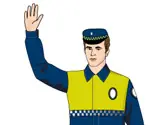
¿Qué indica el agente?
What is the traffic officer indicating?
- AObliga a detenerse a todos los usuarios de la vía que se le acerquen de frente.All road users approaching head-on must stop.
- BObliga a detenerse a todos los usuarios de la vía que se le acerquen.All road users approaching must stop.
- CObliga a detenerse sólo a los conductores que se le acerquen.Only drivers approaching must stop.
ExplanationA traffic officer with a raised arm tells all road users, both pedestrians and drivers, approaching from any side, whether from the front, from behind or from the side, to stop, except drivers who cannot do so safely enough. Other signals by traffic officers: - Arm or arms stretched out horizontally: road users approaching the officer from any direction that crosses the one shown by the outstretched arm or arms must stop, whatever their direction of travel; this remains in force even if the officer lowers the arm or arms, as long as they do not change position or give another signal. - Swinging a red or yellow light: road users towards whom the officer points the light must stop. - Outstretched arm moved up and down: drivers approaching the officer on the side of the arm giving the signal, and at right angles to that arm, must slow down.
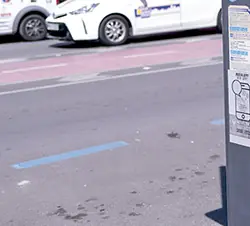
Estas marcas viales azules indican...
These blue road markings indicate...
- Ala zona en que se permite estacionar, al igual que las marcas blancas.the area where parking is allowed, the same as white markings.
- Bque en ciertos periodos del día, la duración del estacionamiento está limitada.that at certain times of the day, how long you may park is limited.
- Cque está prohibido estacionar.that parking is prohibited.
ExplanationBlue road markings mark out the regulated parking area: at certain times of the day the length of stay is limited and a ticket or permit is usually required.
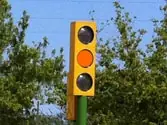
Si al llegar a una intersección encuentra un semáforo amarillo intermitente ¿Cómo actuara?
If you find a flashing amber traffic light when you reach a junction, what should you do?
- ADeteniéndome y cediendo el paso a los vehículos de la vía trasversal.Stop and give way to vehicles on the crossing road.
- BRespetando el resto de señales si las hay y si no existen aplicando la normal general de prioridad en intersecciones.Obey any other signs there are and, if there are none, apply the general rule of priority at junctions.
- CCediendo el paso a los vehículos, que circulen por la vía transversal, en cualquier caso.Give way to vehicles on the crossing road in all cases.
ExplanationA flashing amber traffic light requires drivers to take extra care and, where appropriate, to give way. It does not exempt them from obeying other signs that require them to stop.
¿Puedes pisar la línea continua para adelantar a un ciclista?
May you drive over the continuous line to overtake a cyclist?
- ANo, nuncaNo, never
- BSí, si hay visibilidad y no hay peligroYes, if there is visibility and no danger
- CSolo si el ciclista va muy lentoOnly if the cyclist is going very slowly
ExplanationYou are allowed to cross the continuous line to overtake cyclists or mopeds, as long as there is sufficient visibility, no vehicles are coming towards you and the manoeuvre is safe.
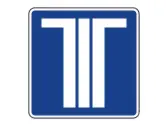
Si su vehículo no está provisto del medio técnico que posibilita el uso del peaje dinámico o telepeaje, ¿podrá circular por el carril así señalizado?
If your vehicle does not have the device needed to use the dynamic toll or electronic toll system, may you drive in the lane signed like this?
- ASí.Yes.
- BNo.No.
- CSí, pero solo fuera de las horas punta.Yes, but only outside rush hours.
ExplanationThe square sign S-32 “Electronic toll” shows that in that lane you can pay by electronic toll as well as by other means. So a vehicle without that equipment can use it. The round sign R-418, on the other hand, requires payment by electronic toll.
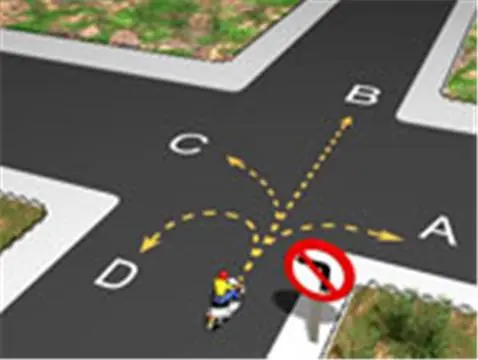
¿Qué dirección, de las indicadas, puede tomar el conductor?
Which of the directions shown may the driver take?
- ALas direcciones A y B, solamente.Directions A and B only.
- BCualquiera, excepto la dirección C.Any, except direction C.
- CCualquiera de las indicadas.Any of those shown.
ExplanationThe ‘no left turn’ sign also prohibits U-turns. So the driver may only turn right (A) or go straight on (B); they may not turn left (C) or make a U-turn (D).
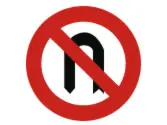
¿Esta señal prohíbe efectuar un cambio de dirección a la izquierda?
Does this sign prohibit turning left?
- ASí.Yes.
- BSí, y también el cambio de dirección a la derecha.Yes, and turning right too.
- CNo.No.
ExplanationThe sign in the question prohibits making a U-turn, but it does not prohibit turning left. On the other hand, if it were the sign that prohibits turning left, it would also prohibit U-turns.
Si una señal de prohibición está junto a la señal que indica el nombre de la localidad, ¿la prohibición vale para toda la localidad?
If a prohibition sign is next to the sign showing the name of the town, does the prohibition apply to the whole town?
- AProhíbe solo en el tramo de la carretera que atraviesa la localidad.It applies only on the stretch of road that passes through the town.
- BNo.No.
- CSí, pero dentro de la localidad pueden existir otras señales que modifiquen esa prohibición.Yes, but inside the town there may be other signs that change that prohibition.
ExplanationUnder Article 145.3 of the General Traffic Regulations (RGC), regulatory signs placed next to the sign showing the name of the town apply to the whole built-up area, except on stretches where other signs set different rules.
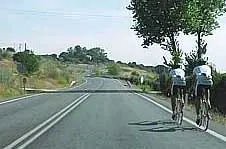
¿Se podría adelantar a estos ciclistas atravesando, para ello, las marcas viales?
Could you overtake these cyclists by crossing the road markings to do so?
- ANo, porque van en grupo.No, because they are riding in a group.
- BSí, atravesando las líneas continuas cuando no exista peligro.Yes, crossing the continuous lines when there is no danger.
- CNo, porque las líneas continuas lo impiden.No, because the continuous lines prevent it.
ExplanationArticle 88 of the RGC allows you to overtake cyclists on stretches where overtaking is prohibited, even if you have to cross the continuous line, provided you make sure there is no danger. You must leave a gap of at least 1.5 metres.
Un conductor moviendo el brazo alternativamente de arriba abajo con movimientos cortos y rápidos, ¿qué indica?
What does a driver moving their arm up and down with short, quick movements indicate?
- AQue va a frenar el vehículo o incluso intención de inmovilizarlo totalmente.That they are going to brake, or even intend to stop completely.
- BQue va a cambiar de dirección hacia la izquierda.That they are going to turn left.
- CQue va a efectuar marcha atrás.That they are going to reverse.
ExplanationThe intention to stop the vehicle or slow down considerably must be signalled by repeatedly using the brake lights or by moving the arm up and down with short, quick movements.
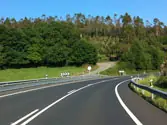
Si circulamos por una vía donde hay una línea longitudinal continua adosada a otra discontinua...
If you are driving on a road where a continuous longitudinal line runs alongside a broken one...
- Adebemos tener en cuenta solamente la línea más cercana al carril por el que circulamos.you only need to take into account the line nearer to the lane you are driving in.
- Bnos indica que es un carril reversible.it shows that it is a reversible lane.
- Cno se puede atravesar en ningún caso.it may not be crossed in any case.
ExplanationA marking made of a continuous longitudinal line next to a broken one means that drivers need only take into account the line on the side on which they are driving. When these markings separate opposite directions of traffic, this arrangement does not prevent drivers who have overtaken from returning to their normal position on the carriageway.
Cuando un conductor percibe las señales especiales de una ambulancia en servicio de urgencia, ¿cómo actuará?
When a driver notices the special signals of an ambulance on an emergency call, what should the driver do?
- AApartándose a la derecha y si fuese preciso se detendrá.Move over to the right and, if necessary, stop.
- BAcelerando para facilitarle el paso a la ambulancia.Speed up to make way for the ambulance.
- CContinuando la marcha porque la ambulancia ya buscará un hueco para pasar.Carry on, because the ambulance will find a gap to get past.
ExplanationAs soon as they notice the special signals of a priority (emergency) vehicle, drivers must make way for it, normally by moving over to the right and, if necessary, stopping.
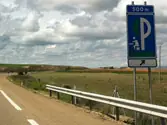
¿Qué indica la señal que se aprecia en la imagen?
What does the sign seen in the picture indicate?
- AMerendero.Picnic area.
- BÁrea de descanso.Rest area.
- CÁrea de servicio.Service area.
ExplanationThe sign in the photograph in the question is a rest area sign.
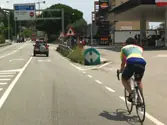
Si nos encontramos ante un agente que da paso y un semáforo en rojo...
If you find a traffic officer signalling you to go and a red traffic light...
- ARespetaremos la señal más restrictiva.You obey the most restrictive signal.
- BRespetaremos la señal del Agente.You obey the officer's signal.
- CRespetaremos la señal del semáforo.You obey the traffic light.
ExplanationUnder the order of precedence between signs, you obey first the officers' signals, second the temporary signs, third the traffic lights, fourth the upright signs and fifth the road markings.
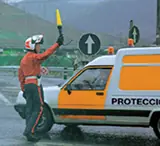
El agente balancea una luz roja o amarilla, ¿a qué obliga?
A traffic officer is swinging a red or yellow light. What does this require?
- AA disminuir la velocidad.Reducing speed.
- BA pasar por el lado correspondiente al brazo con el que realiza la señal.Passing on the side of the arm making the signal.
- CA detenerse a los usuarios de la vía hacia los que dirige la luz.Stopping, for road users towards whom the light is directed.
ExplanationA red or yellow light swung by a traffic officer is a signal to stop for the road users it is directed at, under the General Traffic Regulations (RGC). Traffic officers' instructions prevail over any other signal.
En el carril de la izquierda de la vía por la que Ud. circula, se ha encendido en el semáforo de carril un aspa roja, ¿qué deben hacer los vehículos que circulan por dicho carril?
On the road you are driving along, a red X has lit up on the lane control signal above the left lane. What must vehicles in that lane do?
- AAbandonar el carril en el tiempo más breve posible.Leave the lane as soon as possible.
- BCambiarse de carril antes de llegar a la altura del semáforo.Change lanes before reaching the signal.
- CDetenerse porque por ese carril no pueden circular.Stop, because vehicles may not use that lane.
ExplanationUnder Annex I of the General Traffic Regulations, on lane control signals a red X prohibits the use of that lane, and anyone driving in it must leave it as soon as possible, moving safely into another lane; they must not stop in it.
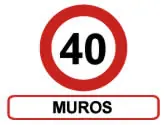
Cuando una señal de reglamentación está colocada al lado de una señal que indique el nombre del poblado, dicha reglamentación se aplica...
When a regulatory sign is placed next to a sign showing the name of a town, the regulation applies...
- AA todo el poblado.To the whole town.
- BSolo a la travesía.Only to the travesía (stretch of road through the town).
- CÚnicamente hasta la próxima intersección.Only as far as the next junction.
ExplanationWhen a regulatory sign is placed next to a sign showing the name of a town, the regulation applies to the whole town, except where a different regulation is indicated within the town.
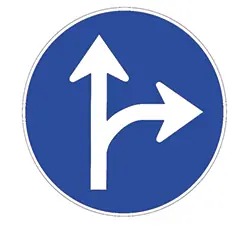
Esta señal indica que...
This sign indicates that...
- Aa su altura puede realizar un cambio de sentido de la marcha a la derecha.at this point you may make a U-turn to the right.
- Blas únicas direcciones aconsejadas son seguir de frente o girar a la derecha.the only recommended directions are straight on or turning right.
- Cdebe seguir una de las direcciones y sentidos que señalan las flechas.you must follow one of the directions shown by the arrows.
ExplanationIt is a mandatory sign, a blue circle: the arrows set the only permitted directions, in this case straight on or turning right. It is not a recommendation; it is an order.
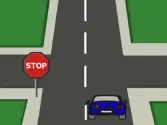
¿Qué debe hacer si circula por una vía de sentido único y al llegar a un cruce se encuentra una señal de Stop a la izquierda y usted desea girar a la derecha?
What must you do if you are driving on a one-way road and, on reaching a junction, you find a Stop sign on the left and you want to turn right?
- ADetenerme obligatoriamente para cumplir con la señal de Stop.Stop, as I am required to, to comply with the Stop sign.
- BGirar a la derecha sin detenerme obligatoriamente ya que la señal no me afecta.Turn right without being required to stop, because the sign does not apply to me.
- CCeder el paso a la izquierda y girar a la derecha.Give way to the left and turn right.
ExplanationRoad users must obey the traffic lights and road signs placed immediately on their right, above the carriageway or above their lane and, if there are none in those places and they intend to turn left or go straight ahead, those placed immediately on their left.
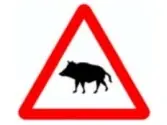
Esta señal, ¿qué significa?
What does this sign mean?
- APeligro por la proximidad de un lugar donde frecuentemente la vía puede ser atravesada por animales en libertad, tratándose en una proporción muy significativa de jabalíes.Danger because you are approaching a place where the road may frequently be crossed by wild animals, a very significant proportion of them wild boar.
- BPeligro por la proximidad de un lugar donde frecuentemente la vía puede ser atravesada por animales domésticos.Danger because you are approaching a place where the road may frequently be crossed by domestic animals.
- CPeligro por la proximidad de un lugar donde frecuentemente puede ser cruzada por cualquier tipo de animal.Danger because you are approaching a place where the road may frequently be crossed by any kind of animal.
ExplanationWild animals crossing (wild boar): danger because you are approaching a place where the road may frequently be crossed by wild animals, a very significant proportion of them wild boar.
Esta señal, ¿prohíbe girar a la izquierda?
Does this sign prohibit turning left?
- ASí, salvo en las intersecciones con semáforo.Yes, except at junctions with traffic lights.
- BSí.Yes.
- CNo.No.
ExplanationThis sign prohibits making a U-turn, but it allows turning both right and left.
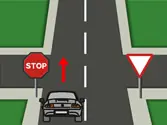
El turismo negro que se muestra en la imagen quiere continuar recto.¿Qué señal debe obedecer?
The black car shown in the picture wants to go straight on. Which sign must it obey?
- ALa señal de ceda el paso porque prevalecen las señales situadas a la derecha.The give way sign, because signs on the right take precedence.
- BLa señal de Stop porque es más restrictiva.The STOP sign, because it is more restrictive.
- CLa señal de Stop porque está situada a la izquierda y el turismo quiere continuar recto.The STOP sign, because it is on the left and the car wants to go straight on.
ExplanationIf there are traffic lights or road signs showing different instructions on the right and on the left, those who intend to turn left or go straight on must only obey the ones immediately to their left. Those who intend to turn right will obey the sign on the right.
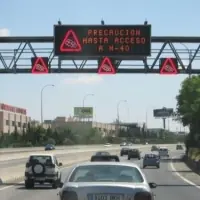
¿Cuál es la función de los paneles de mensaje variable?
What is the purpose of variable message signs?
- AObligar a los usuarios a detenerse en cada uno de ellosTo make road users stop at each one.
- BProhibir temporalmente el paso de turismosTo temporarily prohibit cars from passing.
- CAdvertir de posibles peligrosTo warn of possible hazards.
ExplanationThe main purpose of variable message signs on a road is to inform and warn road users about possible hazards they may encounter. For example, they may give information about roadworks or traffic accidents that have just happened.
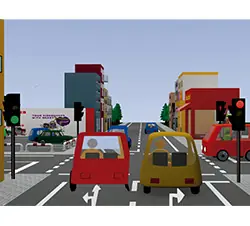
Si existen semáforos con indicaciones distintas a la derecha y a la izquierda, ¿a cuál obedecerán los que pretendan seguir de frente?
If there are traffic lights showing different signals on the right and on the left, which one must drivers who want to go straight on obey?
- AAl situado a su derecha.The one on their right.
- BAl que se encuentre más cerca del vehículo.The one nearest the vehicle.
- CAl situado inmediatamente a su izquierda.The one immediately to their left.
ExplanationWhen there are traffic lights showing different signals on each side, those who want to turn left or go straight on must only obey the one immediately to their left (Article 132.3 of the General Traffic Regulations, RGC). The one on the right applies to those turning to that side.
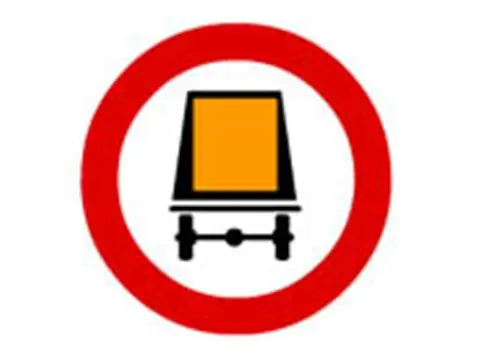
Esta señal, ¿prohíbe la entrada a los vehículos que transportan mercancías peligrosas?
Does this sign prohibit entry to vehicles carrying dangerous goods?
- ANo.No.
- BSí.Yes.
- CSí, pero solamente si la masa del vehículo supera las 3,5 toneladas.Yes, but only if the vehicle's mass is more than 3.5 tonnes.
ExplanationThis is the sign prohibiting entry to vehicles carrying dangerous goods (R-108), with the orange plate on the silhouette. It prohibits entry to these vehicles whatever their mass.
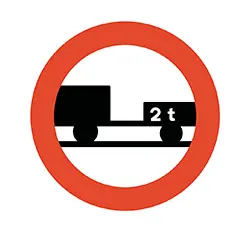
Conduce un turismo con un remolque de un solo eje. ¿Le afecta esta señal?
You are driving a car with a single-axle trailer. Does this sign apply to you?
- ANo.No.
- BSí, porque lleva un remolque de un eje.Yes, because you are towing a single-axle trailer.
- CNo, salvo que la M.M.A. del remolque supere la cifra indicada en la señal.No, unless the MAM of the trailer exceeds the figure shown on the sign.
ExplanationThis is sign R-112: it prohibits entry to motor vehicles with a trailer, except those with a single axle. A tonnage figure only limits the prohibition to trailers that exceed it; as your trailer has a single axle, the sign does not apply to you.
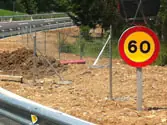
Esta señal indica la velocidad...
This sign indicates the...
- Amáxima permitida.maximum permitted speed.
- Bmáxima aconsejada.advisory maximum speed.
- Cmínima obligatoria.compulsory minimum speed.
ExplanationThe sign in the question is a maximum speed limit sign. It prohibits driving faster than the speed shown in km/h. As it has a yellow background, it also tells us that the prohibition applies on a stretch of carriageway with roadworks.
All topics
- Definitions
- Documents and penalty points
- The driver's condition
- Duties of drivers and pedestrians
- Vehicle safety devices
- Vehicle controls and equipment
- Vehicle lights and horn
- The road and its lanes
- Speed and distances
- Manoeuvres
- Right of way
- Carrying passengers and loads
- Driving safely in difficult conditions
- Vehicle mechanics and maintenance
- Road accidents and first aid
- Defensive and eco-driving
Independent app: not affiliated with or endorsed by the DGT (Spain's Directorate-General for Traffic) or the Ministry of the Interior. The official exam is booked with the DGT and taken at its test centres. The questions here are practice material; the DGT's official question bank is not public.
Basado en datos de la Agencia Estatal Boletín Oficial del Estado (https://www.boe.es). Textos consolidados de carácter meramente informativo. La AEBOE no patrocina ni respalda este sitio.
Parte de las preguntas procede de los tests de la revista «Tráfico y Seguridad Vial» de la DGT, reproducidos con indicación de la fuente.