
DGT test · 1,397 questions
Traffic signs, markings and signals · Page 27 of 28
Road signs, road markings, traffic lights, police signals and temporary markings: what they mean and which one wins when they disagree. The topic with the most questions in the bank.
Questions in this topic, with answers
1,397 questions, 50 per page, with the correct answer and the explanation. Page 27 of 28.
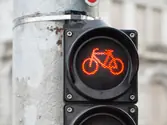
Si un semáforo presenta la silueta iluminada de un ciclo, sus indicaciones se refieren a...
If a traffic light shows the lit outline of a cycle, its signals apply to...
- AExclusivamente a los ciclos.Cycles only.
- BA los ciclos y a los ciclomotores.Cycles and mopeds.
- CA todos los vehículos de dos ruedas.All two-wheeled vehicles.
ExplanationUnder section 4.4 of Annex I of the General Traffic Regulations (RGC), when the lights of a traffic light show the lit outline of a cycle, its signals apply only to cycles. They do not apply to mopeds or to other vehicles.
En una calzada cuyos carriles tengan una anchura inferior a 3 metros, ¿puede un turismo circular sobre la línea discontinua que separa los sentidos de circulación?
On a carriageway with lanes less than 3 metres wide, may a car drive on the broken line separating the directions of traffic?
- ASí, cuando sea necesario y no exista peligro.Yes, when necessary and there is no danger.
- BNo, nunca se puede circular sobre las líneas longitudinales que separan los sentidos de circulación.No, you may never drive on the longitudinal lines separating the directions of traffic.
- CSí, pero solo dentro de poblado.Yes, but only in built-up areas.
ExplanationYou should not drive on a broken line, except when the width of the lanes makes it necessary and traffic safety allows it. With lanes less than 3 metres wide, a car may drive on it under those conditions.
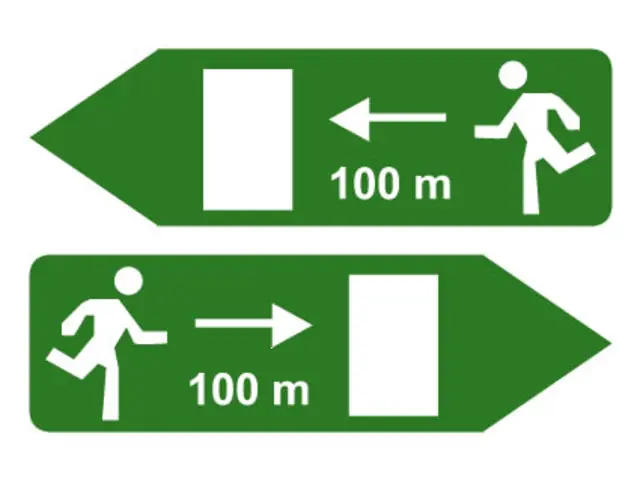
En un túnel, ¿qué indica esta señal?
In a tunnel, what does this sign indicate?
- Ala ubicación de un teléfono de emergencia.where an emergency telephone is.
- Bla dirección y la distancia hasta una salida de emergencia.the direction and distance to an emergency exit.
- Cla ubicación de una salida de emergencia.where an emergency exit is.
ExplanationThe green sign in the picture, with a running person, an arrow and a distance, shows in a tunnel the direction and distance to the nearest emergency exit. The sign that marks the exit itself has no arrow or distance.
¿De qué depende conducir de forma segura?
What does safe driving depend on?
- ADepende del conductor y del buen estado del vehículo.On the driver and on the vehicle being in good condition.
- BDepende del conductor, no del vehículo.On the driver, not on the vehicle.
- CDepende del buen estado del vehículo, no del conductor.On the vehicle being in good condition, not on the driver.
ExplanationSafe driving depends both on the driver (their attention, ability and physical condition) and on the vehicle being in good condition: brakes, tyres, lights and steering. A failure in either one increases the risk of an accident, which is why neither is enough on its own.
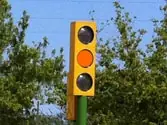
¿Qué significa una luz amarilla fija?
What does a steady amber light mean?
- AExtremar la precaución.Take extreme care.
- BIgual que una luz roja, detenerse en condiciones de seguridad.The same as a red light: stop if it is safe to do so.
- CCeder el paso.Give way.
ExplanationA steady amber light requires you to stop just as if it were red, unless, when it comes on, the vehicle is so close that it cannot stop before the traffic light safely (annex I of the General Traffic Regulations). Taking extreme care and giving way is what a flashing amber light means.
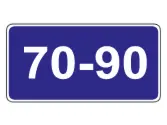
¿Es recomendable mantener la velocidad indicada por la señal aunque las condiciones de la vía y la circulación sean favorables?
Is it advisable to keep to the speed shown on the sign even though road and traffic conditions are favourable?
- ASí.Yes.
- BNo, si las condiciones son favorables la recomendación no es aplicable.No, if conditions are favourable the recommendation does not apply.
- CNo, es obligatorio cumplir con la velocidad señalada.No, it is compulsory to keep to the speed shown.
ExplanationThis sign recommends keeping to a speed between the values shown whenever weather and environmental conditions are favourable. If they are not, for example because of rain, the recommendation no longer applies.
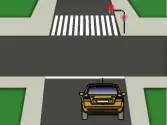
Si pretende seguir de frente, ¿dónde deberá detenerse?
If you intend to go straight on, where must you stop?
- AAnte la línea transversal de detención.At the transverse stop line.
- BAnte la marca de paso para peatones.At the pedestrian crossing marking.
- CAnte el semáforo.At the traffic light.
ExplanationA continuous transverse line across one or more lanes means that no vehicle, animal or load may cross it in order to obey a traffic rule or sign. In the case in the question, that is a red traffic light on the opposite side of the junction.
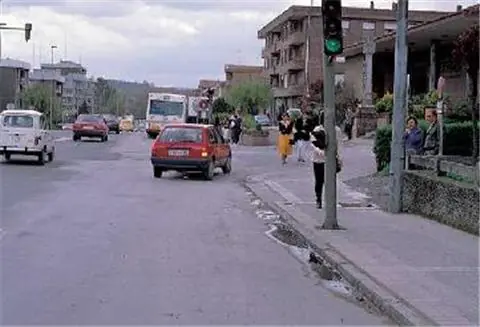
La luz verde de un semáforo circular para vehículos, indica que...
The green light on a round traffic light for vehicles indicates that…
- Aestá permitido el paso y con preferencia de paso.you may pass and you have right of way.
- Bdebe ceder el paso a los demás vehículos.you must give way to other vehicles.
- Cpuede pasar, cediendo el paso a los peatones.you may pass, giving way to pedestrians.
ExplanationA round traffic light showing green means that we have right of way over other vehicles and so allows us to pass, except when traffic is such that the vehicle is likely to end up stopped in a junction, pedestrian crossing or cycle crossing, blocking or obstructing crossing traffic. When the green light is on for vehicles, pedestrians will usually face a red light that prohibits them from crossing.
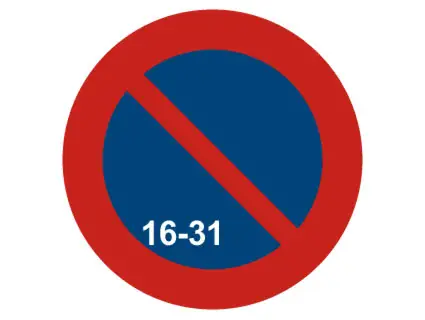
El último día del mes, ¿podrá estacionar su ciclomotor al lado de esta señal?
On the last day of the month, may you park your moped next to this sign?
- ANo.No.
- BSí.Yes.
- CSí, si el mes tiene 30 días.Yes, if the month has 30 days.
ExplanationSign R-308d “No parking in the second half of the month” prohibits parking on that side of the carriageway from 9:00 on the 16th until 9:00 on the 1st. The last day of the month, whether the month has 30 or 31 days, falls within that period.
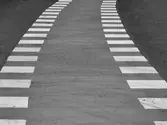
Una marca consistente en dos líneas transversales discontinuas paralelas sobre la calzada, ¿qué indica?
What does a marking made of two parallel broken transverse lines on the carriageway indicate?
- AUna zona de estacionamiento prohibido.A no-parking area.
- BUn paso para ciclistas.A cyclist crossing.
- CUna línea de detención.A stop line.
ExplanationUnder the road marking catalogue (M-4.4), a marking made of two parallel broken transverse lines on the carriageway indicates a cyclist crossing, where vehicles travelling on the carriageway must let cyclists pass.
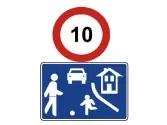
¿Qué debe hacer a la vista de esta señal?
What must you do when you see this sign?
- AConducir la motocicleta empujándola a pie con el motor apagado.Walk the motorcycle, pushing it with the engine switched off.
- BCircular como máximo a 10 kilómetros por hora y conceder prioridad de paso a los peatones.Drive at no more than 10 kilometres per hour and give pedestrians priority.
- CNo circular porque señaliza una zona reservada a la circulación de peatones.Not drive in, because it marks an area reserved for pedestrians.
ExplanationThe lower sign is S-28 'Stay and play zone' (zona de estancia y juego): an area intended mainly for pedestrians, where vehicles may not exceed 10 km/h and must give pedestrians priority. It always comes with an R-301 10 km/h sign, like the one above it.
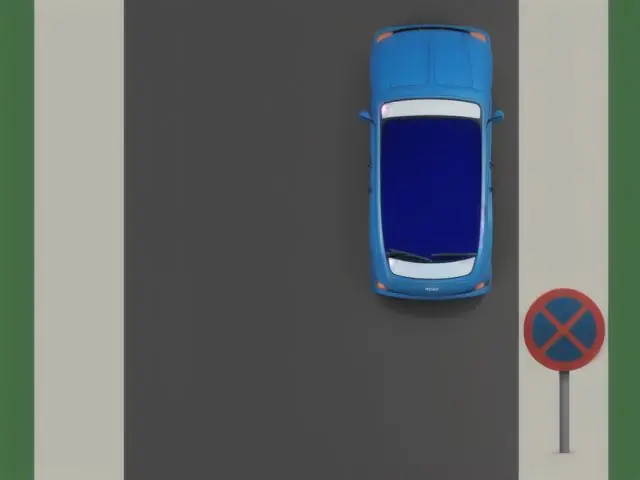
¿Qué indica esta señal en una calle de sentido único?
What does this sign indicate in a one-way street?
- AProhíbe parar y estacionar a la derecha.It prohibits stopping and parking on the right.
- BProhíbe parar y estacionar en ambos lados.It prohibits stopping and parking on both sides.
- CProhíbe parar a la derecha.It prohibits stopping on the right.
ExplanationThe sign in the picture, round and blue with a red border and a red cross, prohibits stopping and parking. It applies on the side of the carriageway where it is placed, in this case the right, even if the street is one-way; it does not apply on the left-hand side.
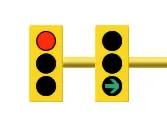
Si usted está situado en el carril de la derecha y pretende seguir de frente, ¿qué hará a la vista de la flecha verde?
If you are in the right-hand lane and intend to go straight on, what will you do given the green arrow?
- APodré esperar a que el semáforo cambie a verde para continuar de frente, aunque el carril esté reservado para el giro.I may wait for the traffic light to turn green to go straight on, even though the lane is reserved for turning.
- BDeberé avanzar en la dirección y el sentido indicados por la flecha.I must move off in the direction shown by the arrow.
- CPodré seguir de frente.I may go straight on.
ExplanationUnder section 4.2.g) of Annex I of the General Traffic Regulations (RGC), a vehicle that, when the green arrow lights up, is in the lane reserved for that direction, or in the lane that this traffic has to use, must move off in the direction shown, with care and without endangering anyone.
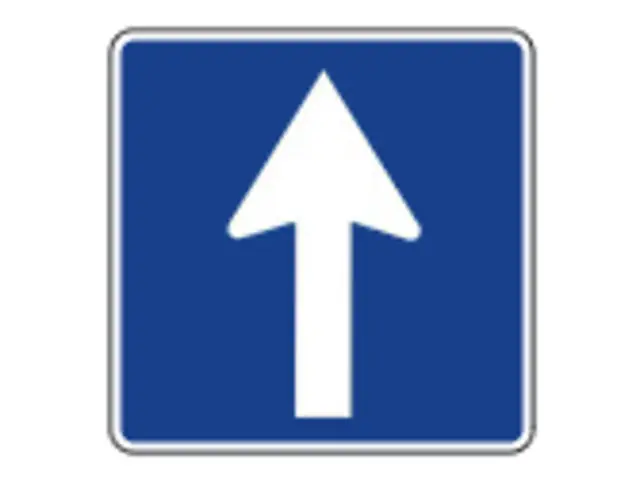
¿Qué indica esta señal?
What does this sign indicate?
- AQue no se puede girar ni a la derecha ni a la izquierda.That you may not turn either right or left.
- BQue la calzada es de sentido único, en el sentido de la flecha.That the carriageway is one-way, in the direction of the arrow.
- CQue está prohibido cambiar de dirección.That changing direction is prohibited.
ExplanationThe blue square sign with a white arrow pointing up is an information sign: it indicates that the carriageway is one-way and that traffic moves in the direction of the arrow. It does not prohibit turning right or left at junctions.
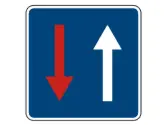
Si al llegar a un estrechamiento encontramos esta señal sabremos que...
If you find this sign when you reach a narrow section, you will know that...
- ATenemos prioridad con relación a los vehículos que circulan en sentido contrario.You have priority over vehicles coming the other way.
- BNo podemos entrar si con ello obligamos a los vehículos que circulen en sentido contrario a detenerse.You may not enter if this forces vehicles coming the other way to stop.
- CTendrá prioridad de paso el vehículo que entre primero.The vehicle that enters first has right of way.
ExplanationThe sign in the question shows that you have right of way over vehicles coming the other way.
Una marca longitudinal constituida por dos líneas continuas paralelas, ¿qué significado tiene?
What does a longitudinal marking made of two parallel continuous lines mean?
- AQue se trata de un carril reversible.That it is a reversible lane.
- BTiene el mismo significado que una línea longitudinal continua simple.It has the same meaning as a single continuous longitudinal line.
- CQue se trata de un carril Bus.That it is a bus lane.
ExplanationUnder the road marking catalogue in Annex I of the General Traffic Regulations (RGC), a marking made of two parallel continuous lines means the same as a single continuous line: you may not cross it or drive on it, or drive to its left when it separates the two directions of traffic.
¿Se pueden llevar objetos o paquetes que salgan por las ventanillas de los lados?
Can you carry objects or packages that stick out of the side windows?
- ANo.No.
- BSí, hasta 30 centímetros.Yes, up to 30 centimetres.
- CSí, con una tela de color rojo.Yes, with a red cloth.
ExplanationIn cars, the load may only stick out at the rear of the vehicle. This means it may not stick out at the front or at the sides (where the windows are). At the rear, the load may stick out up to 10% of the vehicle's length if it is divisible and 15% if it is indivisible. It must be marked with the V-20 sign (a panel with alternating red and white stripes), which shows that the load sticks out at the rear. Use one V-20 panel, or two if the load sticks out across the whole width of the rear (their stripes then form an upside-down “V”). If you are also driving in poor light, you must also fit a red light.
¿Qué haremos ante un semáforo amarillo intermitente?
What will we do at a flashing amber traffic light?
- APasar extremando la precaución y, en su caso, cediendo el paso.Go through taking extreme care and, where necessary, giving way.
- BCeder el paso siempre a derecha e izquierda.Always give way to the right and left.
- CDetenernos y ceder el paso a derecha e izquierda.Stop and give way to the right and left.
ExplanationUnder section 4.2 of annex I of the General Traffic Regulations, a flashing amber light requires you to take extreme care and, where necessary, give way. It does not require you to stop, unless another sign, such as a STOP sign, requires it.
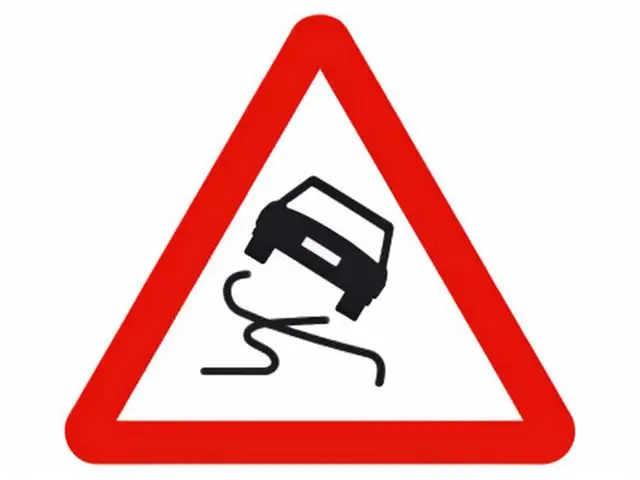
¿Qué indica la señal triangular?
What does the triangular sign indicate?
- ALa carretera puede estar resbaladiza.The road may be slippery.
- BHay un escalón lateral en la calzada.There is a drop at the side of the carriageway.
- CHay un tramo con curvas peligrosas.There is a stretch with dangerous bends.
ExplanationThe triangular sign in the picture, with a skidding car and zigzag tracks, warns of a stretch ahead where the road surface may be slippery. You must reduce speed and avoid sudden braking and sharp steering.
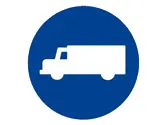
¿Un turismo podrá circular por la calzada a cuya entrada está situada esta señal?
Can a car use the carriageway at whose entrance this sign is placed?
- ANo, es una calzada exclusiva para camiones.No, this carriageway is only for lorries.
- BSí.Yes.
- CLos turismos no podrán circular, pero sí furgones y furgonetas.Cars may not use it, but vans may.
ExplanationThe sign requires drivers of lorries and vans to use this carriageway, but it does not prohibit drivers of other vehicles from using it.
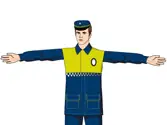
¿Qué indica un agente con un brazo extendido horizontalmente?
What does a traffic officer with one arm stretched out horizontally indicate?
- AObliga a detenerse a todos los usuarios de la vía que se acerquen al agente.All road users approaching the officer must stop.
- BObliga a detenerse a todos los usuarios de la vía que se acerquen al agente desde las direcciones que corten a la indicada por el brazo.All road users approaching the officer from directions that cross the one shown by the arm must stop.
- CObliga a los usuarios de la vía a disminuir la velocidad.Road users must slow down.
ExplanationA traffic officer with an arm or arms stretched out horizontally requires road users approaching from any direction that crosses the one shown by the outstretched arm or arms to stop, whatever their direction of travel.
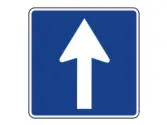
¿Esta señal prohíbe cambiar de dirección?
Does this sign prohibit turning?
- ASí.Yes.
- BNo.No.
- CSí, pero solo hacia la izquierda.Yes, but only to the left.
ExplanationThis sign shows that on the carriageway continuing in the direction of the arrow, vehicles must travel in the direction shown, and travelling in the opposite direction is prohibited. It allows turning but not a U-turn.
¿Qué haremos ante un semáforo con luz amarilla no intermitente?
What will we do at a traffic light showing a steady amber light?
- APasar con precaución.Go through carefully.
- BDetenernos como si de rojo fijo se tratase.Stop, as if it were a steady red light.
- CPasar cediendo el paso.Go through, giving way.
ExplanationAt a steady (non-flashing) amber light we must stop in the same way as for a red light, unless, when the light comes on, the vehicle is so close to the stopping point that it cannot stop before the traffic light safely.
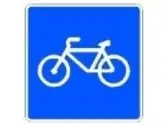
A la vista de la señal que se muestra en la imagen ...
Given the sign shown in the picture...
- ASolamente se permite la circulación de ciclos.only cycles are allowed.
- BLos ciclos deben utilizar obligatoriamente la vía y es opcional para el resto de usuarios.cycles must use the road, and it is optional for other road users.
- CSe permite el uso de la vía a ciclos y ciclomotores.cycles and mopeds are allowed to use the road.
ExplanationThe sign shown in the picture indicates that the road is reserved only for cycles, prohibiting its use by any other type of vehicle. This ensures the safety of cyclists and the proper flow of traffic on the road intended for them.
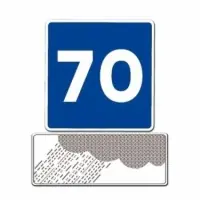
Esta señalización recomienda circular a 70 kilómetros por hora…
This sign recommends driving at 70 kilometres per hour…
- ASólo cuando las condiciones meteorológicas y ambientales sean favorables.Only when weather and environmental conditions are favourable.
- BEn cualquier caso.In all cases.
- CSólo cuando está lloviendo.Only when it is raining.
ExplanationThe blue sign S-7 advises a maximum speed. The additional panel underneath, with the rain symbol, shows that this recommendation only applies when it is raining; in good weather it does not apply.
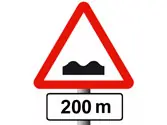
¿Qué indican las siguientes señales?
What do the following signs indicate?
- AQue a 200 m. hay un resalto o badén en la vía o pavimento en mal estado.That in 200 m there is a speed bump or dip in the road or a poor road surface.
- BProximidad a 200 m. de un canal de agua.That a water channel is 200 m away.
- CDistancia máxima que deben llevar los vehículos en ese tramo de vía.The maximum distance vehicles must keep on that stretch of road.
ExplanationThe upper sign warns of danger because you are approaching a speed bump or dip in the road or a poor road surface. The additional panel below the danger sign shows the distance to the start of that danger. If there were two arrows beside the numbers on this panel, it would show the length of the dangerous stretch.
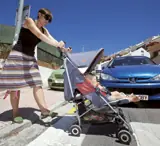
Ante un paso para peatones señalizado con marca vial solamente, ¿cuándo hay que detenerse?
At a pedestrian crossing marked only by a road marking, when must you stop?
- ACuando el peatón ya está atravesándolo, pero no cuando sólo demuestra su intención de hacerlo.When the pedestrian is already crossing, but not when they only show their intention to do so.
- BSólo cuando lo indique un agente.Only when a traffic officer tells you to.
- CSiempre que un peatón esté atravesándolo o demuestre su intención de hacerlo.Whenever a pedestrian is crossing or shows their intention to do so.
ExplanationPedestrians have priority on marked pedestrian crossings (Article 65 of the General Traffic Regulations, RGC). The driver must stop not only when a pedestrian is already crossing but also when they are about to do so, and to be able to do this must approach at a moderate speed.
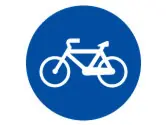
Esta señal obliga...
This sign places an obligation on...
- ASolo a los ciclos.Cycles only.
- BA los ciclos y ciclomotores.Cycles and mopeds.
- CA todos los vehículos de 2 ruedas.All two-wheeled vehicles.
ExplanationThis sign requires only cycle riders, not moped riders or riders of other two-wheeled vehicles, to use the route at whose entrance it is placed, and it also prohibits all other road users from using it.
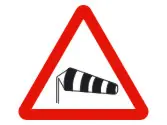
¿Qué peligro indica esta señal?
What danger does this sign show?
- ADesprendimiento.Falling rocks.
- BObstrucción en la calzada.Obstruction on the carriageway.
- CViento transversal.Side winds.
ExplanationThe sign shows danger because you are approaching an area where strong winds often blow across the road.
El orden de prioridad entre señales, de mayor a menor, es:
The order of precedence between signs, from highest to lowest, is:
- AMarcas viales, señales verticales, semáforos, agentes.Road markings, road signs, traffic lights, officers.
- BAgentes, señalización circunstancial/obras, semáforos, señales verticales, marcas viales.Officers, temporary/roadworks signs, traffic lights, road signs, road markings.
- CSemáforos siempre por encima de todo.Traffic lights always come above everything.
ExplanationOfficers' instructions come first, then temporary and roadworks signs, then traffic lights, road signs and, finally, road markings.
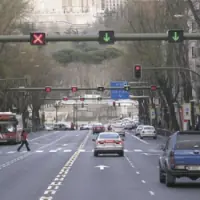
¿A qué vehículos afectan los semáforos cuadrados para vehículos?
Which vehicles do square traffic lights for vehicles apply to?
- ALos que circulen por el carril dónde se encuentre el semáforoThose travelling in the lane where the light is.
- BSolo a los camiones y furgonetasOnly lorries and vans.
- CTodos los vehículos que circulen por esa vía en cualquier carrilAll vehicles on that road, in any lane.
ExplanationSquare traffic lights for vehicles, or lane lights, apply only to vehicles travelling in the lane above which they are placed, or in the lane shown on the variable message panel.
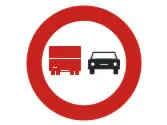
Si estando en posesión del permiso B conducimos un camión, ¿nos afecta esta señal?
If you hold a category B licence and drive a lorry, does this sign apply to you?
- ASí.Yes.
- BNo.No.
- CSí, si circula cargado.Yes, if it is loaded.
ExplanationThe sign prohibits lorries with an MAM of more than 3,500 kg from overtaking. With a category B licence you may only drive lorries of up to 3,500 kg, so this sign does not apply to you.
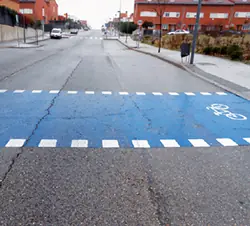
La marca indica un paso...
This marking indicates a crossing...
- Apara peatones.for pedestrians.
- Bpara ciclistas.for cyclists.
- Cpara ciclistas y ciclomotores.for cyclists and mopeds.
ExplanationThe marking made up of two broken lines of square blocks (here with a bicycle symbol) is a cycle crossing. It does not cover mopeds, which are not cycles.
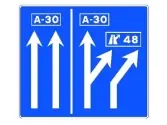
Esta señal indica que en el próximo nudo:
This sign indicates that at the next interchange:
- ACada carril tiene las únicas direcciones permitidas y se muestra la carretera de permanencia en cada flecha.Each lane has its only permitted directions, and the road you stay on is shown over each arrow.
- BTodos los carriles permiten cualquier dirección y se puede cambiar libremente.All lanes allow any direction and you may change lanes freely.
- CSolo indica el número de carriles sin informar sobre las direcciones permitidas.It only indicates the number of lanes, without giving information about the permitted directions.
ExplanationThe sign warns about the only directions permitted for each lane at the next interchange, so that drivers know which lane to move into to take the exit or to continue on the same road. Above the arrows showing the lanes that stay on the road, there is a panel with the name of the road. It is used in exceptional situations, such as when the solid lane-separation line does not indicate divergence from the lanes on the left, or at junctions or forks between motorways/dual carriageways with heavy traffic in both lanes.
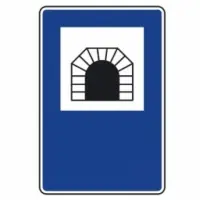
En un tramo de vía con la señal “túnel” ¿está permitido cambiar de sentido?
On a stretch of road with the “tunnel” sign, are U-turns allowed?
- ASí.Yes.
- BÚnicamente podrán las motocicletas.Only motorcycles may make them.
- CNo.No.
ExplanationArticle 79 of the General Traffic Regulations (RGC) prohibits U-turns in tunnels, underpasses and stretches covered by the tunnel sign (S-5), whatever the vehicle. On these stretches you may not stop, park or reverse either.
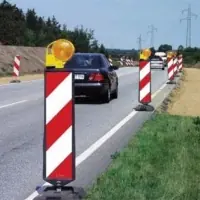
¿Cuál de éstos tipos de baliza no existe?
Which of these types of marker does not exist?
- AHitos de aristaEdge marker posts.
- BBalizas circularesCircular markers.
- CBalizas cilíndricasCylindrical markers.
ExplanationThe guidance devices listed in Annex I of the General Traffic Regulations (RGC) include edge marker posts, which mark the edges of the road, and cylindrical markers, which provide guidance where lanes are separated, at merges and at junctions. ‘Circular markers’ do not exist.
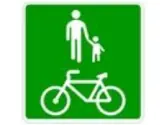
La señal de senda ciclopeatonal, indica...
The shared pedestrian and cycle path (senda ciclopeatonal) sign indicates...
- Ala existencia de una vía para peatones,ciclos y, en su caso, VMP, segregada del tráfico motorizado.a route for pedestrians, cycles and, where applicable, PMVs, separated from motor traffic.
- Bla intersección con una vía ciclista.a junction with a cycle route.
- Cque el acceso está prohibido a ciclos.that access is prohibited to cycles.
ExplanationThe sign in the question, shared pedestrian and cycle path, indicates a route for pedestrians, cycles and, where applicable, PMVs, separated from motor traffic, which usually runs through open spaces, parks, gardens or woods, although outside built-up areas it may also run alongside the road. When there are people walking, cycles and, where applicable, PMVs must reduce their speed to ensure safety and coexistence. Likewise, pedestrians must make way for cycles and, where applicable, PMVs.
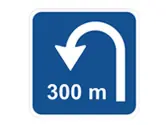
Esta señal indica la proximidad de un cambio de sentido...
This sign indicates that you are approaching a U-turn...
- AAl mismo nivel.At the same level.
- BA distinto nivel.At a different level.
- CObligatorio, situado a 300 metros.That is compulsory, 300 metres ahead.
ExplanationThe sign indicates that you are approaching a place where you can make a U-turn at the same level.
Para seguir recto, ¿dónde hay que detenerse?
To go straight on, where must you stop?
- AAntes de la línea de detención.Before the stop line.
- BDelante de la marca de paso de peatones.In front of the pedestrian crossing marking.
- CEn la intersección.At the junction.
ExplanationThe continuous transverse line (M-4.1) is a stop line: when you have to stop because of a stop sign, a traffic light, a traffic officer or a pedestrian crossing, no vehicle or its load may go past it. You must stop before it, not on the crossing or inside the junction.
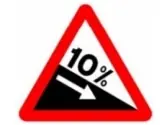
Esta señal nos advierte del peligro por una fuerte pendiente...
This sign warns us of danger from a steep gradient...
- AAscendente.Uphill.
- BDescendente.Downhill.
- CCon resalto en la vía.With a hump in the road.
ExplanationThe sign warns us of danger from a stretch of road with a steep downhill gradient. The figure shows the gradient as a percentage.
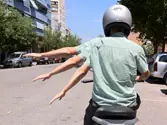
Si un conductor mueve el brazo de arriba abajo indica...
If a driver moves their arm up and down, it indicates...
- ALa intención de cambiar de dirección hacia la izquierda.The intention to turn left.
- BLa intención de inmovilizar el vehículo o reducir la velocidad de manera considerable.The intention to stop the vehicle or slow down considerably.
- CQue va a efectuar marcha atrás.That they are going to reverse.
ExplanationIf the driver moves their arm up and down, they are showing their intention to stop the vehicle or slow down considerably.
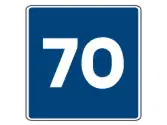
A la vista de esta señal, usted debe saber que se trata de...
Looking at this sign, you should know that it shows...
- AUna velocidad máxima aconsejada.a recommended maximum speed.
- BUna velocidad mínima obligatoria.a compulsory minimum speed.
- CUna velocidad máxima obligatoria.a compulsory maximum speed.
ExplanationThis sign recommends an approximate speed, in kilometres per hour, that you are advised not to exceed, even when weather, environmental, road and traffic conditions are favourable. When it is placed under a warning sign, the recommendation applies to the stretch where that danger continues.
¿De qué color es el fondo de las señales de obras?
What colour is the background of roadworks signs?
- ABlanco.White.
- BAmarillo.Yellow.
- CRojo.Red.
ExplanationSigns placed on stretches with roadworks have a yellow background.
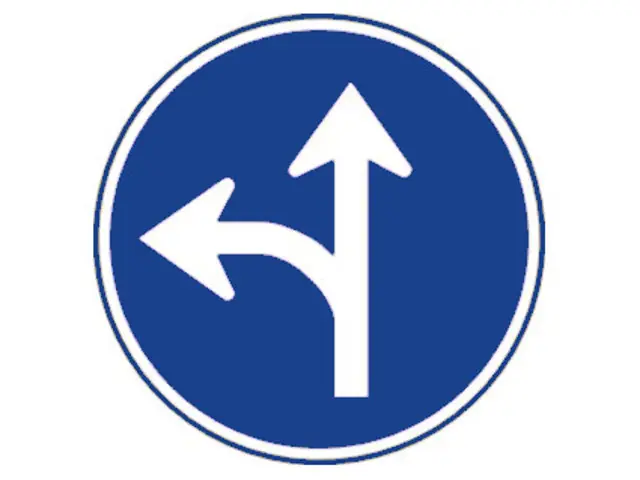
Al ver esta señal, ¿puede usted cambiar de sentido?
When you see this sign, may you make a U-turn?
- ASí.Yes.
- BNo.No.
- CSí, tanto por la derecha como por la izquierda.Yes, both to the right and to the left.
ExplanationThe round blue sign in the picture is a mandatory sign: it shows the only directions allowed, which are going straight on or turning left. A U-turn is not among them, so it is not allowed.
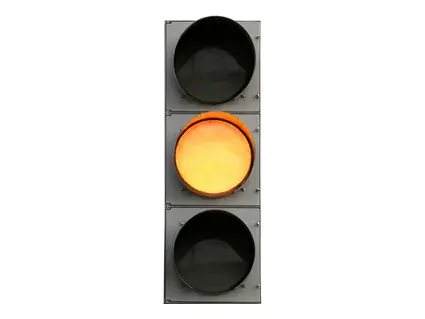
Con su motocicleta, ¿cuál debe ser su comportamiento ante un semáforo amarillo fijo?
On your motorcycle, what should you do at a steady amber traffic light?
- APasar igual que si fuera intermitente.Go through as if it were flashing.
- BAcelerar para pasar antes de que cambie a luz roja.Speed up to get through before it turns red.
- CDetenerme como si se tratara de una luz roja, si es posible hacerlo con seguridad.Stop as if it were a red light, if it is possible to do so safely.
ExplanationUnder Annex I of the General Traffic Regulations (RGC), a non-flashing amber light requires you to stop under the same conditions as a steady red light, unless, when it comes on, the vehicle is so close to the stopping point that it cannot stop before it with sufficient safety.
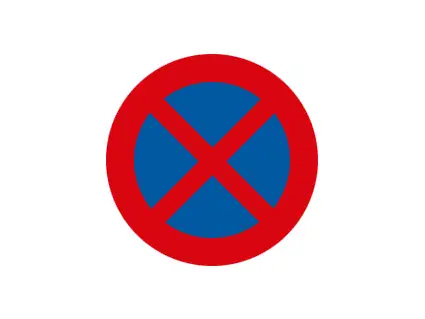
A la vista de esta señal, ¿podemos parar un momento el ciclomotor para que baje el pasajero que llevamos?
Seeing this sign, may we stop the moped for a moment to let our passenger get off?
- ASí.Yes.
- BNo.No.
- CSí, si la parada dura menos de dos minutos.Yes, if the stop lasts less than two minutes.
ExplanationNo, you may not stop the moped for a moment to let your passenger get off. The sign indicates that stopping is prohibited, which means you are not allowed to stop in that place, even for a brief moment.
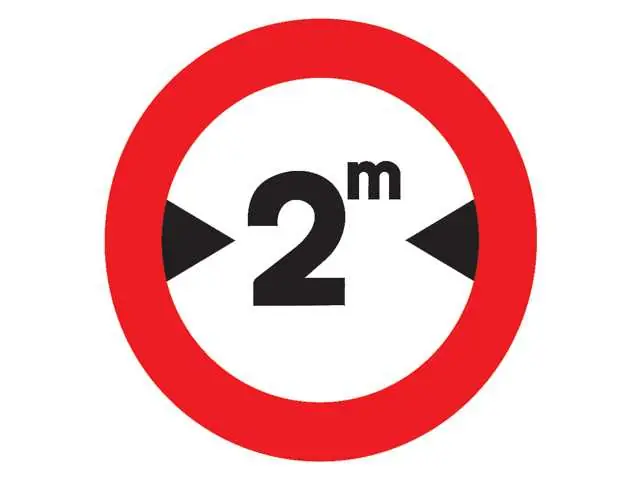
Esta señal se encuentra al principio de una vía, ¿qué vehículos no pueden circular por esa vía?
This sign is at the start of a road. Which vehicles may not use that road?
- ALos vehículos que midan más de 2 metros de largo, incluida la carga.Vehicles more than 2 metres long, including the load.
- BLos vehículos que midan más de 2 metros de ancho, incluida la carga.Vehicles more than 2 metres wide, including the load.
- CLos vehículos que midan más de 2 metros de altura, Incluida la carga.Vehicles more than 2 metres high, including the load.
ExplanationThis is the sign prohibiting vehicles wider than the width shown: vehicles that, with their load, are more than 2 metres wide may not enter. Horizontal arrows pointing at the number indicate width; length and height have their own signs.
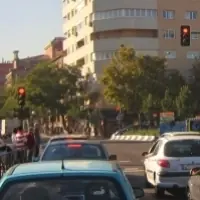
¿Deben los conductores obedecer a los semáforos situados a su izquierda?
Must drivers obey traffic lights placed on their left?
- ANo, los semáforos en el lado izquierdo son únicamente para autobusesNo, traffic lights on the left-hand side are only for buses.
- BSolo cuando pretendan girar a la izquierda o seguir de frenteOnly when they intend to turn left or go straight on.
- CSi, incluso cuando se pretenda girar a la derechaYes, even when they intend to turn right.
ExplanationIf there is a traffic light on the left-hand side of the road and another on the right-hand side, the driver must obey the left-hand light to go straight on or turn left, and the right-hand light to turn right.
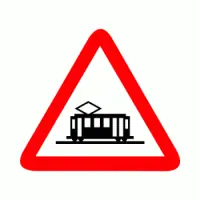
¿De qué advierte la señal de advertencia de peligro de cruce de tranvía?
What does the tram crossing warning sign warn you about?
- AProximidad de vía para ciclos y tranvíasA road for cycles and trams ahead.
- BProximidad de cruce con tranvía que tiene preferenciaA crossing ahead with a tram that has right of way.
- CProximidad de cruce con tranvía que NO tiene preferenciaA crossing ahead with a tram that does NOT have right of way.
ExplanationThe tram crossing warning sign, as its name suggests, warns that you are approaching a crossing with a tram, and the tram has right of way over your vehicle.
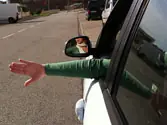
Si un conductor extiende el brazo horizontalmente con la palma de la mano hacia atrás, ¿qué está indicando?
If a driver holds their arm out horizontally with the palm facing backwards, what are they indicating?
- AQue va a girar a la izquierda.That they are going to turn left.
- BQue va a ir marcha hacia atrás.That they are going to reverse.
- CQue va a girar a la derecha.That they are going to turn right.
ExplanationUnder Article 109 of the General Traffic Regulations, holding the arm out horizontally with the palm facing backwards warns that the vehicle is going to reverse, when it does not have a reversing light. Turns are shown with the arm held out, palm facing down, or bent upwards.
All topics
- Definitions
- Documents and penalty points
- The driver's condition
- Duties of drivers and pedestrians
- Vehicle safety devices
- Vehicle controls and equipment
- Vehicle lights and horn
- The road and its lanes
- Speed and distances
- Manoeuvres
- Right of way
- Carrying passengers and loads
- Driving safely in difficult conditions
- Vehicle mechanics and maintenance
- Road accidents and first aid
- Defensive and eco-driving
Independent app: not affiliated with or endorsed by the DGT (Spain's Directorate-General for Traffic) or the Ministry of the Interior. The official exam is booked with the DGT and taken at its test centres. The questions here are practice material; the DGT's official question bank is not public.
Basado en datos de la Agencia Estatal Boletín Oficial del Estado (https://www.boe.es). Textos consolidados de carácter meramente informativo. La AEBOE no patrocina ni respalda este sitio.
Parte de las preguntas procede de los tests de la revista «Tráfico y Seguridad Vial» de la DGT, reproducidos con indicación de la fuente.