
DGT test · 1,397 questions
Traffic signs, markings and signals · Page 6 of 28
Road signs, road markings, traffic lights, police signals and temporary markings: what they mean and which one wins when they disagree. The topic with the most questions in the bank.
Questions in this topic, with answers
1,397 questions, 50 per page, with the correct answer and the explanation. Page 6 of 28.
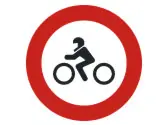
A partir de esta señal, ¿los ciclomotores podrán acceder a la vía?
From this sign onwards, may mopeds enter the road?
- ASí.Yes.
- BSí, pero solo los de tres ruedas.Yes, but only three-wheeled ones.
- CNo.No.
ExplanationThe sign prohibits motorcycles from entering, but it does not prohibit mopeds or bicycles.
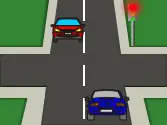
En una intersección sin línea de detención. ¿Dónde hay que detenerse?
At a junction without a stop line, where must you stop?
- AA una distancia mínima de 5 metros antes de la intersección.At least 5 metres before the junction.
- BDentro de la intersección.Inside the junction.
- CAntes de entrar en la intersección.Before entering the junction.
ExplanationIf there is no stop line at a junction and you have to stop, you must do so just before entering the junction, where there is enough visibility, but without obstructing cross traffic.
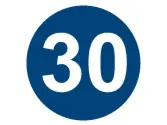
¿Hasta cuándo será obligatorio cumplir con la velocidad mínima especificada en la señal?
Until when must you keep to the minimum speed shown on the sign?
- AHasta encontrar una señal de velocidad máxima de valor superior.Until you find a maximum speed sign with a higher value.
- BHasta encontrar una señal de velocidad máxima de valor igual o inferior.Until you find a maximum speed sign with an equal or lower value.
- CÚnicamente al encontrar la señal de fin de velocidad mínima.Only when you find the end of minimum speed sign.
ExplanationMinimum speed: drivers must travel at least at the speed shown by the figure on the sign, in kilometres per hour, from where the sign is placed until another «minimum speed» sign with a different value, an «end of minimum speed» sign or a «maximum speed» sign with an equal or lower value.
¿Qué significa una luz amarilla no intermitente en un semáforo?
What does a steady (non-flashing) amber light on a traffic light mean?
- AQue debemos pasar con precaución.That we must go through carefully.
- BQue debemos detenernos.That we must stop.
- CQue el semáforo no funciona.That the traffic light is not working.
ExplanationA steady (non-flashing) amber light means that vehicles must stop in the same way as for a steady red light, unless, when it comes on, the vehicle is so close to the stopping point that it cannot stop before it safely.
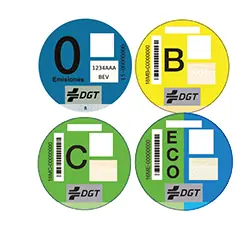
Situado en un vehículo, ¿qué identifica la señal V-25 Distintivo ambiental?
When displayed on a vehicle, what does the V-25 environmental badge identify?
- ASu clasificación ambiental en función de su nivel de emisiones y combustible empleado.Its environmental classification according to its emissions level and the fuel it uses.
- BEl tipo de combustible empleado y su nivel de radiación atmosférica.The type of fuel it uses and its level of atmospheric radiation.
- CSu clasificación ambiental en función de su nivel de contaminación acústica.Its environmental classification according to its noise pollution level.
ExplanationThe V-25 badge shows the vehicle's environmental classification (0 emissions, ECO, C or B), assigned according to its emissions level and the fuel it uses; it is the basis for restrictions in low emission zones (ZBE).
¿Puede usted con su turismo circular por el carril BUS-TAXI si la marca del carril es discontinua?
May you drive your car in the BUS-TAXI lane if the lane marking is broken?
- ASí, para adelantar.Yes, to overtake.
- BNo, está prohibido.No, it is prohibited.
- CSí, si lleva dos o más ocupantes.Yes, if there are two or more occupants.
ExplanationThe BUS-TAXI lane is reserved for buses and taxis. Even if its dividing line is broken, other vehicles may only enter it for certain permitted manoeuvres, such as turning, but they may not drive along it or use it to overtake.
En una carretera de más de 6 m de ancho, ¿está bien conducir sobre las líneas que separan los carriles?
On a road more than 6 m wide, is it all right to drive on the lines separating the lanes?
- ANo, porque debo circular dentro de mi carril.No, because I must drive within my lane.
- BSí, siempre que no vengan vehículos en sentido contrario.Yes, as long as no vehicles are coming the other way.
- CSí, porque la calzada es lo bastante ancha.Yes, because the carriageway is wide enough.
ExplanationAccording to the catalogue of road markings in Annex I of the RGC, you must not drive on a broken longitudinal line except when the width of the lanes makes it necessary and safety allows. On a carriageway more than 6 m wide the lanes are wide enough, so you must stay within your own.

¿Que clase de reglas formales debe conocer un conductor para conducir?
What formal rules must a driver know in order to drive?
- AEl conocimiento que le proporciona la experienciaThe knowledge that experience provides.
- BLas normas y señales de tráficoTraffic rules and signs.
- CLa información que la práctica proporcionaThe information that practice provides.
ExplanationIn addition to the road training they have received and the experience they have gained, drivers must know the formal rules of the road, such as the traffic rules and signs laid down by the authorities, in order to drive a vehicle safely.
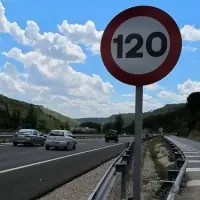
¿Qué indica esta señal de tráfico?
What does this traffic sign indicate?
- ALa velocidad mínima recomendada.The recommended minimum speed.
- BLa velocidad máxima permitida.The maximum permitted speed.
- CLa velocidad máxima recomendada.The recommended maximum speed.
ExplanationThe round sign with a red border and a number in the middle is the maximum speed sign: it prohibits driving faster than the speed shown, in this case 120 km/h. The recommended maximum speed is shown by a square blue sign, and the minimum speed by a round blue sign.
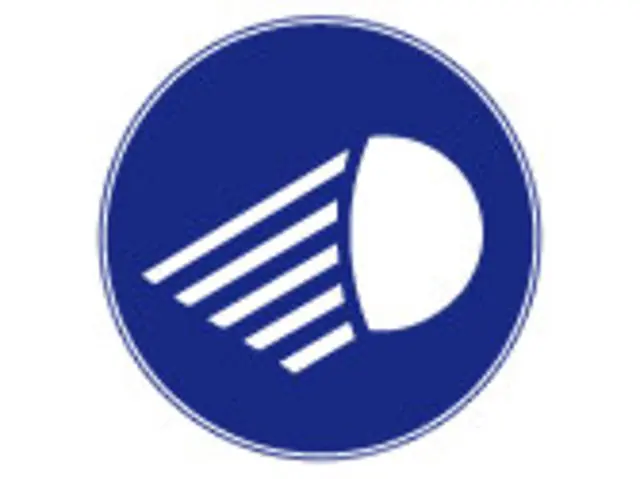
A partir de esta señal está obligado a llevar encendidas, como mínimo, las luces de...
From this sign onwards, the minimum lights you must have on are...
- Alargo alcance.main beam.
- Bcorto alcance.dipped headlights.
- Cposición.sidelights.
ExplanationThe sign in the picture, a blue circle with a headlight symbol, is a mandatory sign: from this point you must have at least dipped headlights on, also during the day, until another sign indicates otherwise.
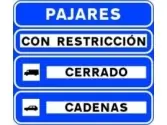
Ante las indicaciones de la señal al acceder al puerto de montaña, ¿qué actuación corresponde a los turismos?
Given what the sign shows at the entrance to the mountain pass, what must cars do?
- ANo pueden circular.They may not go through.
- BSolo pueden circular con cadenas o neumáticos de invierno.They may only go through with chains or winter tyres.
- CPueden circular a una velocidad muy reducida.They may go through at a very low speed.
ExplanationSign S-21 indicates that the pass is restricted for cars, so they may only go through if they have chains or winter tyres. If they do not have them, they must not enter the pass until the restriction is lifted or road conditions improve.
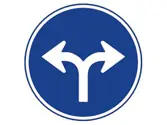
A partir de esta señal, ¿se podrá efectuar un cambio de sentido de la marcha hacia la izquierda?
From this sign onwards, may you make a U-turn to the left?
- ASí.Yes.
- BNo.No.
- CSí, pero solo si no circula ningún vehículo de frente.Yes, but only if no vehicle is coming towards you.
ExplanationThe sign allows turning off, but it does not allow making a U-turn.
¿Qué recursos utiliza el sistema de reconocimiento de señales de tráfico del vehículo para leer las señales verticales?
What does the vehicle's traffic sign recognition system use to read road signs?
- AUna cámara o sensor colocado en la parte trasera del retrovisor interior.A camera or sensor placed behind the interior rear-view mirror.
- BUtiliza siempre los datos de navegación para mostrar la información.It always uses navigation data to show the information.
- CEste sistema solo muestra información sobre marcas viales.This system only shows information about road markings.
ExplanationIt works as an automatic alert for speed limits and the signs the car passes along the way. The vehicle's cameras pick up the signs and send the information to the screen inside the vehicle so that the driver can slow down. Some systems even let the car adapt automatically to the road it is on. These systems help the driver improve road safety, because they keep the driver alert to the signs on the road. The information is received inside the car in real time to help prevent problems and accidents.
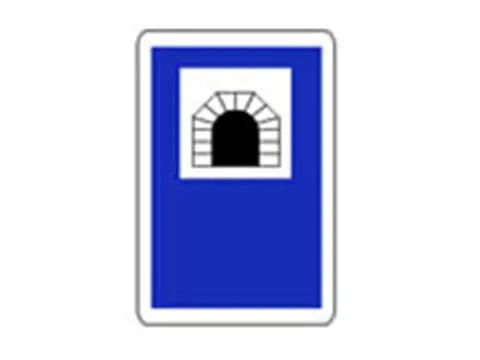
Esta señal, ¿puede indicar el principio de un paso inferior?
Can this sign indicate the start of an underpass?
- ASí, y también el principio de un túnel o de un tramo equiparado a túnel.Yes, and also the start of a tunnel or of a stretch treated as a tunnel.
- BNo, indica únicamente el principio de un túnel.No, it only indicates the start of a tunnel.
- CNo, indica el final de un túnel o paso inferior.No, it indicates the end of a tunnel or underpass.
ExplanationThis tunnel sign indicates the start of a tunnel, an underpass or a stretch of road treated as a tunnel. On these stretches the tunnel rules apply: lights on, and no stopping, parking, U-turns or reversing.
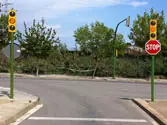
En esta intersección con los semáforos en amarillo intermitente, ¿qué debe hacer?
At this junction, with the traffic lights flashing amber, what must you do?
- AContinuar con precaución, el semáforo en amarillo intermitente exime de cumplir la señal vertical.Proceed with caution; a flashing amber traffic light exempts you from obeying the road sign.
- BExtremar la precaución y, en su caso, ceder el paso a ambos lados.Take extreme care and, where necessary, give way on both sides.
- CDetener el vehículo.Stop the vehicle.
ExplanationOne amber light, or two alternately flashing amber lights, require drivers to take extreme care and, where necessary, to give way. They also do not exempt drivers from complying with other signs that require them to stop, such as the STOP sign in the picture, which obliges us to stop the vehicle.
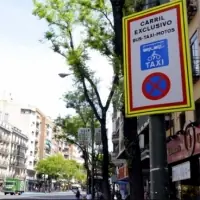
¿Cuál de éstas NO es una señal vertical de servicio?
Which of these is NOT a service sign?
- ASeñal de restauraciónRestaurant sign.
- BCarril reservado para autobusesBus lane.
- CBase de ambulanciaAmbulance station.
ExplanationService signs tell drivers and other road users about a facility that may be useful to them. The ‘bus lane’ sign is classed as a lane sign.
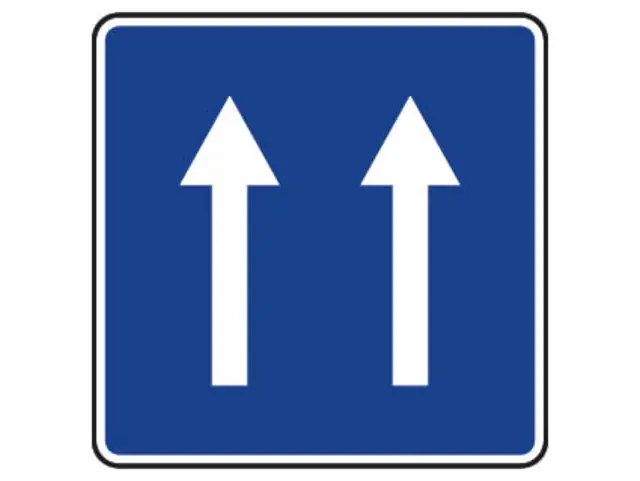
¿Se puede girar a la izquierda al ver esta señal?
May you turn left when you see this sign?
- ANo, la señal lo prohíbe.No, the sign prohibits it.
- BSí, la señal indica que la vía tiene dos carriles en el mismo sentido.Yes, the sign shows that the road has two lanes in the same direction.
- CNo, la señal obliga a ir en línea recta.No, the sign requires you to go straight on.
ExplanationThe sign in the picture is an information sign: it shows that the carriageway has two lanes for the same direction of traffic. It does not prohibit turning or require you to go straight on, so you may turn left, moving into the left-hand lane in good time and checking that the manoeuvre is not dangerous.
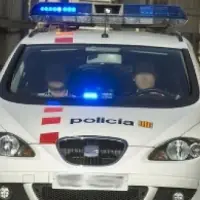
¿Qué significa la señal de luz roja destellante realizada por un vehículo de policía?
What does a flashing red light signal from a police vehicle mean?
- AObligación de ceder el paso a los coches que siguenYou must give way to the cars following
- BObligación de extremar la precauciónYou must take extreme care
- CObligación de detenerse delante del vehículo policialYou must stop in front of the police vehicle
ExplanationWhen traffic officers signal to you from their vehicle with a flashing or strobing red light, it means you must stop in front of the police vehicle for whatever action is required of you.
Un agente se acerca a su vehículo haciendo señales con una luz roja. ¿Qué debe hacer?
A traffic officer is approaching your vehicle signalling with a red light. What must you do?
- ADetener el vehículo.Stop the vehicle.
- BCircular con precaución; existe peligro.Drive with care; there is a hazard.
- CCambiar de dirección.Turn off in another direction.
ExplanationUnder section 1.1 of Annex I of the General Traffic Regulations, when a traffic officer swings a red or yellow light, the road users towards whom the officer points the light must stop. You must stop and then follow their instructions.
La señal de límite de velocidad pintada sobre un carril se aplica a los vehículos que circulan por...
A speed limit sign painted on a lane applies to vehicles travelling...
- Ael lado de la vía en el que está situada.on the side of the road where it is placed.
- Btoda la calzada.on the whole carriageway.
- Cel carril en el que está situada.in the lane where it is placed.
ExplanationThe numbers painted in each lane are horizontal speed limit signs (M-6.6 or M-6.7). If the marking is in a lane marked out by longitudinal lines, the obligation only applies to vehicles travelling in that lane.
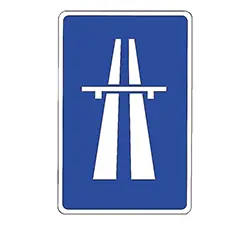
¿Qué indica esta señal?
What does this sign indicate?
- AQue hay que circular con precaución por la proximidad a un puente.That you must drive with caution because a bridge is near.
- BQue hay un control de altura o gálibo.That there is a height or clearance check.
- CQue se circula por una autopista.That you are on a motorway (autopista).
ExplanationThis is the motorway (autopista) sign: it marks the start of a road with the characteristics of a motorway, subject to its special rules. Pedestrians, cycles, mopeds and other slow vehicles may not use it, and reversing is prohibited.
En un paso a nivel el semáforo muestra una luz roja intermitente y no hay barreras bajadas. ¿Qué te obliga a hacer?
At a level crossing, the traffic light shows a flashing red light and the barriers are not down. What does it require you to do?
- APasar con precaución porque intermitente significa solo precauciónGo through with caution, because flashing only means caution
- BDetenerme, porque la luz roja intermitente en un paso a nivel obliga a parar igual que una roja fijaStop, because a flashing red light at a level crossing requires you to stop just like a steady red light
- CReducir la velocidad sin llegar a detenermeReduce speed without stopping
ExplanationAt level crossings, a flashing red light requires you to stop; it is not the same as a flashing amber light, which means caution.
La luz amarilla fija de un semáforo, ¿le obliga a detenerse?
Does a steady amber traffic light require you to stop?
- ASí, siempre.Yes, always.
- BSí, salvo que, cuando se encienda, se encuentre el vehículo tan cerca del lugar de detención que no pueda detenerse antes del mismo en condiciones de seguridad suficientes.Yes, unless, when it comes on, the vehicle is so close to the stopping point that it cannot stop before it with sufficient safety.
- CSólo si en el mismo poste del semáforo hay una señal de STOP.Only if there is a STOP sign on the same post as the traffic light.
ExplanationThis is the correct answer because a steady amber light means that the traffic light is about to change to red and the driver must get ready to stop. However, if the vehicle is so close to the traffic light that it cannot stop safely, it may continue. This matters in order to avoid dangerous situations such as braking sharply.

Los niños suelen tener problemas en el tráfico porque…
Children often have problems in traffic because…
- ASu visión periférica es más grande.Their peripheral vision is wider.
- BSu campo visual es más grande.Their field of vision is wider.
- CNo conocen todos los comportamientos adecuados para circular.They do not know all the correct ways to behave in traffic.
ExplanationChildren as pedestrians usually have limitations: their field of vision is smaller (up to 40% less than an adult's when they walk between parked vehicles); they have hearing problems (under the age of 7 they cannot tell which direction a vehicle is coming from by its sound); they have poor control of their attention; they often confuse seeing with being seen; and they do not know the rules (they do not know all the signs and the correct ways to behave). For all these reasons it is very important to pay extra attention and take extra care around children.
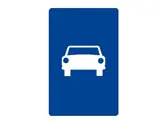
Esta señal nos indica el principio de...
This sign indicates the start of...
- AUna vía reservada para automóviles.A road reserved for motor cars.
- BUna autopista.A motorway (autopista).
- CUna autovía.A dual carriageway (autovía).
ExplanationThis sign indicates the start of a road reserved for motor cars.
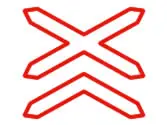
Esta señal le advierte del peligro de la presencia inmediata de un...
This sign warns you of the danger of the immediate presence of a...
- APaso a nivel con barreras.Level crossing with barriers.
- BPaso a nivel sin barreras y dos vías férreas.Level crossing without barriers and with two railway tracks.
- CPaso a nivel sin barreras y con más de una vía férrea.Level crossing without barriers and with more than one railway track.
ExplanationThis sign indicates danger from a level crossing without barriers. As the sign has a double cross, it indicates that there is more than one railway track. Do not confuse the sign for a level crossing with barriers with the one for a level crossing without barriers.
En una intersección hay un semáforo con la luz roja encendida y uno adosado con una flecha verde sobre fondo negro apuntando hacia la derecha, ¿qué debe hacer si circula por el carril derecho que tiene flechas de dirección a la derecha pintadas en la calzada y desea seguir de frente?
At a junction there is a traffic light showing red, with a green arrow on a black background pointing right on an attached light. What must you do if you are in the right-hand lane, which has right-turn arrows painted on the road, and you want to go straight on?
- AContinuar la marcha en la dirección deseada porque la flecha verde permite el paso.Continue in the direction you want, because the green arrow allows you to go.
- BContinuar la marcha siguiendo el sentido y dirección que marca la flecha.Continue in the direction shown by the arrow.
- CDetenerme.Stop.
ExplanationThis is correct because the green arrow on a black background means that you may turn right. If you are in the right-hand lane with right-turn arrows painted on the road, you must follow the direction of the arrow and turn right, obeying the signs that allow that manoeuvre.
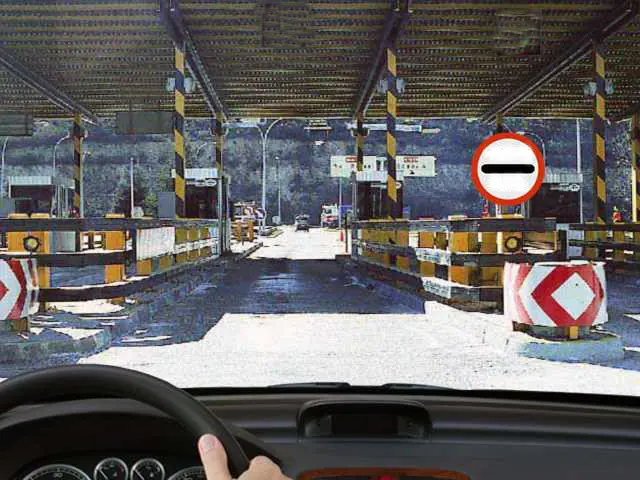
¿Qué indica la señal redonda con el borde rojo?
What does the round sign with the red border indicate?
- AEs obligatorio parar el vehículo.You must stop the vehicle.
- BProhíbe circular a todos los vehículos por cualquier carril.It prohibits all vehicles from using any lane.
- CEstá prohibido circular por ese carril.Driving in that lane is prohibited.
ExplanationThis is the 'no passing without stopping' sign: round, with a red border, a white background and a horizontal black bar. It means you must stop at that point, for example at a toll, a customs post or a checkpoint. Do not confuse it with the no-entry sign, which is red with a white bar.
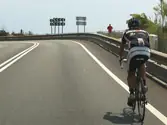
Para adelantar al ciclista de la imagen, ¿podemos rebasar la línea continua?
To overtake the cyclist in the picture, may you cross the continuous line?
- ANo, porque puedo dejar 1,50 metros de separación lateral sin tener que rebasarla.No, because you can leave 1.50 metres of lateral clearance without having to cross it.
- BSí.Yes.
- CNo, tendré que esperar a encontrar discontinua.No, you will have to wait until you find a broken line.
ExplanationUnder Article 88.2 of the General Traffic Regulations (RGC) (as worded by RD 518/2026), even where overtaking is prohibited you may overtake cyclists by using the part of the carriageway reserved for the opposite direction, even crossing the continuous line, when their speed allows you to do so without risk. Article 85.4 requires you to occupy part or all of the adjacent or opposite lane, leaving at least 1.5 metres, both inside and outside built-up areas; if there is more than one lane in each direction, you must change lanes completely.
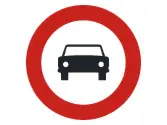
Esta señal indica entrada prohibida a...
This sign indicates no entry for...
- Avehículos automóviles.motor cars.
- Bvehículos de motor, excepto motocicletas de dos ruedas sin sidecar.motor vehicles, except two-wheeled motorcycles without a sidecar.
- Cturismos.passenger cars.
ExplanationSign R-103 prohibits entry to motor vehicles, except two-wheeled motorcycles and three-wheeled vehicles treated as motorcycles. Sign R-102, which shows a car and a motorcycle, prohibits entry to all motor vehicles, motorcycles included.
¿Qué significado tiene una luz amarilla intermitente?
What does a flashing amber light mean?
- AObliga a los conductores a extremar la precaución.Drivers must take extreme care.
- BObliga a los conductores a detenerse.Drivers must stop.
- CIndica que el semáforo va a cambiar a luz roja.It shows that the traffic light is about to change to red.
ExplanationA flashing amber light requires drivers to take extreme care and, where necessary, give way. It does not exempt them from obeying other signs that require them to stop, so when it comes with a Stop sign we must stop. A steady (non-flashing) amber light requires drivers to stop in the same way as for a steady red light, unless, when it comes on, they cannot stop safely enough.
El conductor del vehículo que le precede señaliza un giro a la derecha con el indicador de dirección y un giro a la izquierda con el brazo, ¿a qué señalización haremos caso?
The driver of the vehicle in front signals a right turn with the indicator and a left turn with their arm. Which signal should we follow?
- ALa luminosa.The light signal.
- BLa óptica.The optical signal.
- CLa del brazo.The arm signal.
ExplanationIf the signals given with the indicator and those given with the arm contradict each other, the arm signals prevail.
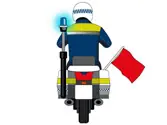
Este agente con la bandera roja indica...
This officer with the red flag indicates...
- Aobligación de detenerse.that you must stop.
- Bcarretera temporalmente cerrada al tráfico.that the road is temporarily closed to traffic.
- Cextremar la precaución.that you must take extreme care.
ExplanationAn officer with a red flag indicates that the carriageway is temporarily closed to all vehicles and road users.
En una vía con semáforos situados a ambos lados de la calzada, deben obedecer solo las indicaciones situadas a su izquierda los conductores que quieran...
On a road with traffic lights on both sides of the carriageway, drivers must obey only the lights on their left if they want to...
- Aseguir de frente o girar a la derecha.go straight on or turn right.
- Bgirar a la izquierda o seguir de frente.turn left or go straight on.
- Cgirar a la izquierda solamente.turn left only.
ExplanationUnder Article 132.3 of the General Traffic Regulations (RGC), if the traffic lights or signs on the right and on the left give different indications, drivers who intend to turn left or go straight on must obey only those immediately to their left. Drivers turning right follow those on their right.
En una autopista, que se encuentre dentro de poblado, con los carriles delimitados por marcas longitudinales discontinuas, ¿puede circular un turismo por el carril que más convenga a su destino?
On a motorway (autopista) within a built-up area, with lanes marked out by broken longitudinal lines, may a car drive in whichever lane best suits its destination?
- ANo, debe circular por el carril derecho.No, it must drive in the right-hand lane.
- BSí, como en el resto de las vías urbanas.Yes, as on other urban roads.
- CSí, siempre que no entorpezca la marcha de los vehículos que circulen detrás a mayor velocidad.Yes, provided it does not hold up faster vehicles behind it.
ExplanationThe freedom to choose the lane that best suits your destination in built-up areas does not apply to motorways (autopistas) and dual carriageways (autovías), even when they run through a built-up area (Article 33 of the RGC). On them you normally drive in the right-hand lane and use the others when the circumstances make it advisable.
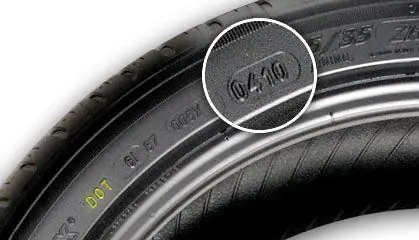
En un neumático,¿ qué indica la inscripción DOT 0410?
On a tyre, what does the marking DOT 0410 indicate?
- AEl índice de carga del neumático.The tyre's load index.
- BLa fecha de fabricación (semana y año).The date of manufacture (week and year).
- CLa fecha de caducidad (semana y año).The expiry date (week and year).
ExplanationThe marking DOT followed by four digits shows the tyre's date of manufacture: the first two digits are the week and the last two the year. DOT 0410 means week 4 of 2010. It tells you how old the tyre is, not an expiry date.
Si el semáforo está en rojo, ¿dónde debe detenerse?
If the traffic light is red, where must you stop?
- AAnte la línea de detención, sin rebasarla.At the stop line, without crossing it.
- BJunto al semáforo.Next to the traffic light.
- CInmediatamente antes de la intersección, aunque rebase la línea de detención.Immediately before the junction, even if you go past the stop line.
ExplanationUnder section 4.2 of Annex I of the RGC, while the red light is on, vehicles must not go past the traffic light or, if there is one, the nearest stop line before it. You must stop at that line, without entering the pedestrian crossing.

¿Qué indica una línea continua amarilla en el bordillo de la calzada?
What does a solid yellow line on the kerb of the carriageway indicate?
- AProhibido el paso de animalesNo entry for animals
- BProhibido el paso de ciclistasNo entry for cyclists
- CProhibido parar o estacionarNo stopping or parking
ExplanationA solid yellow line on the kerb of the carriageway indicates that stopping, and therefore also parking, is prohibited on the side of the carriageway where it is. If the ban is temporary, this is shown by a road sign at the start of the stretch.
Si pasa un semáforo en verde y se queda bloqueando en un cruce, ¿qué hará?
If you go through a green light and are left blocking a junction, what will you do?
- ASalir de la intersección por la primera salida posible, y nunca seguiré de frente.Leave the junction by the first possible exit, and never go straight on.
- BSalir de la intersección sin esperar a que se permita la circulación en la dirección que me proponía tomar.Leave the junction without waiting for traffic to be allowed in the direction I intended to take.
- CEsperaré en el eje de la calzada hasta que el semáforo pase a rojo, y, otra vez, a verde.Wait in the centre of the carriageway until the light turns red and then green again.
ExplanationA driver who has been stopped inside a junction controlled by traffic lights and is blocking cross traffic must leave it without waiting for traffic to be allowed in the direction they intended to take, provided they do not hinder those moving in the permitted direction.
Línea continua en la calzada: ¿qué significa?
A continuous line on the carriageway: what does it mean?
- AProhibido adelantarNo overtaking.
- BSolo recomendaciónIt is only a recommendation.
- CNo significa nadaIt means nothing.
ExplanationA continuous line on the carriageway means that no vehicle may cross it or drive on it. So when it separates the two directions of traffic, it prevents overtaking if you would have to cross it to do so. It is a prohibition, not a recommendation.
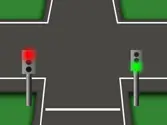
En la situación de la imagen, ¿a qué semáforo debemos obedecer?
In the situation in the picture, which traffic light must we obey?
- AAl semáforo de la derecha indistintamente de la dirección que queramos tomar.The traffic light on the right, whatever direction we want to take.
- BAl semáforo de la derecha si queremos seguir de frente.The traffic light on the right if we want to go straight on.
- CAl semáforo de la izquierda si queremos seguir de frente o girar a la izquierda.The traffic light on the left if we want to go straight on or turn left.
ExplanationRoad users must obey the signals of the traffic lights and road signs placed immediately to their right, above the carriageway or above their lane and, if there are none in those positions and they intend to turn left or go straight on, those placed immediately to their left. If there are traffic lights or road signs showing different instructions on the right and on the left, those who intend to turn left or go straight on must only obey the ones immediately to their left.
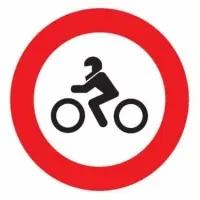
Esta señal, ¿a qué motocicletas prohíbe la entrada?
Which motorcycles does this sign prohibit from entering?
- AA las de más de 125 centímetros cúbicos, únicamente.Only those over 125 cubic centimetres.
- BA todas.All of them.
- CA las de dos ruedas sin sidecar solamente.Only two-wheeled ones without a sidecar.
ExplanationThis sign prohibits entry to all motorcycles, whatever their engine capacity and whether or not they have a sidecar. Mopeds have their own no-entry sign, with a different symbol.
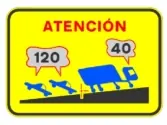
Esta señal advierte al conductor de que en un tramo de autopista o autovía:
This sign warns the driver that on a stretch of motorway (autopista) or dual carriageway (autovía):
- AExiste riesgo de accidentes por alcances debido a que los camiones circulan más despacio en pendientes ascendentes.There is a risk of rear-end collisions because lorries travel more slowly on uphill gradients.
- BSe prohíbe la circulación de vehículos pesados en todo el tramo indicado.Heavy vehicles are prohibited along the whole stretch indicated.
- CEs obligatorio que los turismos reduzcan su velocidad mínima para adaptarse a la de los camiones.Cars must reduce their minimum speed to match that of lorries.
ExplanationThe sign warns of a specific risk on motorways or dual carriageways with uphill gradients, where lorries and heavy vehicles travel at speeds noticeably lower than those of cars. This difference can cause rear-end collisions if drivers do not adapt their driving. The aim of the sign is for road users to take extreme care, increase their safe distance and watch out for differences in speed to avoid accidents.
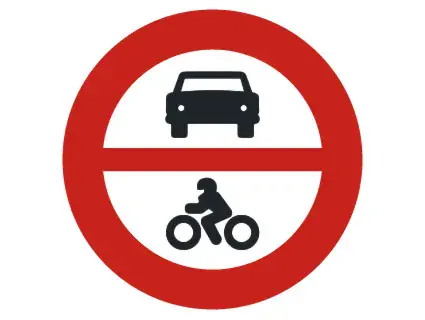
Esta señal, ¿prohíbe a los ciclomotores entrar en la vía que señaliza?
Does this sign prohibit mopeds from entering the road it marks?
- ASí, a cualquier ciclomotor.Yes, any moped.
- BNo.No.
- CSí, a los ciclomotores de dos ruedas.Yes, two-wheeled mopeds.
ExplanationThe sign in the picture is R-102 “No entry for motor vehicles”. The Traffic Law (Ley sobre Tráfico) excludes mopeds from the definition of a motor vehicle, so this sign does not prohibit them from entering; for mopeds there is sign R-105.
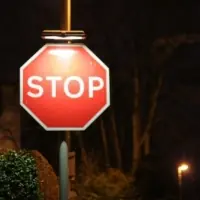
¿Cómo deben ser las señales de circulación para que sean visibles por la noche?
What must road signs be like so that they are visible at night?
- ABrillantesShiny
- BCon luces de neón incorporadasWith built-in neon lights
- CReflectantesReflective
ExplanationTo make road signs easier to see when driving at night, road signs and road markings are reflective, so that they become visible when your vehicle's lights shine on them.
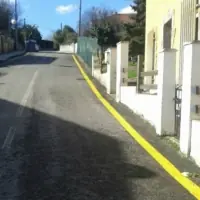
¿Qué indica la línea amarilla continua?
What does the solid yellow line indicate?
- AQue se puede parar pero no estacionar.That you may stop but not park.
- BQue no se puede ni parar ni estacionar.That you may neither stop nor park.
- CQue se puede parar y estacionar.That you may stop and park.
ExplanationWhenever we find a road marking consisting of a solid yellow line next to the edge of the carriageway, it means that stopping and parking are prohibited along the whole length of the line for all vehicles.
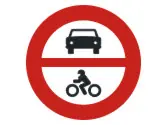
La señal prohíbe la entrada a...
This sign prohibits entry to...
- Atoda clase de vehículos.all types of vehicles.
- Bvehículos de motor.motor vehicles.
- Cturismos y motocicletas.cars and motorcycles.
ExplanationThe sign in the question prohibits access to motor vehicles. Motor vehicles are motor cars and special vehicles. Do not confuse it with the ‘no entry’ sign, which prohibits access to all types of vehicles.
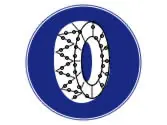
Esta señal obliga a colocar las cadenas para poder continuar la marcha, ¿en qué ruedas las colocaremos?
This sign requires you to fit chains in order to continue. On which wheels will we fit them?
- AEn las ruedas delanteras.On the front wheels.
- BEn las ruedas traseras.On the rear wheels.
- CEn las ruedas motrices.On the driving wheels.
ExplanationSnow chains are fitted on the driving wheels, which on some vehicles are the front wheels and on others the rear wheels.
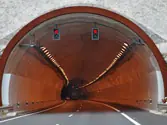
Si encuentra un semáforo rojo antes de entrar en un túnel, ¿cómo actuará usted?
If you find a red traffic light before entering a tunnel, what will you do?
- APasaré extremando la precaución.I will go through, taking extra care.
- BMe detendré y esperaré a que se apague o cambie a verde o amarillo intermitente.I will stop and wait until it goes off or changes to green or flashing amber.
- CPasaré cediendo el paso tanto a la derecha como a la izquierda.I will go through, giving way both to the right and to the left.
ExplanationAt a red traffic light, wherever it is, you must stop and wait for it to change colour before you can continue.
Si al entrar en un túnel el semáforo está en rojo, ¿qué debe hacer?
If the traffic light is red as you are about to enter a tunnel, what must you do?
- ASeguir con precaución.Carry on with care.
- BNo entrar en el túnel.Not enter the tunnel.
- CPasar a una velocidad máxima de 50 km/h.Go through at a maximum speed of 50 km/h.
ExplanationUnder Article 95.7 of the General Traffic Regulations, anyone driving through a tunnel or underpass must obey the traffic lights and variable message signs at all times. If the traffic light at the entrance is red, you may not enter the tunnel.
All topics
- Definitions
- Documents and penalty points
- The driver's condition
- Duties of drivers and pedestrians
- Vehicle safety devices
- Vehicle controls and equipment
- Vehicle lights and horn
- The road and its lanes
- Speed and distances
- Manoeuvres
- Right of way
- Carrying passengers and loads
- Driving safely in difficult conditions
- Vehicle mechanics and maintenance
- Road accidents and first aid
- Defensive and eco-driving
Independent app: not affiliated with or endorsed by the DGT (Spain's Directorate-General for Traffic) or the Ministry of the Interior. The official exam is booked with the DGT and taken at its test centres. The questions here are practice material; the DGT's official question bank is not public.
Basado en datos de la Agencia Estatal Boletín Oficial del Estado (https://www.boe.es). Textos consolidados de carácter meramente informativo. La AEBOE no patrocina ni respalda este sitio.
Parte de las preguntas procede de los tests de la revista «Tráfico y Seguridad Vial» de la DGT, reproducidos con indicación de la fuente.